
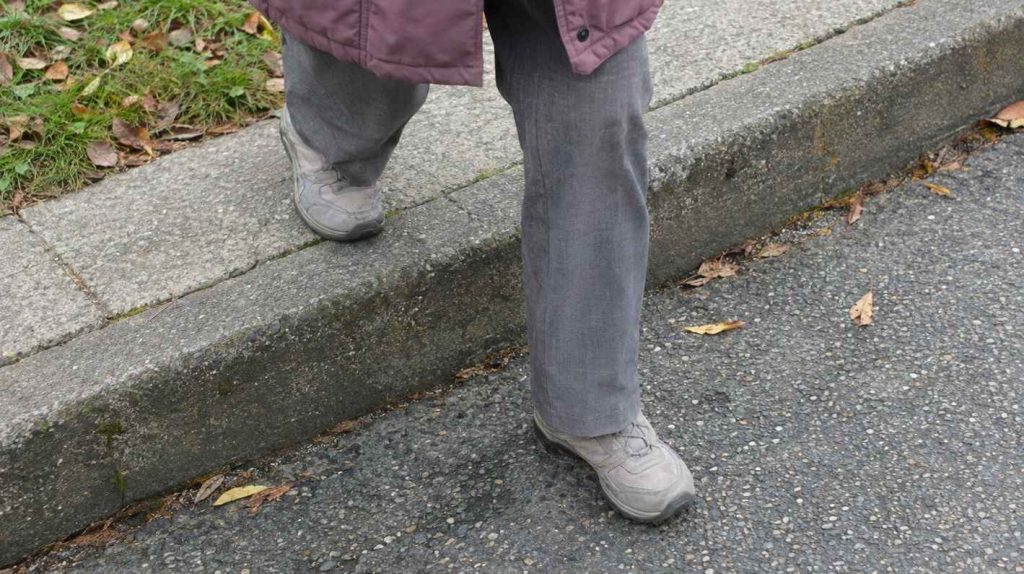
The fear is reasonable. Falls are common after 65, and one bad one can shake anyone’s confidence.
What tends to backfire is the natural response: walking less.
Keep walking, on shorter and easier routes, and add a few minutes of balance practice most days. That combination is what the research supports.
You do not have to feel brave before you start. In the studies below, confidence tended to come back after people began moving, not before.
Why walking less can make a fall more likely
The National Institute on Aging is part of the U.S. National Institutes of Health. It reports that more than one in four people aged 65 or older fall each year.
The same page notes that fear of falling leads many older adults to avoid walking, shopping and time with friends. Yet staying active, it says, actually helps prevent falls.
You may know how that avoidance starts. At the curb you look down, slow right down, and reach for a fence post or the roof of a parked car.
Then the walks get shorter. Then some days they do not happen.
Fewer walks mean less practice for your balance and weaker legs, so the next walk feels shakier. That is how fear that keeps you home can make the next walk harder.
What actually eases the fear
Cochrane is an independent, non-profit network of health researchers that reviews all the trials on a question. Its 2014 review of fear of falling pooled 30 studies with 2,878 people, whose average ages ranged from 68 to 85.
The programs were tai chi, yoga, balance training and strength training.
- Right after the programs ended, fear of falling was lower in the people who had exercised, a small to moderate effect.
- The exercise did not come with more falls. In the trials that counted falls, if anything there were fewer.
- The few studies that checked back months later found a smaller effect.
The reviewers rated the evidence as low quality, so treat the size of the effect with caution. The direction is the useful part.
In these trials, people did not wait for the fear to pass. They moved, and the fear eased.
Walking helps, and balance work does more
A second Cochrane review asked a harder question: does exercise prevent falls themselves?
It pooled 108 trials with 23,407 people, average age 76. Exercise cut the rate of falls by 23 percent.
The type mattered. Balance and functional exercises, the kind that copy everyday moves like standing up or stepping, cut falls by 24 percent.
For walking programs on their own, the reviewers found too little evidence to say either way.
So keep the walks, because they keep your legs and heart working. Then add short balance practice, which the evidence backs for preventing falls.
Exercise cut the rate of falls by 23 percent.
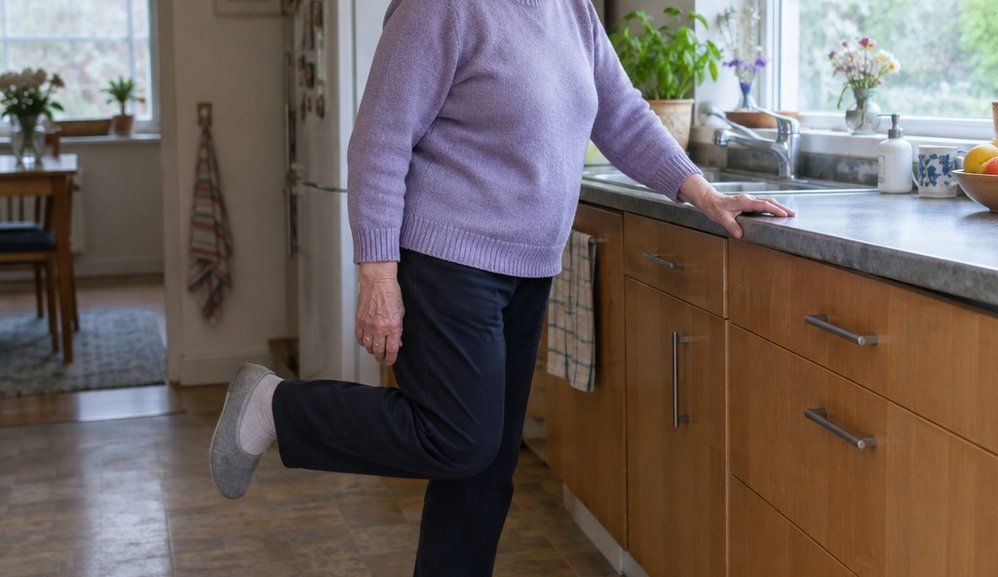
Simple ways to start, holding a kitchen counter or a sturdy chair:
- Stand on one foot for a few seconds, then switch.
- Walk heel to toe along a hallway, one hand on the wall.
- Stand up from a chair and sit back down slowly, several times.
That last one is also a useful self-check, and the sit-to-stand test shows how to read it. For a fuller set, a 10-minute strength routine for walkers covers legs and hips with no equipment.
A first week back, one small step at a time
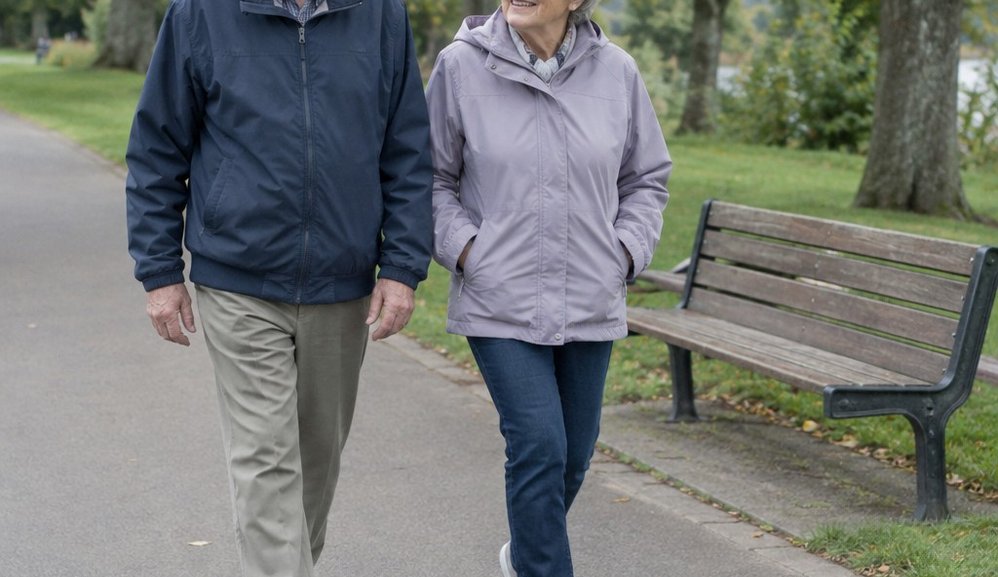
Pick one route near home and keep it for the whole week. Familiar ground is the easiest place to rebuild trust in your feet.
A sample week:
- Days 1 and 2: to the end of your street and back, in daylight.
- Days 3 and 4: the same route, plus one more block.
- Days 5 to 7: the same route again, adding one lap past a bench where you can stop.
A few things make those walks feel safer:
- Flat, even, well-lit sidewalks, not grass, gravel or wet leaves.
- Shoes you already know, with a sole that grips.
- Your phone in a pocket, not a bag.
- A walking partner for the first few outings, if one is free.
If your doctor or physical therapist has suggested a cane, use it. Holding it in the right hand matters more than most people expect, and how to walk with a cane walks through that.
Rougher ground can wait. When the neighborhood feels routine, there is a separate guide to staying steady on uneven trails.
When to talk to your doctor
Some causes of falls are worth a professional look. The National Institute on Aging suggests telling your doctor or pharmacist if a medicine makes you sleepy or dizzy, and having your vision checked.
If you have fallen in the past year, or feel unsteady, say so at your next checkup.
New dizziness, a sudden change in your balance, or a fall that caused an injury deserves a call to your doctor sooner.
You do not need a gym, a trainer or any new gear to begin. A chair, a counter and one familiar street are enough.
The curb that made you reach for the fence will still be there. By the end of the week, you will have crossed it many times.