
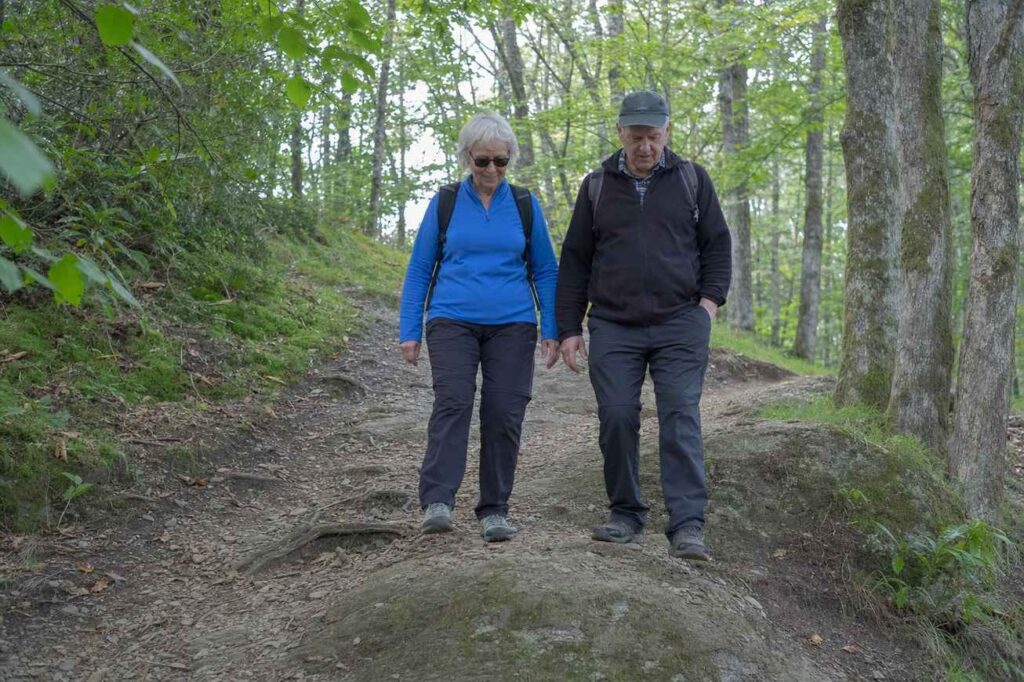
The first time a smooth path turns to roots and loose stone, your body notices.
Your steps shorten. Your eyes drop to the ground.
A walk that felt easy on pavement suddenly asks more of you.
That wariness is not a sign to turn back. It is your balance working the way it should.
With a few simple habits, you can walk uneven ground with real confidence well into your seventies.
This is about staying steady, not becoming a mountaineer. The easy trails we have in mind are within reach of most people already comfortable on the pavement.
Not off the sidewalk yet? The step-by-step transition from neighborhood walks to easy trails is the place to start.
Why Uneven Ground Feels Harder After 60
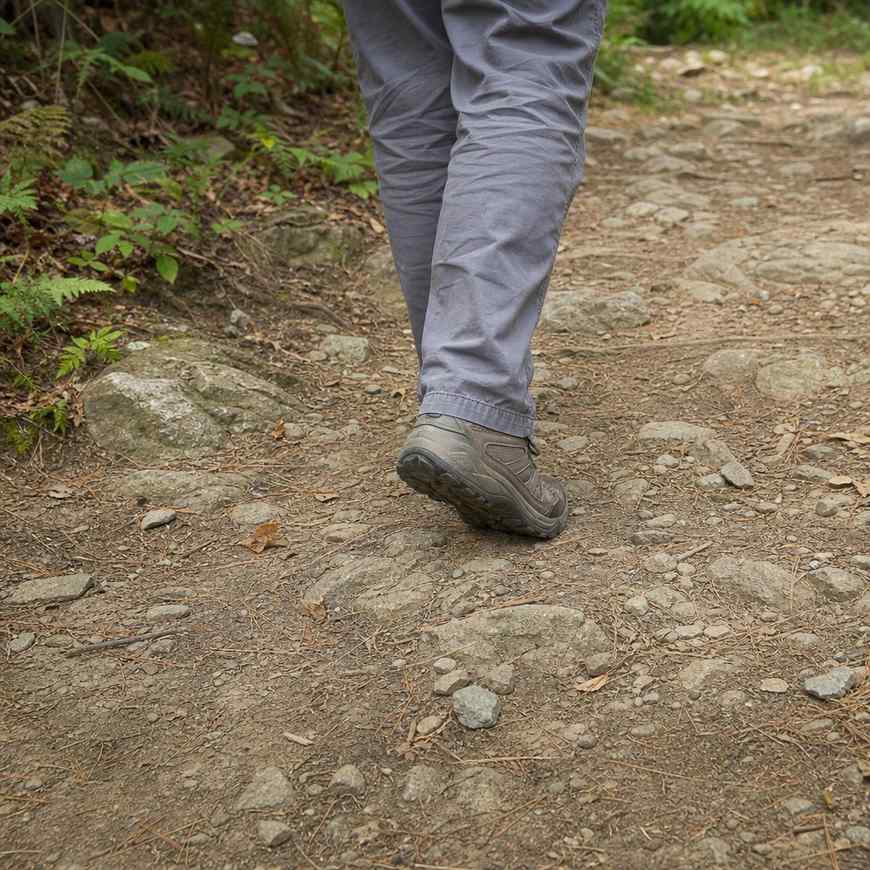
Balance is a skill. Like any skill, it fades when we stop practicing it.
Smooth pavement asks almost nothing of it. Years of flat walking can leave it weak without you noticing.
Three systems keep you upright:
- Your inner ear, which senses motion and position.
- Your eyesight, which reads the ground ahead.
- The sensors in your feet, ankles, and knees, which tell your brain where your body is.
All three change gradually with age. Uneven ground is simply the first place you feel it, because it asks all three to work at once.
Balance responds quickly to practice. Older adults who train it become measurably steadier within weeks.
That finding, echoed by the researchers behind the CDC’s STEADI program, is the encouraging part.
Your body is still listening.
Slow Down and Shorten Your Stride
The single best habit on a trail is also the simplest.
Take shorter steps.
A long stride puts your weight out ahead of you, where you have least control if a foot slips.
A short, flat-footed step keeps your weight over your feet, where you can catch yourself.
Plant each foot deliberately rather than rushing. On a gentle trail there is no prize for speed.
The slower rhythm is part of what makes time in nature feel good.
Use Your Eyes to Read the Trail
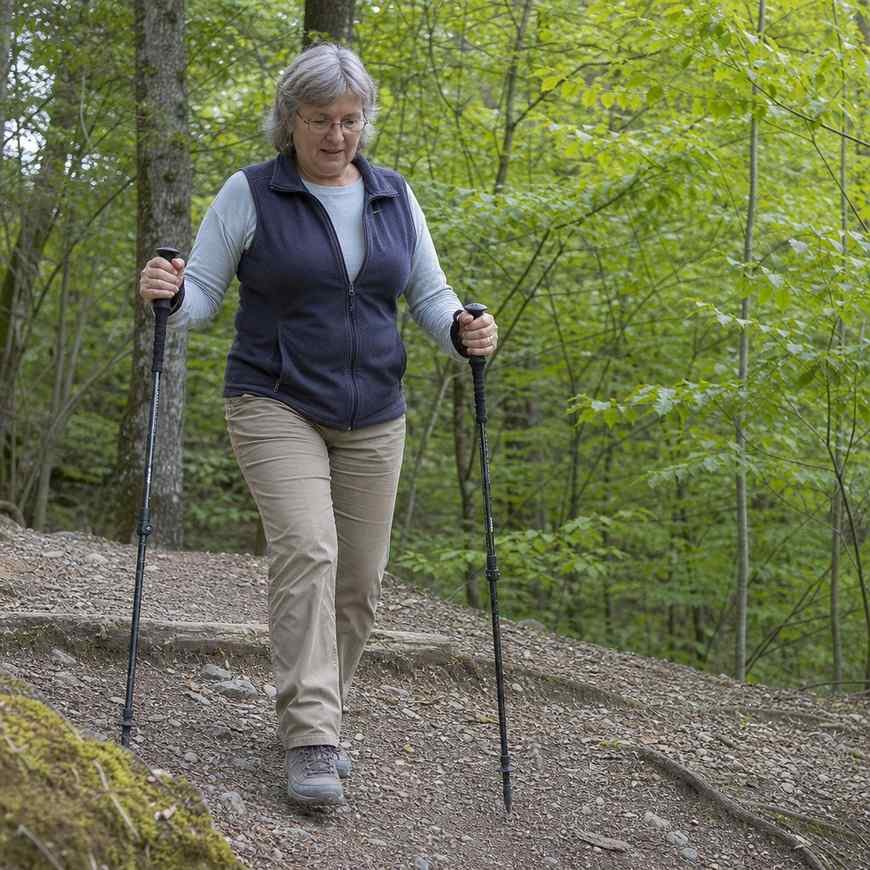
Where you look matters as much as where you step.
Scan the ground a few steps ahead, pick your line, then trust your feet to follow it.
The common mistake is staring straight down at your toes. That tells you nothing about what is coming, and it tips your weight forward.
Look ahead, plan, then place.
Soft surfaces help too. The gentler routes tend to be firmer underfoot.
The difference between gravel, grass, and packed dirt is worth understanding before you set out.
Let Walking Poles Do Some of the Work
If one piece of gear transforms uneven ground, it is a pair of walking poles.
They give you two extra points of contact and take load off your knees on the way down. A nervous descent turns into a steady one.
You do not need anything expensive. A simple, adjustable pair is plenty for gentle trails.
There is more on walking poles for beginners over 50, including how to pick and size them.
Plant a pole as you step onto anything loose or sloped, and set them so your elbows sit at a comfortable right angle.
Choose Gentle Trails and Build Up
Confidence comes from success. So give yourself the best chance.
For your first easy trails:
- Start with short, well-maintained, mostly flat paths.
- Add distance or a gentle slope only once the easy ones feel routine.
- Avoid wet, steep, or rocky stretches early on.
A modest slope is good practice in small doses. If hills make you uneasy, the same technique applies, and walking uphill without dread is mostly about pace and patience.
There is no rush. Every comfortable outing makes the next one easier.
Strengthen the Muscles That Keep You Upright
Steady feet start above the ankle.
Strong legs, hips, and ankles are what catch you when the ground shifts. And they are very trainable at any age.
A few minutes of simple work makes a real difference.
Gentle ankle and knee exercises build the small stabilizing muscles that uneven ground depends on, with no equipment and only a few minutes a day.
If something hurts in a sharp or new way, or your balance has changed suddenly, see your doctor. It is not something to walk through.
Your Steady-Walking Checklist
Keep these few habits in mind and uneven ground stops feeling like a risk:
- Shorten your steps and slow down on loose or rough ground.
- Look a few steps ahead, not down at your toes.
- Use poles on anything sloped or unstable.
- Start on flat, well-kept trails and build up gradually.
- Strengthen your ankles and legs a few minutes a week.
The trail is more welcoming than it looks.
Bring these habits along, and let easy nature paths become part of your week.