

Here is a finding that surprises people.
How easily you stand up from a chair tells you a lot. No hands, no wobble.
Not your weight. Not your blood pressure.
How you get out of a chair.
It sounds too simple. But that one move tests what keeps older adults independent: leg strength, balance, and the power to lift your own body weight.
Those things fade first, often without us noticing. Until a low sofa or a high curb makes it plain.
What the Research Actually Found
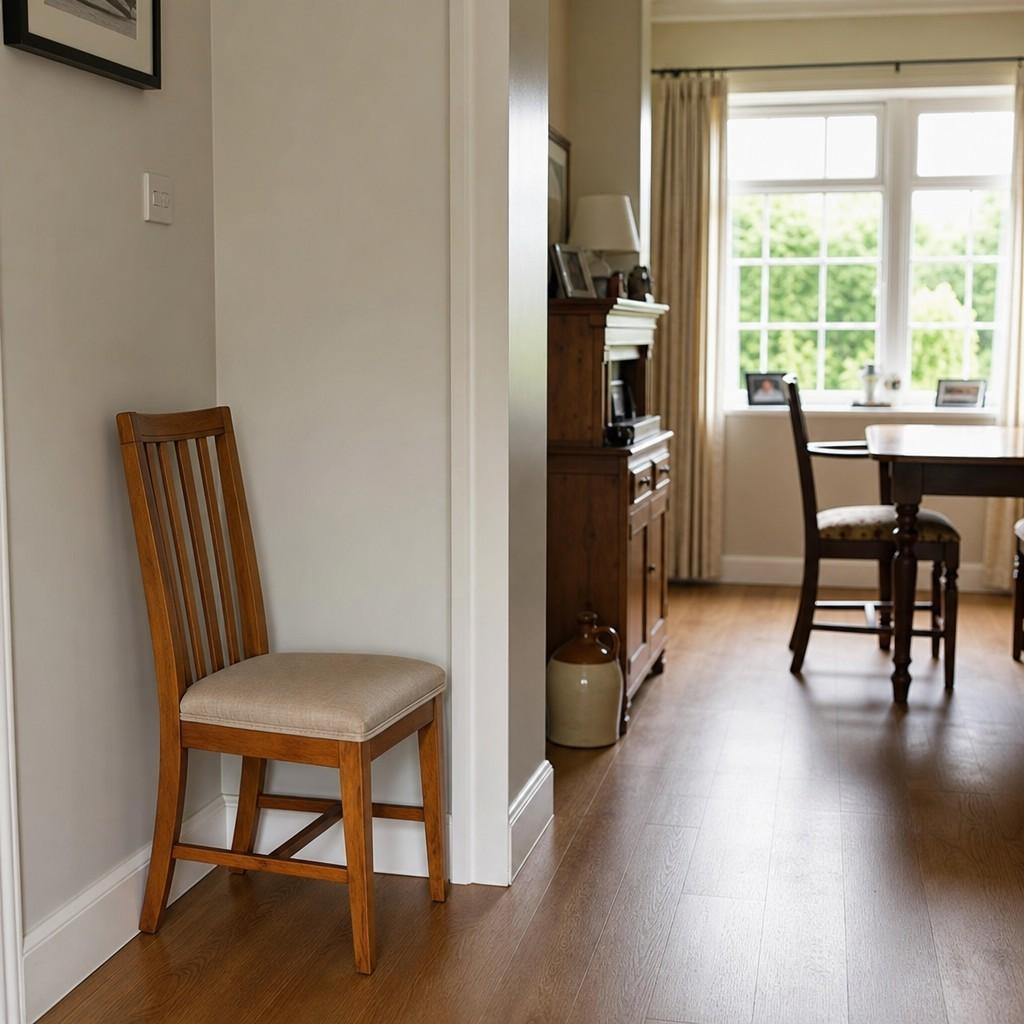
Researchers have studied versions of this test for years.
The 30-second chair stand. Part of the Senior Fitness Test and the CDC’s STEADI fall-prevention program, it counts how many times you can stand and sit in half a minute.
The sitting-rising test. A 2012 study in the European Journal of Preventive Cardiology scored how much support people needed to lower to the floor and rise again.
The result was striking.
People who had to push off with a hand or a knee scored lower. And lower scores were linked with a higher risk of dying over the following years.
One caveat matters.
This is an association, not proof that the chair itself decides anything.
The test does not set your future. It reveals the strength you have right now, which you can change.
That is the hopeful part.
How to Try the Chair Test at Home
You can try a gentle version in your own kitchen. It takes 30 seconds.
- Put a sturdy chair against a wall so it cannot slide.
- Sit with your feet flat and your arms crossed over your chest.
- Stand up fully, then sit back down, smoothly and without bouncing.
- Count how many full stands you manage in 30 seconds.
As a rough guide:
- In your sixties: around twelve to fourteen is typical.
- In your seventies: a little fewer is normal.
- Cannot do it without your hands? That is your honest starting point, not a verdict.
Your own number matters more than any chart.
Use your hands, or skip the test, if your balance is poor or a knee or hip is painful. Check with your doctor first if you are unsure.
The point is information, never strain.
Why Walking Alone Doesn’t Keep You Strong
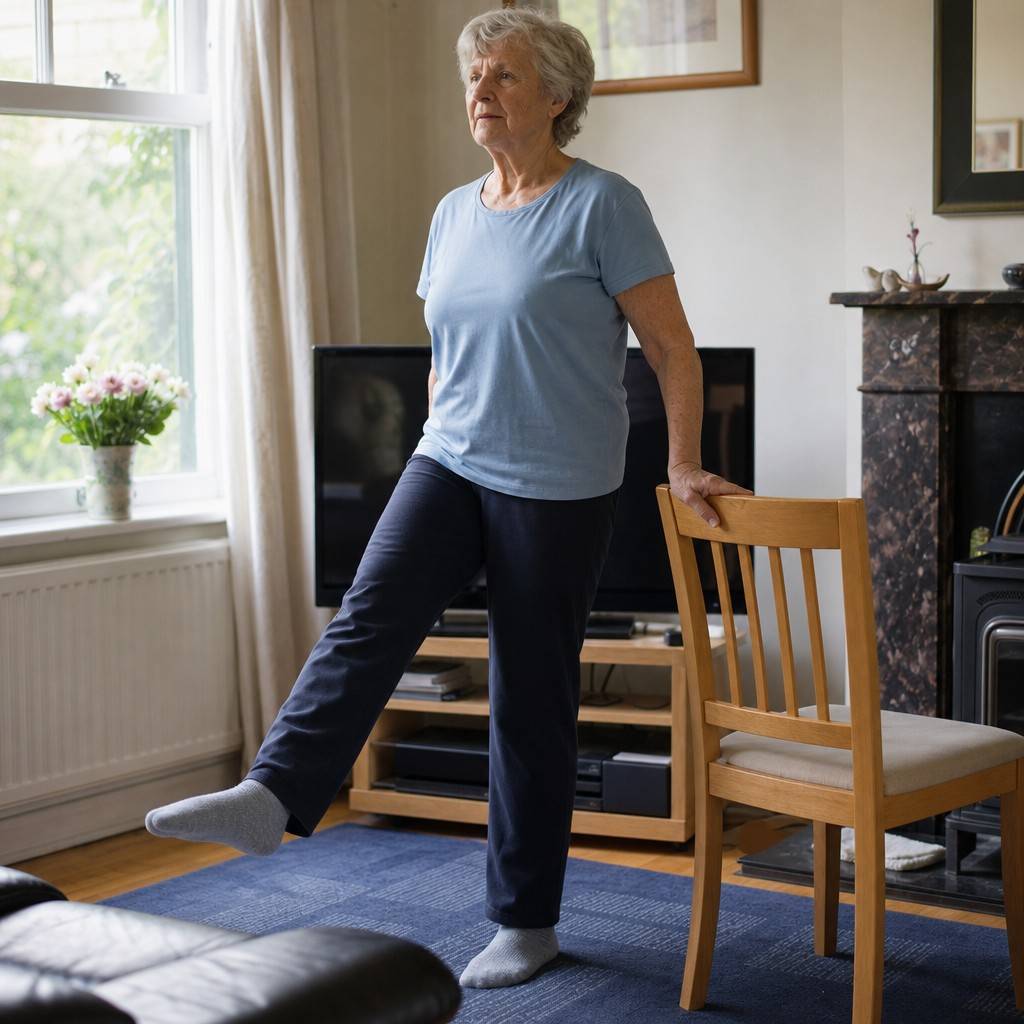
One thing surprises a lot of dedicated walkers:
Walking is genuinely good for your heart, your mood, and your stamina. It remains the best all-round exercise after 50.
But on its own, walking does not build much lower-body strength.
After 50 we lose muscle steadily unless we ask for it back. That loss speeds up through our later decades.
Walking keeps the muscle you use for walking. But rising from a chair, climbing stairs, and catching your balance all call on strength that steady walking never demands.
A faithful daily walker can still struggle to get out of a low chair.
The walk keeps the engine running. It does not, by itself, keep the legs strong. There is more on that balance in moving more and sitting less.
Simple Ways to Get Stronger for the Chair and the Trail
The fix is encouragingly small. A few minutes of strength work, two or three times a week, is enough for most people. No equipment needed:
- The chair stand itself. Standing up slowly and sitting down with control, a handful of times, builds the very strength it measures.
- A short routine. A 10-minute strength routine for walkers covers the main leg and hip muscles.
- Ankle and knee work. Some gentle ankle and knee work builds the small stabilizing muscles.
The payoff reaches well beyond the chair.
The same strength that lifts you out of a seat keeps you upright when the ground shifts. It pays off the moment you step onto an uneven trail.
None of this is about chasing a number. It is about keeping the quiet, everyday strength that lets you stay on your feet and keep walking for years.
If standing up has become genuinely hard or painful, raise it with your doctor rather than pushing through.
But for most of us, the message is a kind one.
The chair test is not a verdict. It is a starting point for getting a little stronger this week.