
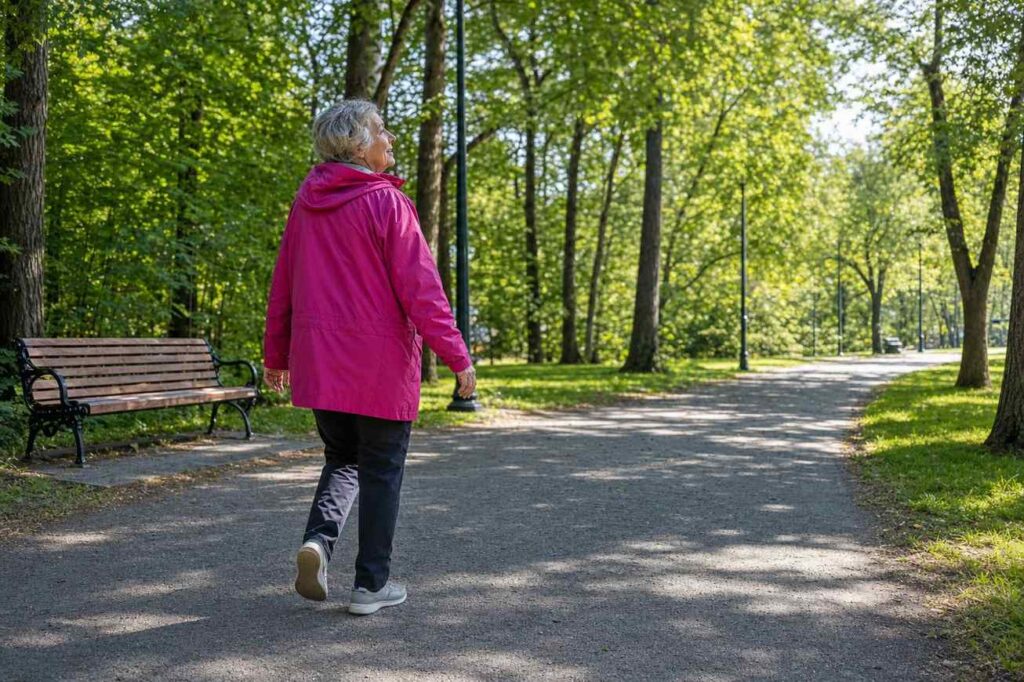
For a long time, the story about the aging brain went one way. Downhill, slowly, with the years.
That story turns out to be incomplete.
Your brain keeps responding to how you live, well into later life. And one of the things it responds to is surprisingly ordinary.
A regular walk.
A walking habit can change the aging brain in ways researchers can measure.
Not in a cure-everything way. The real story is quieter, and more useful, than that.
What the Research Actually Found
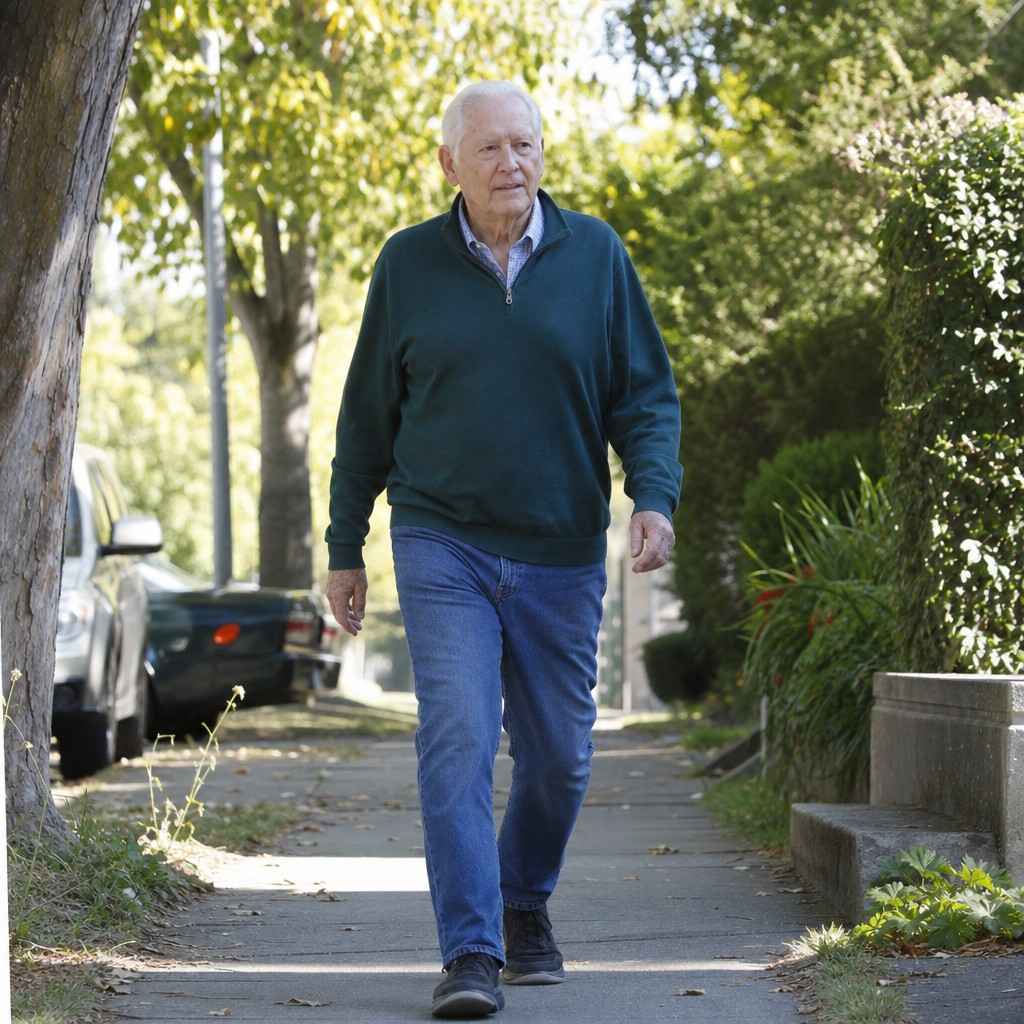
Some of the clearest evidence comes from a study that did something simple. It took inactive older adults and got them moving.
In a randomized controlled trial published in the journal PNAS, 120 older adults were split into two groups for a year. One group did moderate aerobic exercise three days a week, the kind of effort a brisk walk provides.
The other followed a gentle stretching routine.
Then the researchers measured their brains.
The active group’s hippocampus grew. The stretching group’s shrank.
The hippocampus is the part of the brain most tied to memory, and it normally loses a little volume each year in later life. The inactive group’s did exactly that.
The active group’s gained about 2%. The researchers described the change as effectively reversing the usual loss by one to two years.
A brain in your seventies is still listening to how you move.
One trial is not the whole story, and a result in a study is never a promise for any one person.
Reviewing the wider evidence on what actually protects the aging brain, the National Institute on Aging calls the case for physical activity “encouraging but inconclusive.” That is the honest frame to keep.
Why a Walk Reaches the Brain
None of this is magic. The reasons a walk reaches your head are physical and fairly well understood.
It is tempting to think the brain is sealed off from the rest of the body.
It is not.
When you walk, your heart sends more blood, and more oxygen, up to the brain. Movement also prompts the body to make more of a protein that helps brain cells survive, connect, and grow.
The takeaway is simpler than the biology:
- A walk pushes more blood and oxygen to the brain.
- It prompts the growth signals that keep brain cells healthy.
- It does for your head some of what it does for your heart.
What is good for your heart tends to be good for your brain. This is part of why walking, which many consider the best all-round exercise after 50, keeps showing up in the brain research too.
One daily habit, paying off in more than one place.
What It Means for Everyday Memory

For most of us, the question is not about brain scans. It is about the small daily frictions.
The word on the tip of your tongue. Walking into a room and forgetting why. The name that arrives ten seconds too late.
This is the part worth being precise about.
Walking is linked to slower memory decline, not protection from it.
The National Institute on Aging’s guidance on cognitive health and older adults lists sharper memory and thinking among the benefits of staying active, yet it chooses its words with care: physical activity may help reduce the risk of age-related decline.
Association is not the same as cause. People who walk regularly tend to be healthier in other ways too, and research cannot always separate the walk from the walker.
What the evidence does support is encouraging on its own:
- Regular activity is tied to better day-to-day focus and recall.
- It supports mood and sleep, which both shape how sharp you feel.
- Walking with company adds a social layer that solo exercise does not.
That social layer matters more than it sounds. Whether you head out alone or in company changes the experience, and there is a real case for both walking alone and with others depending on the day.
How Much Walking the Brain Wants
You do not need to train like an athlete for this.
It is natural to assume more is always better.
Here, regular beats intense.
The federal activity guidelines, which the National Institute on Aging echoes, point to about 150 minutes of moderate movement a week. That is roughly 30 minutes, five days a week, and walking counts toward all of it.
If that sounds like a lot, start smaller:
- Begin with what your week can hold, even ten minutes a day.
- Add no more than about 10% to your weekly time as you build up.
- Keep it regular, because consistency does more here than intensity.
The first walk needs no gym and no new shoes. If you are not sure how to begin, a plain guide to starting walking for fitness after 50 will take you from the front door outward.
From there it helps to know how many steps a day actually make a difference, so the target feels concrete instead of endless.
Gradual beats heroic. A 10% build protects your knees, and your motivation, better than a burst of enthusiasm that fades by February.
What Walking Can and Can’t Do
It would be easy to oversell this. Plenty of headlines do.
So here is the line to hold onto.
Walking supports a healthy brain. It does not guarantee one.
No walk prevents dementia, and no single habit decides how your mind ages. Genes, health conditions, sleep, hearing, and the company you keep all play a part, and some of it is simply outside anyone’s control.
What walking offers is a rare combination. It is free, it is gentle on the body, it helps your heart and your mood and your balance, and the same easy outing may quietly support your brain as well.
If your memory has changed in a way that worries you, that is a conversation for your doctor, not a reason to walk further. If changes in memory or thinking are new or sudden, see your doctor soon.
For everyone else, the takeaway is a kind one.
You are not too late, and your brain is not finished changing. The next ordinary walk, in the shoes already by your door, is still worth taking.