
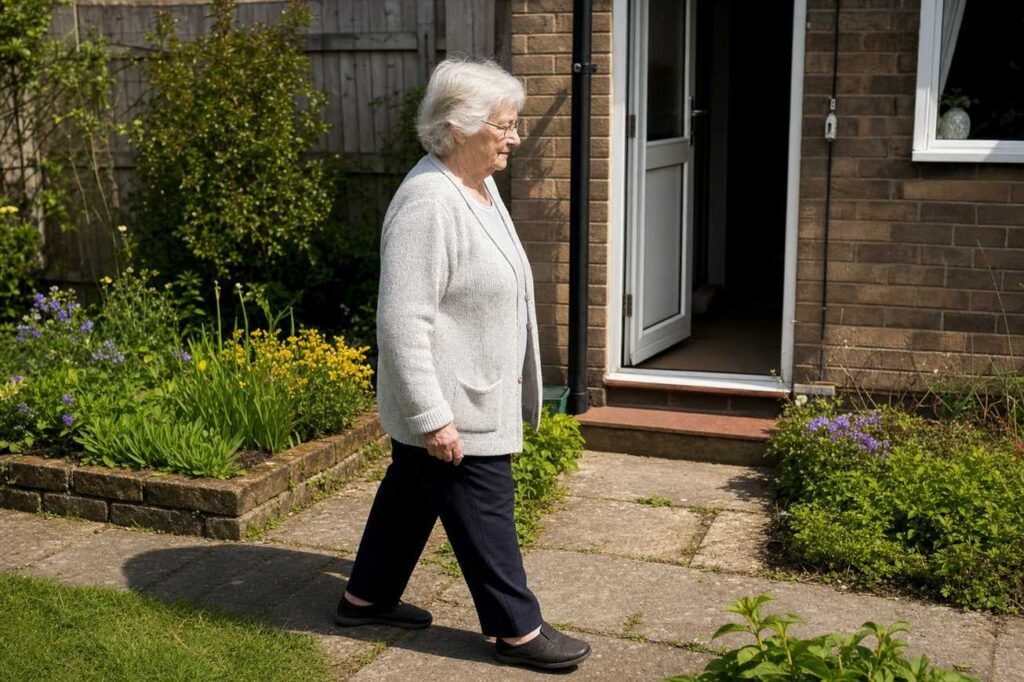
You walked this morning. Thirty good minutes, out the door and back.
So the rest of the day is covered. Desk, sofa, car, television. The walk bought you that.
That is what most of us quietly assume.
Research on sitting says the daily walk does not buy back the whole day. Scientists who study this even have a name for the pattern: the active couch potato.
It sounds like an insult. It is a description. Someone who genuinely exercises, then sits for nearly all the remaining hours. On an ordinary day after 50, that is most of us.
The hopeful part of this story arrives early. Here it is.
The fix is not more exercise. It is smaller than that.
Activity Has Two Dials, Not One
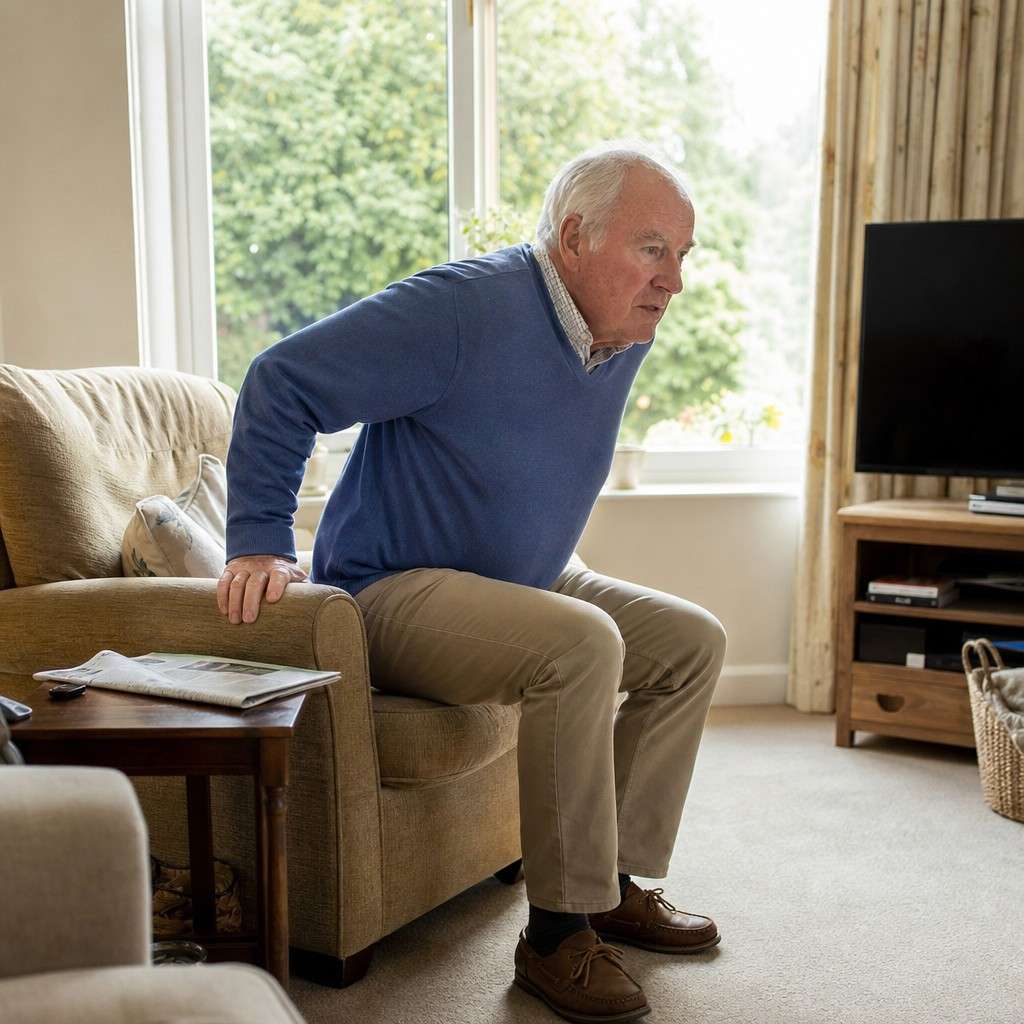
For decades, activity advice turned a single dial.
Move more.
Walk further, more often, a little faster. All of it still true, and walking remains the best all-round exercise after 50.
But the official guidance has changed shape.
The World Health Organization’s current global activity guidelines carry two instructions, not one. Move more, about 150 minutes of moderate activity a week.
And separately: limit the time you spend being sedentary. The WHO applies that second instruction to every age group.
Moving more and sitting less are two separate dials. Turning one does not turn the other.
You can hit your step goal by nine in the morning and still spend ten unbroken hours in a chair. The first dial is set well. The second is not.
That second dial is what this article is about.
What Long Sitting Does on Its Own
The evidence behind the second dial is not one splashy study. It is a steady pattern.
In one of the clearest examples, published in the Annals of Internal Medicine, researchers fitted nearly 8,000 American adults aged 45 and over with activity monitors. Then they followed them for about four years.
Two things predicted a higher risk of dying in that period. The total hours spent sitting, and something more surprising.
How long the sitting ran unbroken mattered on its own. People whose sitting piled up in long, uninterrupted stretches fared worse than people who broke it up more often.
The same hours of sitting are easier on the body in small pieces than in long blocks.
And what about the walk? A large analysis in The Lancet, pooling data from more than a million adults, asked exactly that.
Exercise did soften the risks tied to long sitting hours. But the people it fully protected were doing roughly an hour of moderate activity every day, far more than a standard morning walk.
One caveat belongs here, stated plainly.
These studies show associations, not proof of cause. People who sit less may differ in other ways too, and no study hands out personal guarantees.
The pattern is consistent enough, though, that the WHO now treats heavy sitting time as its own health concern for adults. Its guidance links high sedentary time with heart disease, type 2 diabetes, and earlier death.
Why the Walk Can’t Cancel the Chair

The arithmetic is the honest place to start.
Your walk is 30 minutes. Your sitting, on a typical day, can run 9 or 10 hours. One is a brief event. The other is the background state of the whole day.
A daily walk does real good. It is not an antidote to ten hours of stillness.
The reason sits in your legs.
The big muscles of your thighs and hips are your body’s main users of blood sugar and blood fats. When you sit, those muscles go quiet.
Keep them quiet for hours and blood sugar handling drifts, blood moves more slowly through the legs, and stiffness settles in.
A walk switches the leg muscles on, beautifully, for half an hour. A long afternoon in the chair switches them off again.
The walk was never designed to run the other 23 and a half hours. Only breaking up the sitting reaches those.
The Fix Is Almost Too Small
Here is where this stops being one more worry and becomes the easiest advice on this site.
You do not need a second walk. You need to interrupt the sitting.
Two small trials show how little it takes.
In a Diabetes Care trial, overweight adults aged 45 to 65 broke up their sitting with two minutes of easy walking every 20 minutes.
Their blood sugar rise after a sugary drink fell by roughly a quarter, compared with sitting straight through. Two minutes. At a stroll.
A second trial in the same journal tested adults aged 60 and over. Three 15-minute walks after meals improved blood sugar control across the whole day.
For taming the after-dinner spike, the short post-meal walks worked better than one sustained 45-minute morning walk.
Timing beat duration. A little movement after eating did what one bigger walk could not.
In everyday life, the practice looks like this:
-
Stand up and move for a minute or two after every half hour or so of sitting. A stroll to the kitchen counts.
-
Take a short lap of the garden, the hallway, or the block after meals. Ten or fifteen minutes is plenty.
-
Stand and stretch through the ads, or between episodes.
-
Drink water through the day. The refills, and the trips they cause, are movement breaks in disguise.
None of it needs sports clothes, equipment, or willpower. If you also want to turn the first dial, a gentle four-week walking plan builds the walking habit while these breaks look after the sitting.
Keep the Walk. Add the Breaks.
Nothing here demotes your daily walk.
The walk is still the engine. It carries your heart, your mood, your stamina, and what a daily walk does for the aging brain.
If you like a concrete target, it helps to know how many steps a day actually make a difference.
The breaks are not a second workout. They are brief resets through the day.
Keep the walk for fitness. Add small breaks to cover the hours in between.
If standing up often is hard for you because of pain, dizziness, or a recent surgery, ask your doctor how to shape these breaks.
For everyone else, the bar is wonderfully low. Safe and sustainable beats fast. The goal is still walking, and still rising easily from your chair, next year.
The next time you stand up for no reason at all, that is not restlessness.
That is the second dial turning.