
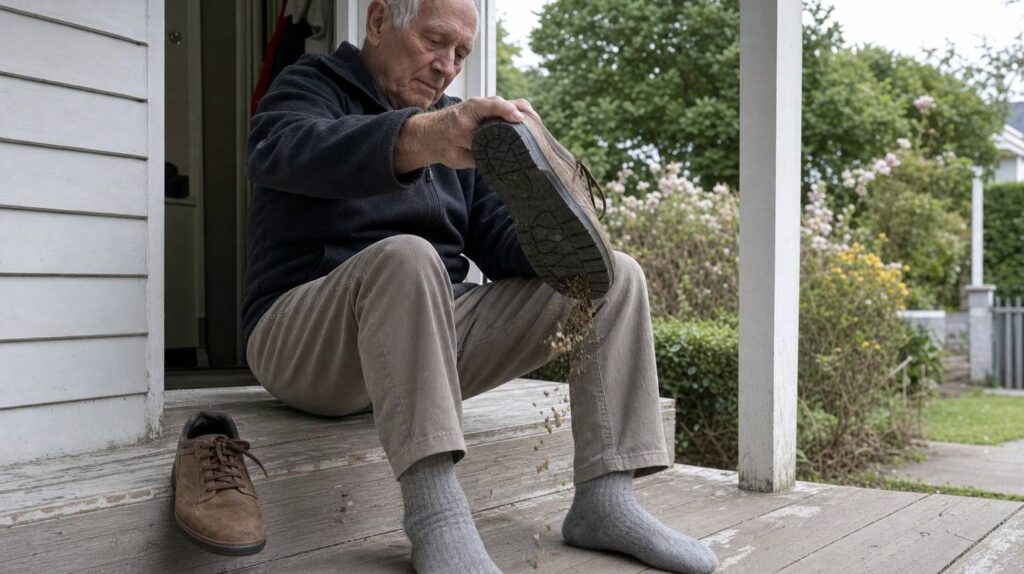
For years, the standard advice for anyone with numb or tingling feet was simple. Stay off them.
Exercise that puts weight on the feet seemed too risky when the feet doing the work could not feel a blister forming underneath.
Guidelines now say walking more is likely safe for people at low or moderate risk of a foot ulcer, not something to avoid. That is a real reversal, not a minor update.
It sounds like the whole story.
It is not quite that simple.
The fear that kept people off their feet
The old caution was not paranoia.
It came from a real mechanism.
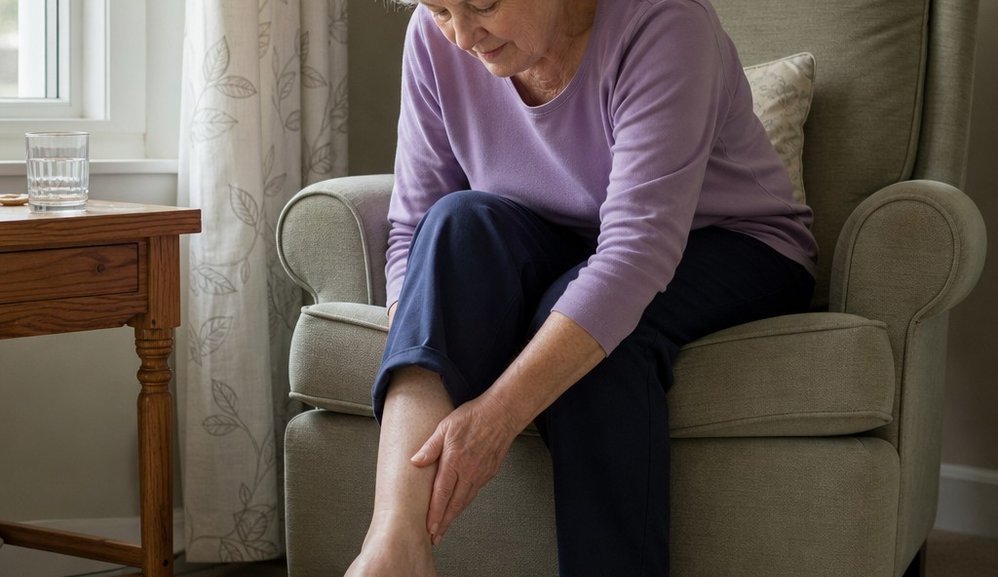
A foot that cannot feel pain will not warn you about a rubbing shoe, a small stone, or a blister building step by step.
Left alone, that kind of unnoticed damage can turn into an open sore that heals slowly and can lead to serious complications.
A blister you cannot feel can turn into an open sore before you ever notice it.
So for years, walking was quietly discouraged for anyone with that kind of nerve damage. The caution came from worry, not from proof either way.
Researchers have identified more than 100 distinct types of peripheral neuropathy, each with its own pattern. Diabetes causes many cases, but nerve damage from other causes can look and feel much the same underfoot.
What the guideline now recommends
The clearest reversal comes from the International Working Group on the Diabetic Foot, whose prevention guideline shapes foot care worldwide.
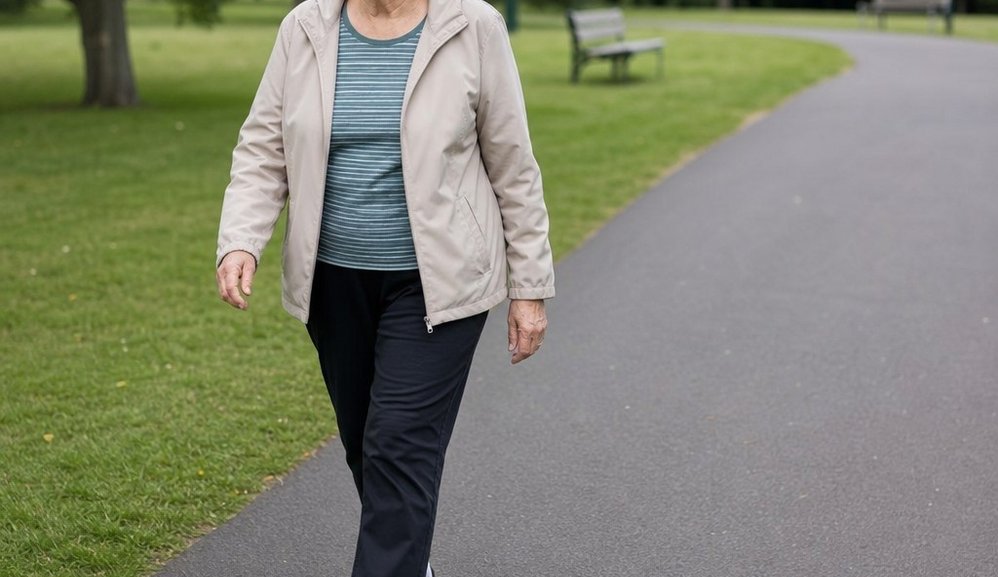
Its 2023 update changed the message for people at low or moderate risk of a foot ulcer. For that group, adding an extra 1000 steps a day of walking is likely safe.
The advice comes with conditions attached. Wear appropriate footwear during activity, and check your skin often for the earliest signs of trouble.
Progress slowly, adding no more than about 10 percent more walking each week until you reach that extra 1000 steps. Gradual still beats heroic.
It is the same principle whether the new load on the body is a hip replacement or a damaged nerve.
This shift applies specifically to people whose risk is low or moderate, never to everyone with nerve damage.
The evidence is thinner than the headline suggests
One thing most articles about this topic leave out:
That recommendation rests on just 4 trials, and the guideline says plainly that none of them was designed to detect a difference in ulcer rates.
The certainty behind that recommendation is rated low, and the recommendation itself is labeled conditional, not settled.
The fear was never as certain as it sounded, and the new advice is not as certain as it sounds now.
That does not mean the earlier caution was simply wrong.
Nothing here proves the old fear baseless, only that it was never backed by strong evidence either.
The fear was never as certain as it sounded, and the new advice is not as certain as it sounds now. What has genuinely changed is the balance of caution, not a guarantee of safety.
The precautions are where the safety lives
The guideline’s real safety net is not the step count. It is the list of habits that go with it.
- Wear real shoes and socks, indoors and outside, never bare feet or thin slippers.
- Check inside each shoe before you put it on, feeling for a pebble, a seam, or anything that has worked its way in.
- Wash your feet daily, dry carefully between the toes, and keep the skin moisturized.
- Cut toenails straight across, not curved into the corners.
If you are unsure what to wear for walking with feet like these, it is worth a look before your next walk. The same goes for socks built to reduce blister risk.
None of these habits take more than a minute. None of them depend on feeling pain, because that is exactly the sense you may not have.
Start with what you have. The first walk needs no purchases.
Test bathwater with your elbow or a thermometer, aiming for 90 to 95 degrees. Feet that cannot feel heat cannot warn you when water is too hot.
The caution about balance is a separate one
There is one real caution buried in the general activity guidance, and it is worth pulling apart from the walking question.
Federal diabetes guidance also aims for about 150 minutes of moderate activity a week. That works out to roughly 30 minutes on most days, and you do not have to do it all at once.
The same guidance notes that some balance heavy activities can be unsafe for people with nerve damage, apart from ordinary walking.
Walking on a flat, familiar surface is a different thing from balancing on an uneven one. The caution is really about the second, not the first.
That is the same caution behind staying steady on uneven trails, worth reading before you trade a sidewalk for a rooted path.
If what actually slows you down is pain rather than numbness, that is a different and usually more fixable problem. Start with the more common causes of foot pain when walking instead.
When to see someone who can examine your feet
Some things belong to a clinician, not an article, and it is worth being plain about which.
- An open sore or ulcer anywhere on the foot, however small it looks.
- Numbness that is new or spreading, not a pattern you already know well.
- Not being sure whether you can actually feel your feet at all.
That last one matters most. A foot that has lost protective sensation sits in a different risk category, and a proper foot exam is built to catch exactly that.
This article can describe the evidence. It cannot look at your feet. A doctor or podiatrist can, and for a foot that has lost some feeling, that exam is why it is worth asking for one.
What to check before you lace up tomorrow
None of this requires a plan.
It requires about thirty seconds before your shoes go on.
Run your hand around the inside of each shoe. Feel for a seam that has come loose, a pebble, anything that should not be there.
A hand inside the shoe catches what your foot cannot warn you about.
Then look, not just feel, at the sole of each foot. A hand mirror on the floor works fine if bending down is hard.
That is the habit. Not a program, not a countdown. A hand inside a shoe and a look at a sole, done before either foot ever takes your weight.
A note before you go: this is general information rather than medical advice. If you have a condition that affects your feet, your balance, or your heart, check with your doctor about what pace and distance make sense for you.