

A tracker works for one simple reason: memory is a poor record keeper. Ask yourself how Wednesday’s walk felt and by Friday you will get a shrug, not a fact.
A written row remembers what your memory smooths over.
That is the whole case for tracking. Not accountability to anyone else. Just a plain, honest record you can look back on without guessing.
This page goes with the 4-week walking plan for beginners over 50. The tracker below is built to match that plan’s four weeks exactly, so it works best if you are already following it or about to start.
| Done | Date | Minutes | How it felt | Notes |
|---|---|---|---|---|
| Done | Date | Minutes | How it felt | Notes |
|---|---|---|---|---|
| Done | Date | Minutes | How it felt | Notes |
|---|---|---|---|---|
| Done | Date | Minutes | How it felt | Notes |
|---|---|---|---|---|
Seventeen rows, one for every walk in the plan. Stayed on a week longer than planned? Use the next week’s rows and keep going.
How to Use the Tracker
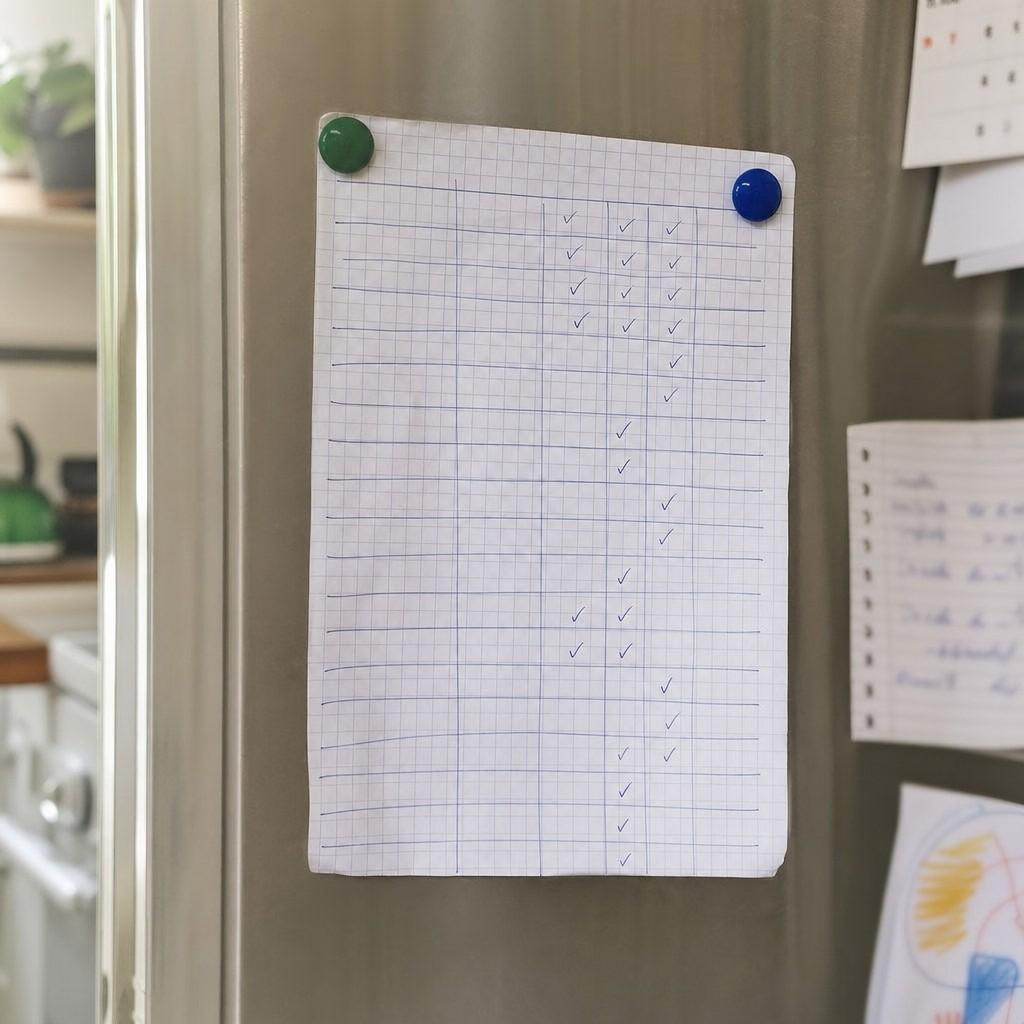
The tracker has one row for every walk across all four weeks. Print it, or keep it on your phone if paper is not your thing.
If you have not started walking yet, how to start walking for fitness after 50 is the better place to begin. Come back here once you are underway.
Every week of the tracker lines up with a week of the plan, so you always know which pace and duration you are aiming for.
Fill in a row right after you finish walking, while the details are still fresh. Waiting until bedtime usually means guessing at what actually happened.
If you are following the plan on paper, tape the tracker somewhere you pass every day, like the fridge or a bathroom mirror.
If everything else you do lives on your phone, a photo of the printed sheet in your notes app works just as well. What matters is that you actually open it after each walk, not where it lives.
What to Write in Each Column
Three columns matter most.
- Minutes is the easy one: how long you walked. Round to the nearest five minutes if that is simpler.
- Notes is for anything worth remembering: the weather, a new route, a friend who joined you, sore ankles the next morning. A few words is plenty.
- How it felt is the column people skip, and it is the one that matters most. Do not just write “good” or “tired.” Write what your body actually told you: legs felt heavy the last five minutes, breathing stayed easy the whole way, a knee talked to you on the hills. That kind of detail is your early warning system. One rough walk means little. Three rows in a row saying the same thing means something.
Pain that is sharp, new, or one-sided is a stop sign, not something to push through, no matter what the rest of the row says. The tracker cannot diagnose anything.
If your notes keep describing that kind of pain, that is worth a call to your doctor, not another week of logging and hoping it settles on its own.
Reading Your Own Tracker

One week of rows will not tell you much. Two or three weeks side by side tell you plenty.
Read back over how you felt across a stretch of walks, not just the last one. You are looking for a pattern, not a single bad day.
Feeling steady and energized across several walks in a row is the plan’s own signal that you are ready to move up to the next week.
Feeling wiped out, sore, or dreading the next walk across several walks is the signal to stay right where you are.
Your tracker is answering the exact question the plan already asks: are you finishing walks feeling good, or feeling wiped out?
The rows just make the honest answer easier to see than trying to recall it from memory a week later.
If You Miss a Walk
You will miss a walk at some point. Everyone does.
A missed walk is not a broken streak. It is one blank row on a page that still has plenty of other rows.
Leave it blank, or jot a one-word reason, and move on to the next scheduled walk. There is no penalty box to fill in and no need to double up the next day to make up for lost time.
An unplanned rest day works the same way an intended one does.
Your legs do not know the difference between a rest day you chose and one that showed up because Tuesday got busy.
The tracker is not a report card. Nobody grades it. It exists so you can see your own effort clearly, missed walks included, without turning a busy week into a reason to quit.
Print It or Keep It on Your Phone
However you use it, the goal is the same: a plain record that outlasts your memory.
If paper works for you, print it and put it somewhere you will actually see it every day. If you would rather skip printing, a screenshot in your phone’s photos folder works just as well.
Checking one small box after each walk adds up faster than it feels like it should.
And if staying consistent starts to tip into overdoing it, these signs you’re walking too much are worth a read.
To round out the walking, this short strength routine for walkers over 50 pairs well with the plan.