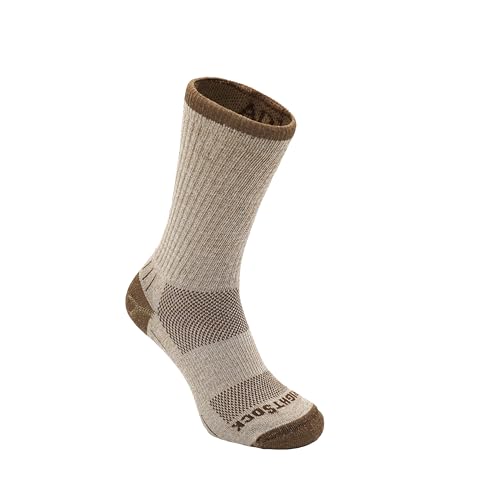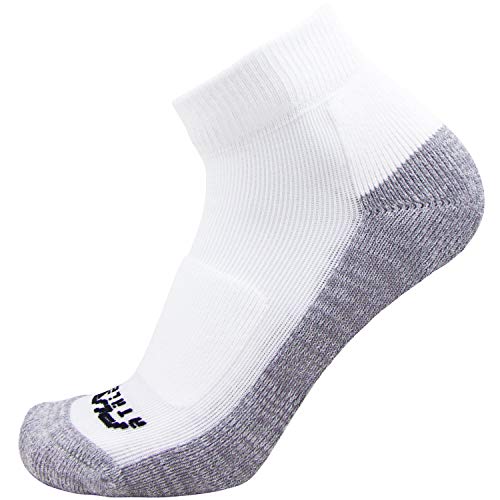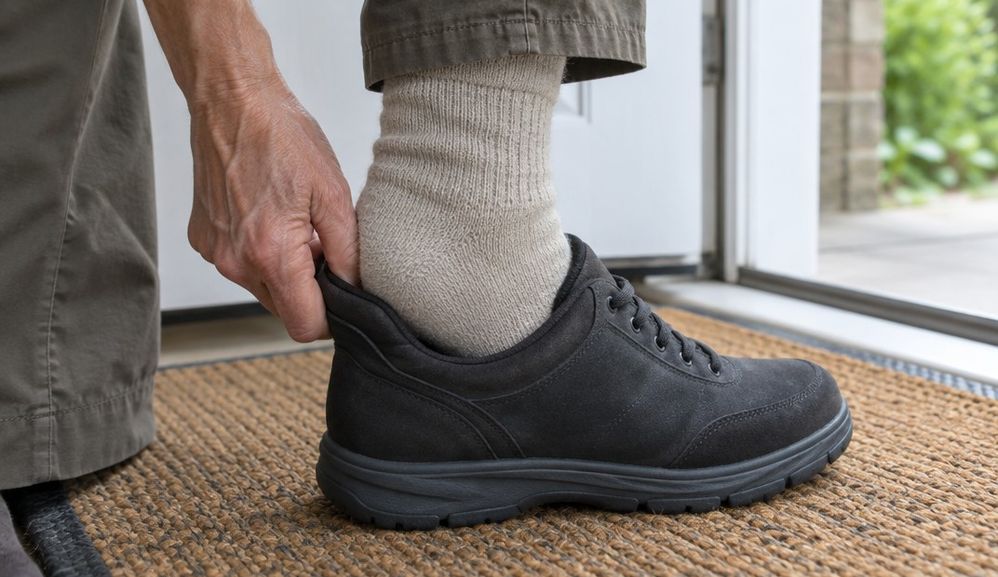
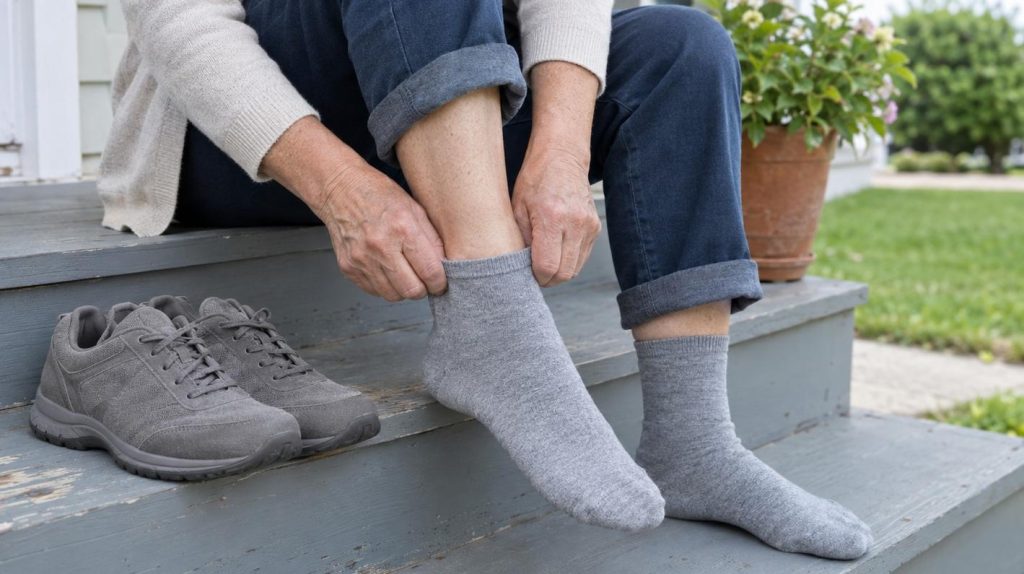
The right walking socks prevent more foot trouble than almost any other piece of gear, and the wrong pair can end a walk early with a hot spot. Feet change after 50. Skin gets thinner, circulation slows, and a seam that never bothered you before can rub a sore patch by your second mile. A good pair fixes most of that, and it does not cost much. Below are five we would genuinely consider, each chosen for a different need: friction and blisters, cushioning for tired feet, a thin liner for damp weather, extra length for swelling, and extra width for feet that puff up as the day goes on.
Key Takeaways
Dr. Scholl’s Women’s Blister Defense Crew Socks if blisters and friction are your main worry on regular walks.
Pure Athlete Padded Walking Socks if your feet feel tired and sore and you want more cushioning underfoot.
Ultrathin Blister Prevention Ankle Socks if you walk in damp conditions and want a thin friction barrier you can reuse.
Orthopedic Medical Tube Socks if you manage edema, diabetic neuropathy, or post-surgical swelling and need the extra length.
FORTIVO Extra Wide Non-Slip Socks if your feet swell and ordinary socks leave a tight band around the ankle.
| Dr. Scholl’s Women’s Blister Defense Crew Socks | ![]() | Blister Prevention Leader | Blister Prevention: Integrated Blister Guard® Green yarn technology | Cushioning Level: Softer cushion | Non-Binding Design: Non-binding top | VIEW LATEST PRICE | Read Our Analysis |
| Pure Athlete Padded Walking Socks Thick Cushion | ![]() | Maximum Cushioning Comfort | Blister Prevention: Extra-thick padded heel and toe cushioning | Cushioning Level: Extra-thick padded heel, toe, and top | Non-Binding Design: Thick ankle design | VIEW LATEST PRICE | Read Our Analysis |
| Ultrathin Blister Prevention Ankle Socks | ![]() | Innovative Blister Solution | Blister Prevention: Friction barrier acts like second skin | Cushioning Level: Ultrathin design | Non-Binding Design: Not specified | VIEW LATEST PRICE | Read Our Analysis |
| Orthopedic Medical Tube Socks for Walking Boots (2-Pair) | ![]() | Medical-Grade Support | Blister Prevention: Extra cushioned foot design | Cushioning Level: Extra cushioned foot | Non-Binding Design: Non-binding top with loose fit | VIEW LATEST PRICE | Read Our Analysis |
| FORTIVO Extra Wide Non-Slip Socks for Swollen Feet | ![]() | Swollen Feet Specialist | Blister Prevention: Comfortable fit to alleviate pain | Cushioning Level: Standard cushioning with flexibility | Non-Binding Design: Extra wide fit design | VIEW LATEST PRICE | Read Our Analysis |
More Details on Our Top Picks
Dr. Scholl’s Women’s Blister Defense Crew Socks
These are a sensible first choice if blisters are the problem you keep running into. The blister-guard yarn is woven to cut friction at the heel and toe, the two spots that flare up first on a longer walk. The cushioning is soft rather than thick, so they fit inside most walking shoes without making them feel tight. The non-binding top is the detail that matters most after 50, since it holds the sock up without leaving a pressure ring around the calf.
- Blister Prevention:Integrated Blister Guard® Green yarn technology
- Cushioning Level:Softer cushion
- Non-Binding Design:Non-binding top
- Moisture Management:Moisture wicking
- Material Composition:Not specified
- Sizing Options:Multiple shoe sizes
- Additional Feature:Integrated Blister Guard® Green yarn
- Additional Feature:Smooth non-irritating toe seam
- Additional Feature:Multiple color choices available
Pure Athlete Padded Walking Socks Thick Cushion
If your feet are simply tired and sore by the end of a walk, the extra padding here does the most good. The thick cushioning under the heel and ball of the foot absorbs some of the repeated impact that wears you down over a couple of miles. The cotton blend feels comfortable and breaks in quickly. These suit daily walkers who want comfort over a thin, technical feel, and they pair well with a roomy walking shoe.
- Blister Prevention:Extra-thick padded heel and toe cushioning
- Cushioning Level:Extra-thick padded heel, toe, and top
- Non-Binding Design:Thick ankle design
- Moisture Management:Anti-odor technology
- Material Composition:59% cotton, 19% polyester, 19% nylon, 2% spandex, 1% Lycra
- Sizing Options:Small-Medium
- Additional Feature:Light compression arch band
- Additional Feature:Anti-odor technology integrated
- Additional Feature:Premium cotton yarn construction
Ultrathin Blister Prevention Ankle Socks
This is the odd one out, and useful for a specific reason. It is a thin liner you wear under your regular sock to add a second surface that takes the rubbing instead of your skin. That makes it handy in damp weather or on days when one particular spot always blisters. It is reusable, so it works out cheaper over time than sticking on blister plasters. If you have never tried a liner sock, this is a low-cost way to see whether the two-layer approach suits your feet.
- Blister Prevention:Friction barrier acts like second skin
- Cushioning Level:Ultrathin design
- Non-Binding Design:Not specified
- Moisture Management:Performs wet or dry
- Material Composition:Not specified
- Sizing Options:One size up recommended (runs small)
- Additional Feature:Washable and reusable design
- Additional Feature:Reversible black/tan exterior
- Additional Feature:Wear barefoot or layered
Orthopedic Medical Tube Socks for Walking Boots (2-Pair)
These are made for a real medical need rather than general comfort. The 21-inch length and gentle stretch suit anyone managing edema, diabetic neuropathy, or swelling after surgery, where a normal sock can dig in. The wider, non-restrictive fit is the point, so they go on without forcing and stay up without squeezing. If a nurse or doctor has told you to watch for tight elastic around swollen legs, this is the kind of sock they mean. Check with them first if you are being treated for a circulation condition.
- Blister Prevention:Extra cushioned foot design
- Cushioning Level:Extra cushioned foot
- Non-Binding Design:Non-binding top with loose fit
- Moisture Management:Moisture-wicking fabric keeps foot dry
- Material Composition:Not specified
- Sizing Options:Unisex up to size 13-15
- Additional Feature:21-inch calf coverage length
- Additional Feature:Compatible with orthopedic air walkers
- Additional Feature:Swollen edema foot accommodation
FORTIVO Extra Wide Non-Slip Socks for Swollen Feet
If ordinary socks leave a dented ring around your ankle by lunchtime, the extra width here is what you are after. They fit a wider size range and stretch to take swelling as it builds through the day, without the grip loosening. The non-slip sole adds a little safety on smooth indoor floors, which matters if you do some of your walking around the house. A practical pick for swollen or sensitive feet that other socks pinch.
- Blister Prevention:Comfortable fit to alleviate pain
- Cushioning Level:Standard cushioning with flexibility
- Non-Binding Design:Extra wide fit design
- Moisture Management:Enhances breathability and airflow
- Material Composition:100% cotton
- Sizing Options:Fits sizes 9-12 and 13-15
- Additional Feature:Non-slip gripper technology
- Additional Feature:Made in USA origin
- Additional Feature:Promotes healthy blood circulation
Factors to Consider When Choosing Walking Socks for Seniors (Blister Prevention)

You do not need to weigh every feature below. Pick the one or two that match your feet and let the rest go. Here is what actually changes how a sock feels over a couple of miles.
Moisture-Wicking Fabric Technology
Look for moisture-wicking fabric, usually a merino wool or synthetic blend. It pulls sweat away from the skin so your feet stay drier, and dry skin blisters far less than damp skin. Plain cotton holds moisture against the foot, which is the opposite of what you want on a longer walk.
Cushioning And Padding Levels
Extra padding under the heel and ball of the foot softens the repeated impact that tires feet out. More is not always better, since very thick socks can make a shoe fit too tightly. Aim for cushioning you can feel without cramping your toes.
Non-Binding Top Design
A non-binding or low-elastic top is one of the most useful features after 50. It holds the sock up without leaving a tight ring around the calf, which protects circulation and avoids pressure marks on thinner skin.
Material Composition Quality
Merino wool, cotton blends, and good synthetics all work. What matters is that the material wicks moisture and holds up to repeated washing without going thin. Seamless construction helps too, since internal seams are a common hidden cause of rubbing.
Arch Support Features
A reinforced arch band gives a little support and gentle compression, which can ease foot fatigue and help circulation on longer walks. It should feel snug, not tight.
Seamless Toe Construction
Seamless toe socks remove the thick seam that normally sits across the toes, a frequent spot for irritation and blisters. If your toes tend to rub, this one feature is worth prioritizing.
Size And Fit Considerations
Check the size against the maker’s guide rather than assuming your shoe size. A sock that is too loose slides and creates friction; one that is too tight restricts swelling. For feet that puff up during the day, a stretchy, accommodating fit beats a precise one.
Frequently Asked Questions
How Often Should Seniors Replace Their Walking Socks for Optimal Foot Health?
Every six to twelve months for most people, and sooner if you notice thinning fabric, flattened cushioning, or elastic that no longer holds the sock up. Worn socks lose the very features that prevent blisters.
Are Bamboo or Merino Wool Socks Better for Seniors With Sensitive Skin?
Both work well, and it comes down to your skin. Merino wool regulates temperature and resists odor; bamboo is very soft and moisture-wicking, which suits sensitive or easily irritated skin. If one fabric has bothered you before, try the other.
Can Compression Walking Socks Help Seniors With Circulation or Swelling Issues?
They can. Gentle compression supports circulation and helps with mild swelling, which is why they suit many older walkers. If you are being treated for a circulation condition or diabetes, check the compression level with your doctor before wearing them regularly.
What Is the Ideal Sock Height for Different Types of Walking Activities?
Ankle-height socks are fine for casual strolls, while crew length gives more coverage on rougher ground or easy trails. If you walk in low shoes, a taller sock also keeps grit out.
Do Seniors Need Different Socks for Indoor Versus Outdoor Walking?
Often, yes. Outdoor walking usually calls for more cushioning and moisture-wicking, while indoor walking does better with a thinner sock and a non-slip sole for safety on smooth floors.
Conclusion
The right socks quietly prevent a lot of foot trouble, from blisters to the soreness that makes you cut a walk short. Match the pair to the problem you actually have rather than buying the most padded or most expensive option. If friction is your issue, start with a blister-guard or liner sock; if swelling is, look to the wider, non-binding pairs.
Replace your socks every six months or so, sooner if the cushioning has flattened or the elastic has gone. And if you are managing diabetes, neuropathy, or a circulation problem, check any compression or medical-length sock with your doctor first. This is general information, not medical advice.