
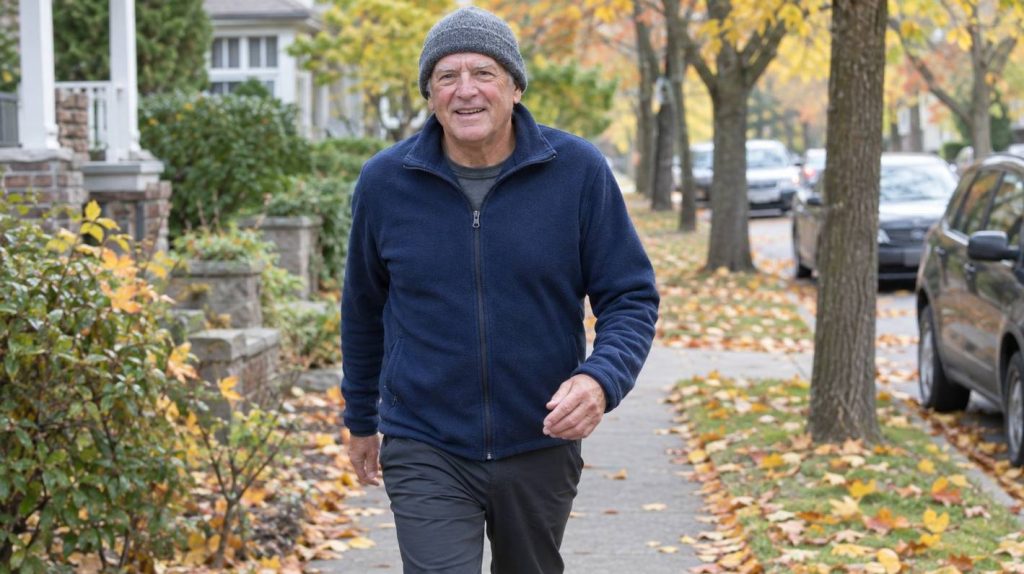
Probably, by a modest amount.
In a review of 73 trials, regular walking lowered the top blood pressure number by about 4 mmHg on average. The bottom number fell by about 2.
Those are millimeters of mercury, the unit blood pressure is measured in. They are averages across many people, not a figure anyone can promise you.
This is general information, not medical advice. Your own doctor knows what your numbers mean for you.
What the reviews found
The largest check comes from Cochrane, a global network of health researchers that reviews and combines trial results. Its 2021 review pooled 73 trials with 5,763 people from 22 countries.
The walkers were aged 16 to 84. About half were over 60, and they had various health conditions.
- Top number (systolic): down 4.11 mmHg on average. The likely range was 3.01 to 5.22 mmHg lower, and the reviewers rated their confidence as moderate.
- Bottom number (diastolic): down 1.79 mmHg, with a likely range of 1.07 to 2.51 lower. Their confidence here was low.
- Walkers over 60: the top number fell 4.30 mmHg, again with low confidence.
An earlier review by Murtagh and colleagues, in 2015, pooled 32 trials of adults who were inactive at the start. The average drops were 3.58 mmHg on the top number and 1.54 on the bottom.
Both reviews land near a 4 mmHg drop in the top number.
The Cochrane reviewers also note that many trials had weaknesses in how people were assigned to groups.
The 2018 Physical Activity Guidelines Advisory Committee, a federal panel of scientists that reviewed the exercise research for the US guidelines, looked wider than walking.
It graded the evidence that physical activity lowers blood pressure in adults with high blood pressure as strong.
Across 14 pooled reviews, the reductions ranged from 5 to 17 mmHg on the top number and 2 to 10 on the bottom. Those figures cover every kind of activity, so they are not a walking promise.
How much walking, and how brisk
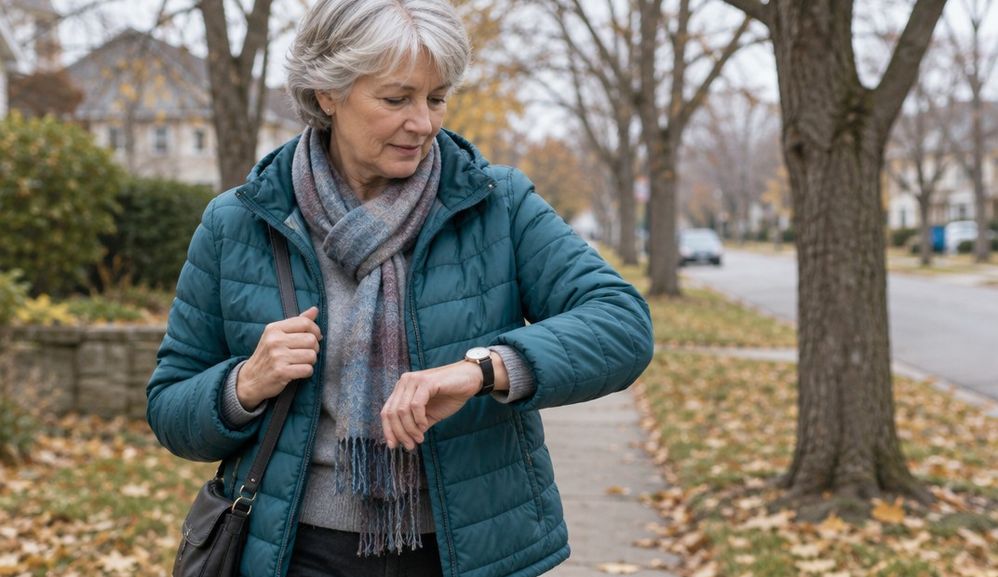
In the Cochrane trials, the average walker did 153 minutes a week, mostly at moderate effort. The average program ran 15 weeks.
The review’s summary points to moderate-intensity walking three to five times a week, for 20 to 40 minutes at a time. It adds a weekly total of 150 minutes, kept up for about three months.
The Physical Activity Guidelines for Americans, the federal government’s exercise advice, set the same floor. Adults should do 150 to 300 minutes a week of moderate activity, preferably spread through the week.
Moderate effort is brisk walking, which the guidelines put at 2.5 to 4 mph.
Without a watch, use the talk test: if you can talk but not sing, the pace is moderate.
If 150 minutes is out of reach today, the guidelines add that some activity is better than none.
How long before a change shows
Some of the effect comes quickly. The guidelines say a single session of moderate activity can lower blood pressure on the day it is done.
A lasting drop takes longer. The same document says sustained reduction in blood pressure needs a few weeks or months of regular activity.
The trials fit that. The Cochrane programs averaged 15 weeks. In the committee’s review of adults with high blood pressure, programs of 4 to 16 weeks were the most common.
Give a walking plan about three months before you judge it.
None of the sources says when one person’s readings will move.
A 12-week plan, with the numbers to watch
The weekly goal comes from the sources: 150 minutes of moderate walking, in sessions of 20 to 40 minutes. The build-up below is this site’s suggestion, not a schedule any trial tested.
- Weeks 1 to 4: three walks a week of 15 minutes at an easy pace, 45 minutes in all.
- Weeks 5 to 8: four walks of 25 minutes, 100 minutes in all, picking up to a brisk pace for part of each.
- Weeks 9 to 12: five walks of 30 minutes, 150 minutes in all, mostly brisk.
A 15-minute walk fits easily after dinner.
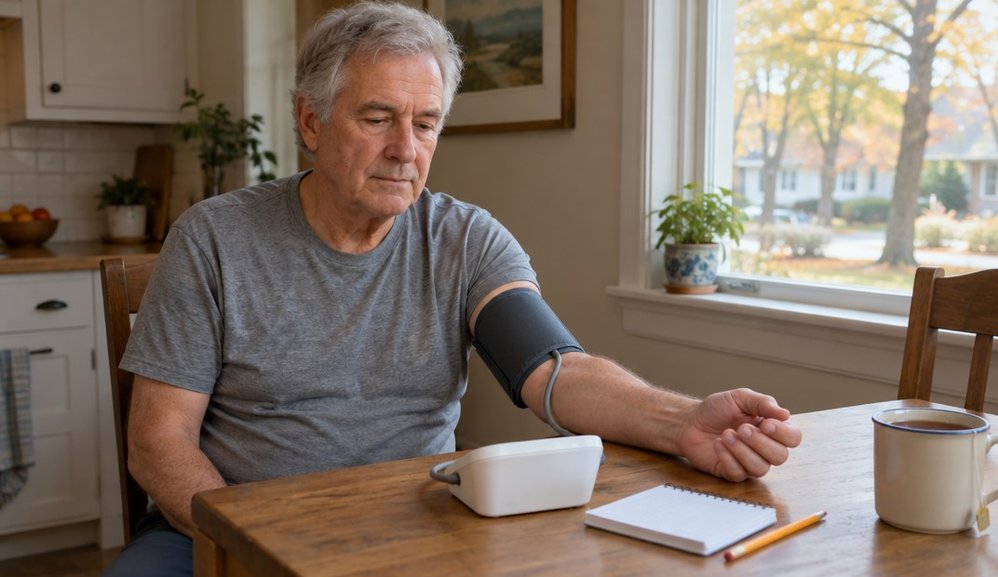
Write down three numbers: minutes walked each week, whether you can still talk but not sing, and your home blood pressure.
The American Heart Association, a Dallas-based US health organization that funds research and shares health information, recommends an automatic upper-arm cuff. It says to ask a health professional how often to measure.
Its advice for each reading:
- Sit with your back supported and your feet flat, and rest quietly for five minutes.
- Take two readings one minute apart, at the same time every day.
- Avoid exercise for 30 minutes before a reading.
When walking is not enough on its own
The Association gives two lines to know:
- 130 over 80 or higher, consistently: hypertension, the medical term for high blood pressure. It advises working with a health care professional.
- Above 180 over 120: a hypertensive crisis. Seek medical attention immediately.
For mildly or moderately raised blood pressure, an American Heart Association scientific statement names lifestyle changes alone as the first treatment. Physical activity is among them. A doctor decides whether that fits you.
An internal medicine physician quoted in a 2025 American Heart Association release adds that for many people lifestyle changes may not be enough. Medication may be required.
Walking is not a substitute for medicine your doctor has prescribed. Do not stop it or change the dose on your own.
Few harms showed up in the Cochrane trials. Only 21 of the 73 reported adverse events, eight in all, and five of those were knee injuries.
Two things to raise with your doctor:
- Before week 1, whether a chronic condition you have changes how you can be active safely. The guidelines say older adults with one should find out.
- Any joint pain that is sharp or new. Stop walking and ask.
Bring your written readings, or the monitor if it stores them, to your next appointment. Leave any change to your medicine to your doctor.