
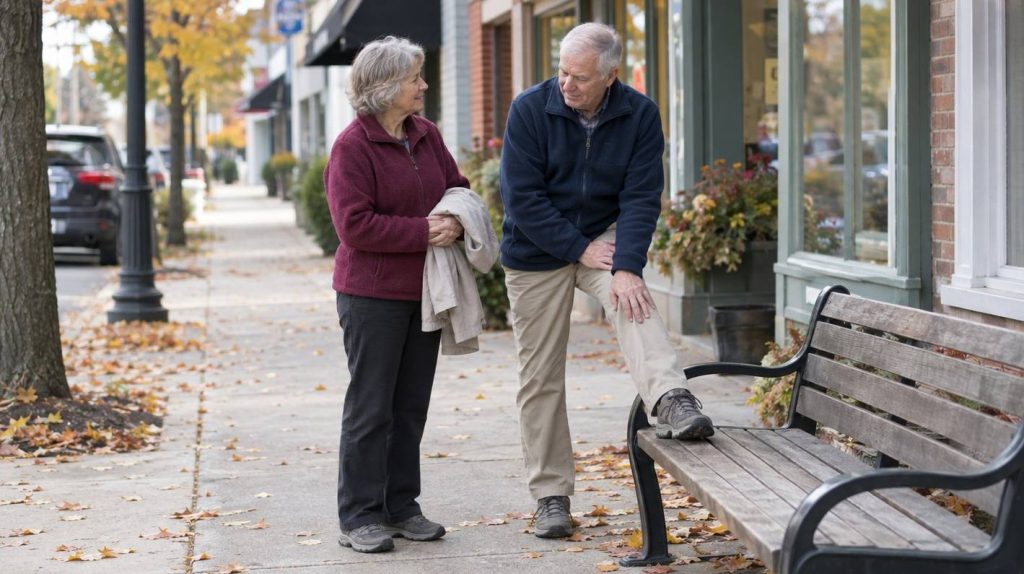
Watch for one pattern: calf pain that comes on while you walk and goes away after several minutes of rest.
That ache is the one worth mentioning to your doctor. Many calf aches are something simpler, like a tired or strained muscle.
This is information, not medical advice. Your doctor can examine your legs, which an article cannot.
What the pain does, and what it usually means
Use this table as a rough guide, not a diagnosis.
A swollen, warm, red, tender calf is the one row that calls for a provider right away.
| What the pain does | Likely cause | What to do |
|---|---|---|
| Aches while walking, eases after several minutes of rest | Poor blood flow (claudication) | Tell your doctor |
| Tight, sudden clench, often after a walk | Muscle cramp | Stretch, gently massage |
| Sore after a longer or harder walk | Strained muscle or tendon | Rest and ice |
| Swollen, warm, red, tender calf | Possible clot | Call a provider right away |
The pattern that matters most at this age
The medical name is claudication. The National Heart, Lung, and Blood Institute (NHLBI) is the federal institute that studies heart, lung and blood diseases.
NHLBI describes claudication as pain, aching, heaviness or cramping that comes when walking or climbing stairs and goes away after rest.
It is often felt in the calf, and it is the most common symptom of peripheral artery disease (PAD).
NHLBI says most people in the United States who have PAD are age 65 or older. The condition becomes more common with age.
Other signs can come with it:
- A foot that feels colder than the other
- Sores on the toes, feet or legs that heal slowly or not at all
- Leg weakness or numbness
Simpler causes of a sore calf
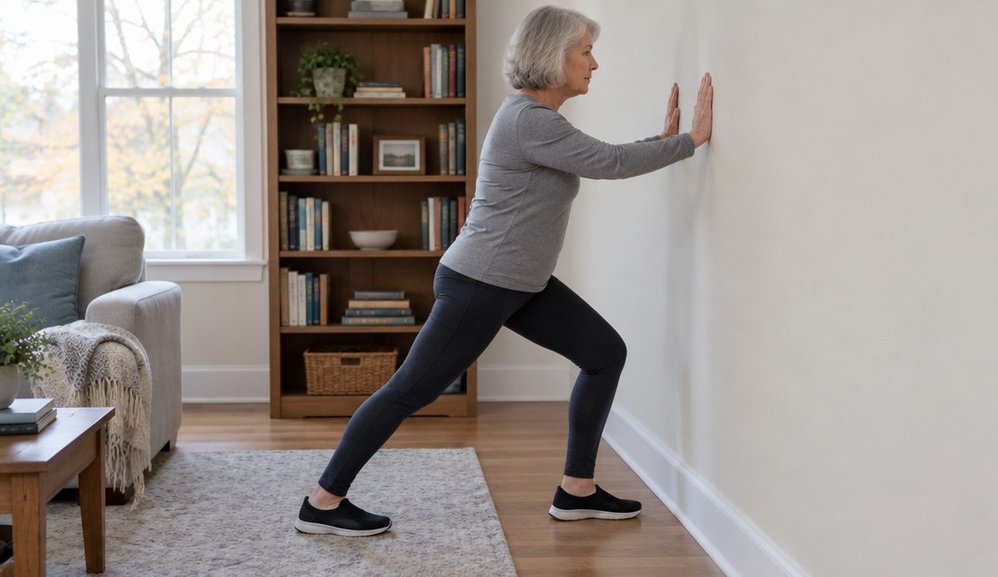
Many calf aches come from the muscle itself. MedlinePlus, the health information service of the US National Library of Medicine, says straining or overusing a muscle is the most common cause of cramps.
A cramp is a sudden, involuntary tightening. Stretching or gently massaging the muscle can ease it.
A strain is a stretched or torn muscle or tendon. MedlinePlus lists pain, spasms, swelling and trouble moving the muscle, and says treatment starts with rest and icing.
Soreness near the heel can be Achilles tendinitis. MedlinePlus says the Achilles tendon connects the back of your leg to your heel.
Tight calf muscles and a sudden increase in activity make it more likely.
If your calves are sore after longer walks, the signs you are walking too much can help you sort out an overuse ache. Tight calves also respond to the stretches for walkers over 50.
Warning signs that need a call right away
A swollen, warm, tender calf can be a blood clot. MedlinePlus lists warmth and tenderness over the vein, pain or swelling, and skin redness as signs of a deep vein clot.
Such a clot can break loose and travel to the lung. That is called a pulmonary embolism, and NHLBI lists shortness of breath and pain when breathing as its signs.
NHLBI says to call your healthcare provider right away if you think you may have these symptoms.
Walking is part of the treatment
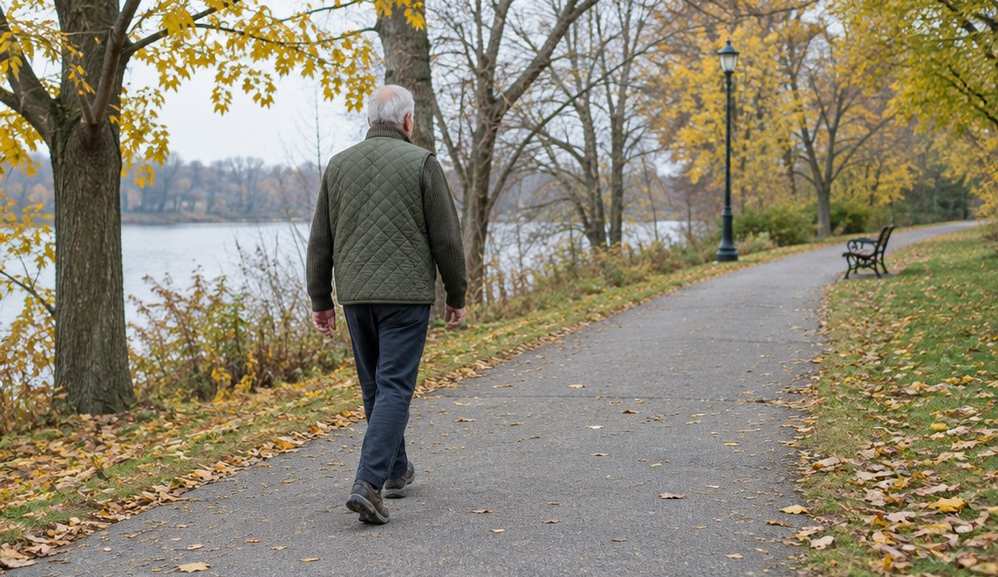
If your doctor finds PAD, walking is part of the treatment.
The 2024 guideline was led by two US groups, working with other societies. The American College of Cardiology is the professional society for heart clinicians. The American Heart Association is a national nonprofit that works against heart disease and stroke.
The guideline gives supervised exercise for claudication its top recommendation, Class 1, Level of Evidence A.
The guideline says it improves walking performance, functional status and quality of life. In a supervised program, the walking that brings on the ache is the treatment.
NHLBI says these programs usually meet at least 3 times a week and last between 3 and 9 months. Treadmill walking is the most common type.
If the ache is mainly in your foot, the usual causes of foot pain when walking cover other possibilities too.
Learn your own pattern on the next walk
On your next walk, pay attention to two things. Note about how far you get before the ache starts. Then note how long it takes to ease once you stop.
Write both down. That record gives your doctor a clear description.