
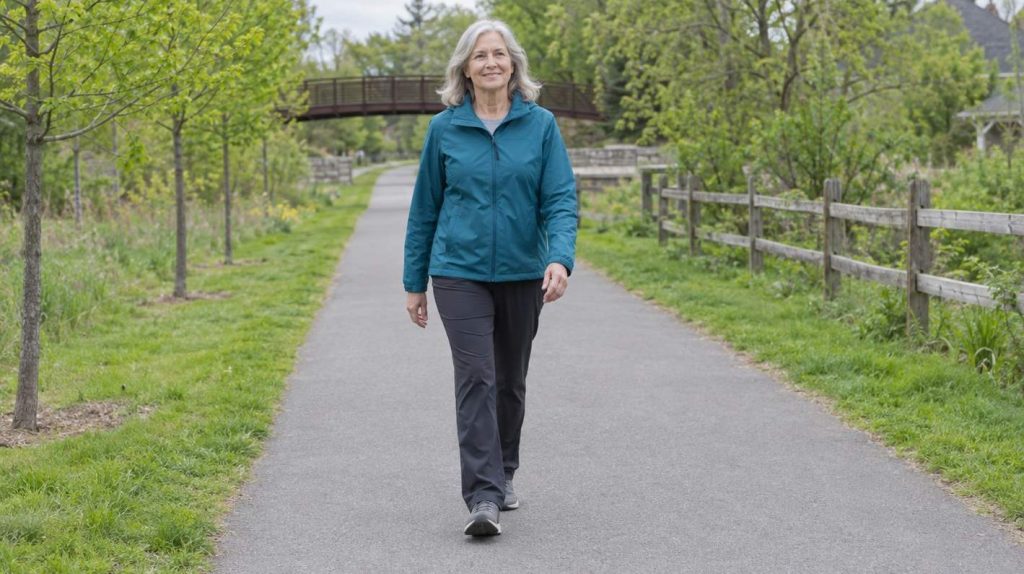
Back pain often comes back: about 70 percent of people who recover from an episode have at least a minor recurrence within 12 months.
In a 2024 trial, adults on a walking program went a median of 208 days before the next flare that limited their activities. Adults who got no treatment went 112 days.
That is a result about prevention, not a cure for a flare in progress. This is information, not medical advice, so check with your doctor before you change how you walk or exercise.
What the WalkBack trial found
The trial, called WalkBack, was led by Natasha Pocovi at Macquarie University in Sydney, Australia. It was published in The Lancet, a medical journal.
It enrolled 701 adults who had recently recovered from a low back pain episode that lasted at least 24 hours and had no specific diagnosis. Their average age was 54.
Half were given a walking program. Half got no treatment.
The walking program, as planned in the trial’s published protocol, had these parts:
- Six sessions over six months with a physiotherapist (a physical therapist), three in person and three by phone.
- A walking plan built around each person’s current walking, age and body mass index.
- Education alongside the walking.
The walking group went a median of 208 days before the next activity-limiting episode. The no-treatment group went 112.
A median is the middle value of the group. An activity-limiting episode is a return of back pain that lasts at least 24 hours and gets in the way of normal daily activities.
Adverse events meant any new health problem, or worsening of an existing one, reported during the trial. They were similar overall, 52 percent of the walking group and 54 percent of the no-treatment group.
Problems in the legs and feet were more common with walking, 100 events against 54.
The American College of Physicians, a national group of internal medicine doctors, published back pain guidance in 2017.
For long-lasting (chronic) back pain, it lists exercise among the treatments to try first, ahead of medicines.
How to walk when your back is sore
The trial recruited people who had already recovered, so it says nothing about walking through a flare. For that, MedlinePlus, the National Library of Medicine’s health information site, gives a timeline.
- For the first couple of days, cut back your activity.
- After that, slowly return to your usual activities.
- After 2 to 3 weeks, gradually start exercising again, beginning with light aerobic activity.
- For the first 6 weeks, skip heavy lifting and twisting.
Walking is the first example of light activity that MedlinePlus names. Bed rest is not recommended.
The federal institute for brain and nerve disorders, NINDS, says the same about bed rest. In its advice for chronic back pain, it adds that resuming normal activities as soon as possible may ease pain.
A progressive walking plan after a flare
The trial gave no one-size starting time. A physiotherapist set it from each person’s current walking, age and body mass index.
- Start with three walks a week, each short enough that your back pain does not get worse.
- Add walks until you reach five a week.
- Build each walk toward 30 minutes. That was the minimum the trial aimed for by the end of its six months.
- Once you are walking five times a week, add intensity: a faster pace, hills or stairs.
Frequency came first in the trial’s plan: three walks a week, then five.
Intensity came after.
The trial’s plan moved each person forward based on their response. Move to the next stage when your back allows it.
For someone starting from a lower base, a 4-week walking progression plan for beginners shows what a gradual build can look like.
Posture and shoes
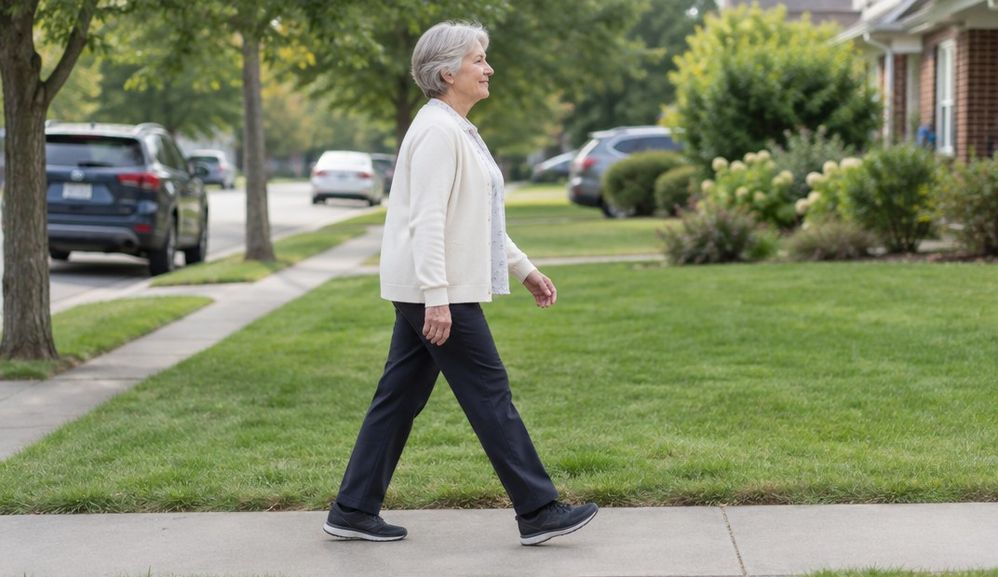
NINDS lists comfortable, low-heeled shoes among its tips for protecting the back. It also suggests switching sitting positions often and walking around now and then.
To check your head, shoulders and arm swing, how to walk correctly to avoid back pain goes through each one.
Red flags: call a doctor before you walk
MedlinePlus says to contact your provider right away if you have any of these:
- Back pain after a severe blow or fall
- Loss of control over urine or stool
- Burning with urination or blood in your urine
- Weakness or numbness in your buttocks, thigh, leg or pelvis
- Pain traveling down your legs below the knee
- Difficulty walking or maintaining your balance
- Unexplained fever with back pain
- A history of cancer
- Pain that is worse when you lie down, or that wakes you at night
- Redness or swelling on the back or spine
- Severe pain that does not allow you to get comfortable
It also says to get in touch if you have been losing weight without trying, or use steroids or inject drugs.
Get in touch too if the pain lasts longer than 4 weeks, or if this episode is different from earlier ones and feels worse.
Back pain that is severe or has not improved after three days is also a reason to call.
Planning the first walk after your next flare
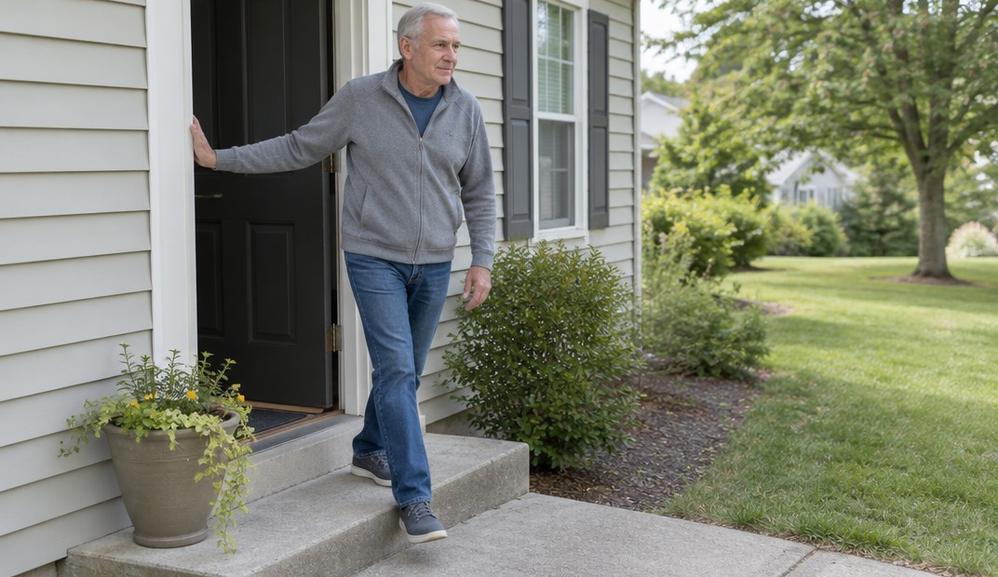
Decide the route now, while your back is not hurting. Choose a short, level loop near home that you can cut short at any point.
The trial’s protocol let physiotherapists adjust a program for surfaces, lighting and safety, so a level, well-lit route is a sensible choice.
When the flare comes, cut back for the first couple of days and avoid bed rest. Then ease back into your usual activities, and after 2 to 3 weeks start again at the first stage above.