
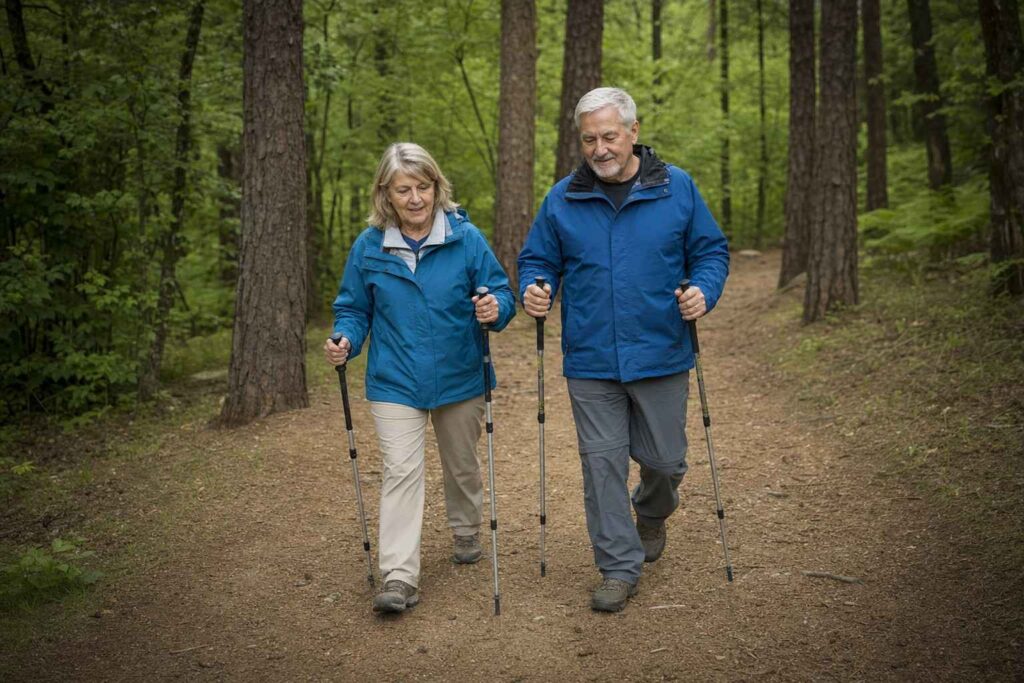
You have probably heard that walking poles take a lot of strain off your knees.
It is true. On a downhill, a good pair shifts real pressure off your legs and into your arms.
But that does not mean everyone over 50 needs them.
Whether poles are worth it for you comes down to your knees, your balance, and where you walk.
Here is how to decide, without spending $50 to $200 to find out the hard way.
What Walking Poles Actually Do
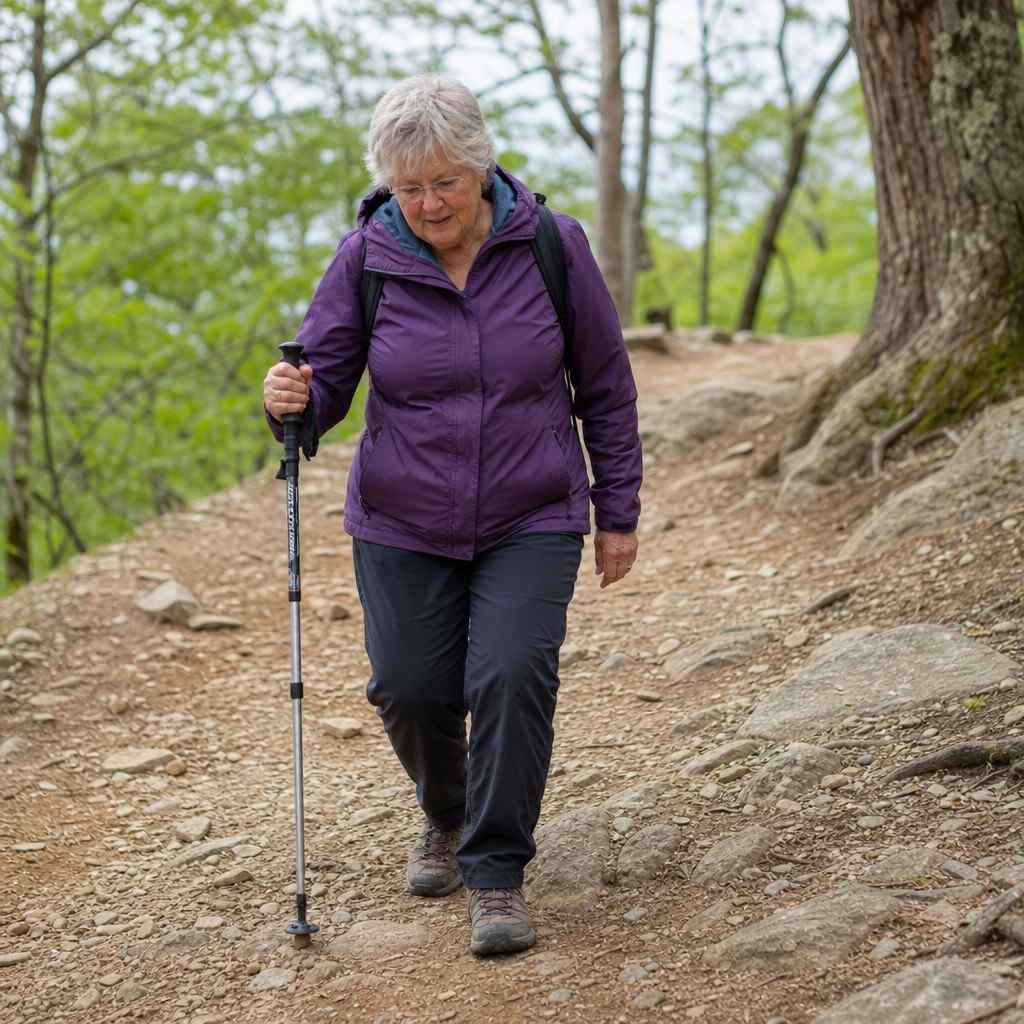
Poles do three things that matter more as we get older:
- They take load off your knees and hips, especially going downhill.
- They add two points of contact, so a stumble on loose ground is far less likely to become a fall.
- They steady your rhythm and posture, which helps you walk a little longer and stand a little taller.
On descents, walking poles can move roughly 5 to 10 pounds of pressure per step off your knees and onto your arms.
For many older walkers, the biggest gift of poles is not fitness.
It is confidence.
When Poles Help Most
Poles are worth it if you:
- Feel unsteady on uneven or loose ground.
- Have sore or arthritic knees, especially on downhills.
- Are moving from pavement to easy nature trails and want surer footing.
- Carry a small daypack or walk longer distances.
If any of those sound like you, a pair is likely worth it.
When You Can Probably Skip Them
You may not need poles if you:
- Walk mostly on flat pavement or a treadmill.
- Feel steady, with no knee or balance trouble.
- Take short, easy walks close to home.
There is no shame either way. Poles are a tool, not a badge.
Choosing a Pair Without Overthinking It
The gear choices matter less than the shop suggests. A few honest pointers:
- Adjustable length beats a fixed pole, so you can shorten them on climbs.
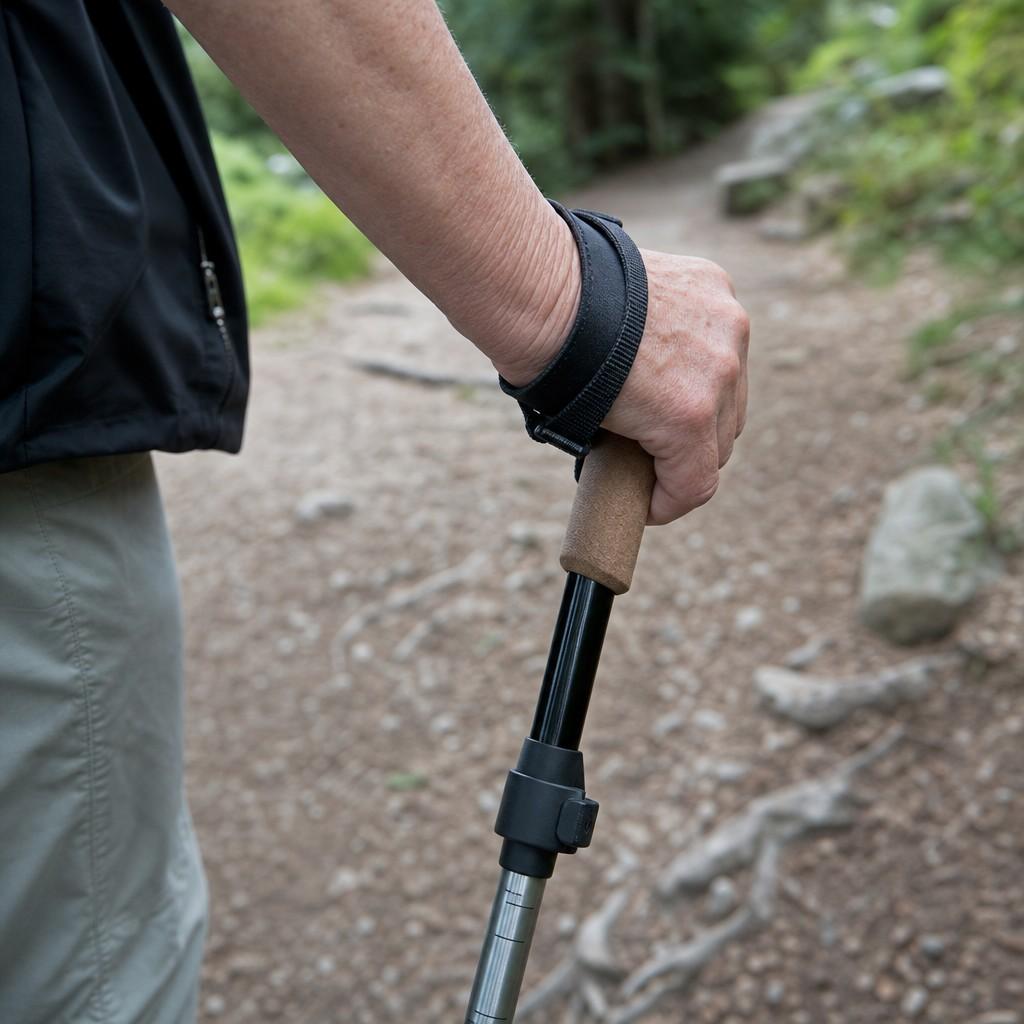
- Cork or foam grips stay comfortable and handle sweat better than hard plastic.
- Aluminum is sturdy and affordable; carbon is lighter but pricier. Either is fine for gentle walking.
For specific models at different prices, walking poles for beginners over 50 does the comparing for you.
How to Size Them
Stand the pole tip on the ground beside your foot.
Your elbow should sit at a comfortable right angle.
A touch shorter is better than too long. Shorten them slightly for uphills, lengthen them a little for steep descents.
One Honest Catch
Poles take a little getting used to.
For the first walk or two the rhythm feels awkward, and on very rough ground or when you want a hand free, they can be more nuisance than help.
That is normal. Give them three or four outings before you decide.
The coordination clicks faster than you expect.
So, Do You Really Need Them?
If your knees complain on hills, if loose ground makes you tentative, or if you are stepping onto trails for the first time in years, poles are one of the cheapest ways to walk farther and feel safer.
If you are steady on flat ground and pain-free, you can happily walk without them.
Try a pair on a familiar route before you judge them. Most people who do never go back.