
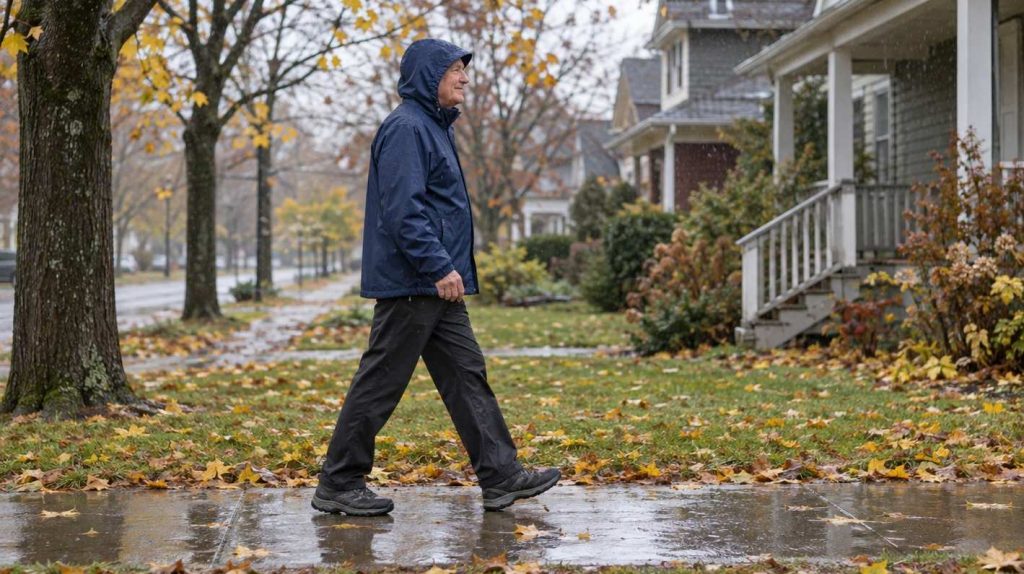
Light rain on a mild day is walking weather. Thunder, flooded paths and a freeze after the rain are not.
A light, steady rain on a mild day is usually fine for a walk. The trouble starts with lightning, moving water, slick leaves and ice. Check for those four first, then go.
The short list: go, adapt or stay in
Use this before you reach for the door.
Go as usual:
- Light or steady rain with no thunder
- Paved sidewalks, tracks and park loops with good drainage
- Mild temperatures, well above 40°F
Adapt (shorter, slower, or a different route):
- Heavy rain with poor light, where drivers see you late
- Wet leaves on a path or a trail with roots and rocks
- Wind that makes a damp walk feel much colder
- Cold rain near 40°F: keep it short and dress to stay dry
Stay in:
- Thunder, however far away it sounds
- A path with water running across it
- A walk that ends in a cold, wet wait for a ride
Lightning: stop and go indoors
The National Weather Service, the federal agency that issues US weather warnings, keeps its rule short. It is “When thunder roars, go indoors.”
There is no safe place outside when thunderstorms are in the area. If you hear thunder, you are likely within striking distance of the storm.
A substantial building or a hard-topped car is safe. A rain shelter, small shed or open vehicle is not. After the last thunder or lightning, wait 30 minutes before you walk again.
Water on the path
You can see a puddle. You often cannot see how fast water is moving across a low spot.
According to the National Weather Service, 6 inches of fast-moving flood water can knock over an adult. Its advice is plain: never walk into flood waters.
If water is moving across the path, turn around. A longer route on higher ground costs little time. A fall into moving water can cost far more.
Footing on wet ground
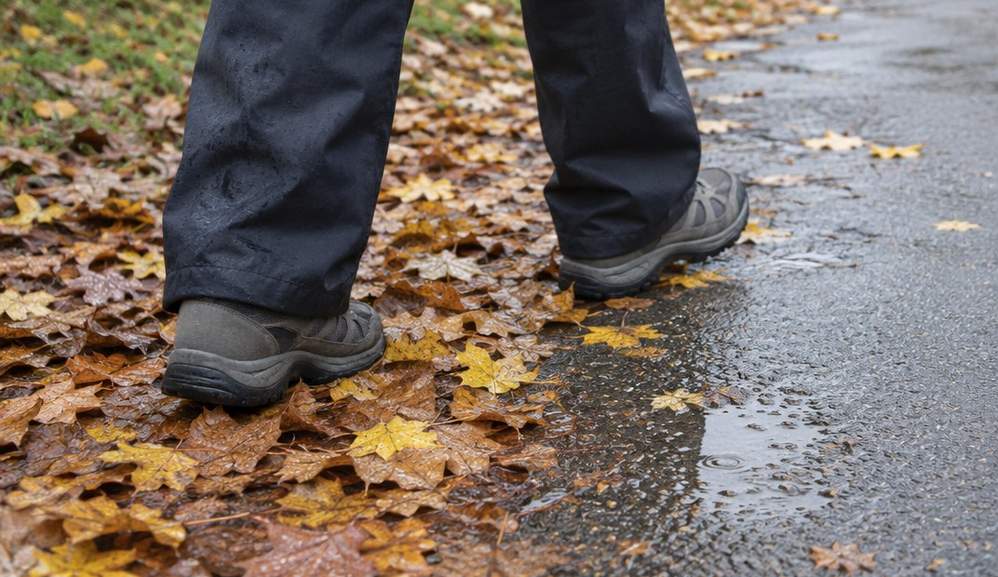
- Painted lines and crosswalk stripes: slick, so step over them where you can.
- Metal covers and boardwalk planks: slick as well.
- Wet leaves: a skin of leaves hides roots, holes and ice.
- Mud: pulls at your shoes and tires your calves.
Shorten your steps and keep your feet under you. Let your arms swing a little for balance, and look two steps ahead, not at your shoes.
If wet leaves cover the path, stay on pavement or a wide, flat track. Roots and rocks hidden under leaves are easy to trip on. The advice on staying steady on uneven trails covers rough ground in more detail.
Being seen in gray light
You see the car clearly. The driver may not see you.
The Governors Highway Safety Association, the association of state highway safety offices, reports troubling trends in people on foot being killed at night. A gray, rainy afternoon makes you harder to see, so treat it like dusk.
Wear something bright or reflective, and walk where drivers expect you. A light-colored jacket helps. So does a small clip-on light, and a hat brim keeps rain off your glasses.
What to wear, and what to skip
You do not need new gear for a wet walk. Start with what you have.
- A waterproof or water-resistant jacket with a hood
- Shoes with a tread you trust, not smooth soles
- Socks that are not cotton, since wet cotton stays wet
Skip the heavy raincoat that traps sweat. Sweat trapped inside can chill you, just as rain can. A thin layer under a light shell is easier to adjust.
The full clothing guide is in what to wear for walking.
When wet turns dangerous
The National Institute on Aging, a US government research agency on aging, says hypothermia is a core body temperature below 95°F. It can happen above 40°F if you are chilled by rain.
Warning signs include cold hands and feet, shivering, slowed or slurred speech, and feeling sleepy, angry or confused. Hypothermia also makes it hard to think clearly, so you may not notice it yourself.
If you start shivering, head home and change into dry clothes. If speech slurs or confusion sets in, the institute says to call 911 right away.
If you take medicines or live with a heart or circulation condition, ask your doctor what weather is right for you.
When the rain means an indoor day
A thunderstorm, a flooded path or an icy morning after a wet night means walking indoors.
Laps inside keep you moving, and mall walking and other indoor routes keep the habit going without the weather.
Drying out afterwards
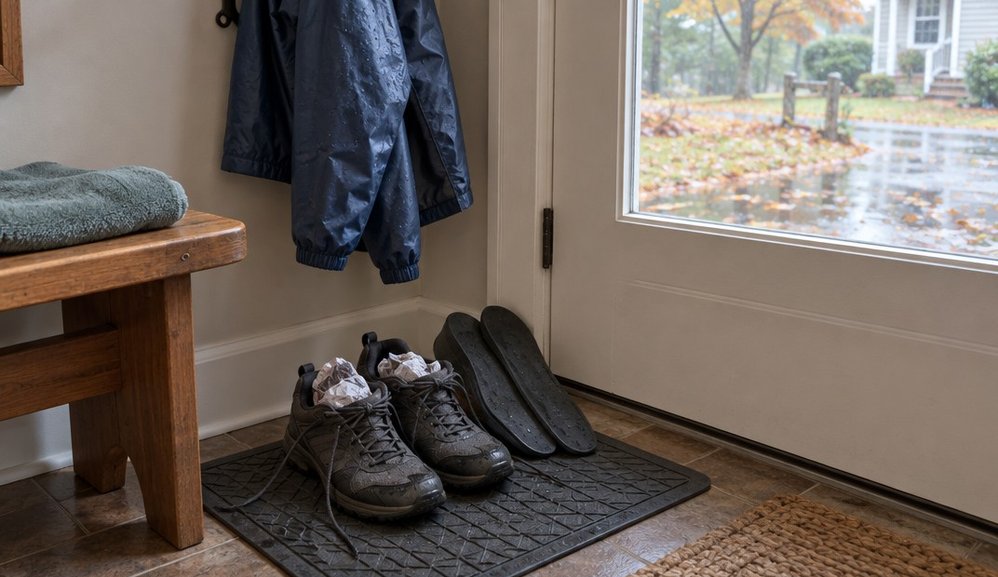
You step in from the porch with wet cuffs and cold hands. Change out of damp clothes as soon as you can, as the National Institute on Aging advises.
Dry your feet fully, between the toes too, and check for any red or sore spots. Then warm up with a hot drink and a dry layer.
Shoes that stay wet overnight stay cold and rub. Take out the insoles, loosen the laces, and stuff the toes with crumpled paper.
Leave them in a warm, airy spot away from a radiator, and they should be dry by the next day.