
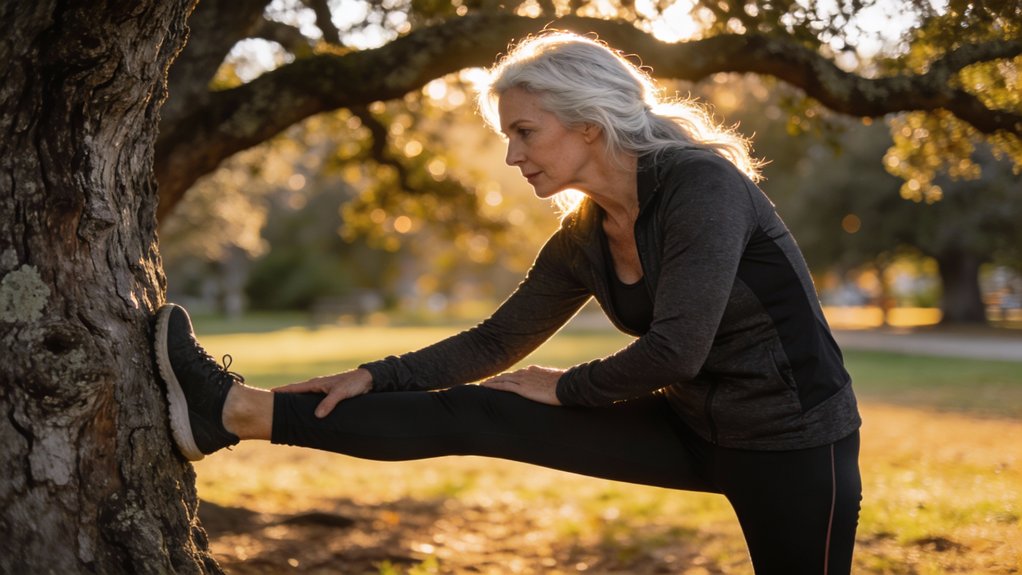
You’ve probably heard that stretching becomes more important after 50, but here’s what matters: the right stretches target the specific muscles that tighten up from walking.
Most walkers skip the tibialis anterior along your shin, yet that single muscle affects your entire stride.
Your calves, quads, and hip flexors need attention too, but there’s a particular sequence that works better than randomly stretching whatever feels tight.
5 Essential Stretches Every Walker Over 50 Needs
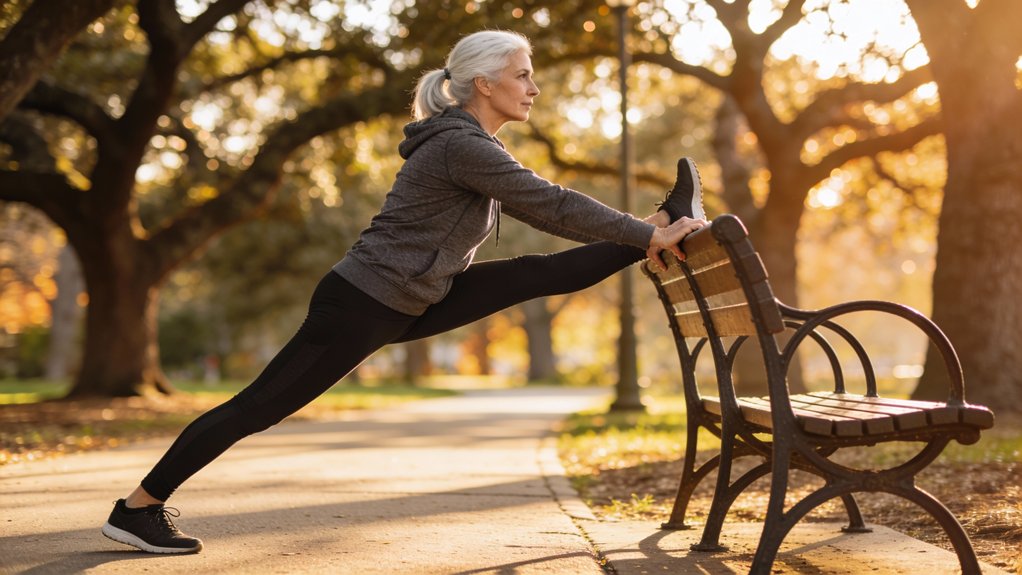
Walking gets harder on your body after 50, but the right stretches make a real difference.
You’ll want to focus on five key areas that directly impact your ability to serve others through active engagement.
The tibialis anterior stretch targets ankle flexibility, reducing shin pain that limits your daily activities.
Better ankle mobility means less shin discomfort, giving you the freedom to stay active and engaged in serving your community.
Calf stretches, both shallow and deep, keep you moving forward with strength.
Don’t skip quadriceps and hip flexor work; they prevent the tightness that causes discomfort and restricts movement.
These stretches done consistently lead to genuine mobility improvement, letting you walk longer and help others more effectively. Consistent stretching combined with regular walking enhances memory and stress resilience as you age, supporting both physical and mental wellness.
Shin and Calf Stretches: Stop Lower Leg Tightness
Your lower legs bear the full weight of every step you take, and that repetitive impact builds up fast.
Without proper care, muscle tightness in your shins and calves can derail your walking routine and limit your ability to serve your community actively.
Start with the tibialis anterior stretch to improve ankle flexibility and reduce shin pain.
Follow with standard calf stretches, holding each side for 30 seconds.
Then add deep calf stretches by bending both knees to target deeper muscle layers, holding another 30 seconds per leg.
These three stretches prevent stiffness and keep you walking comfortably.
Incorporating mindful walking meditation into your stretching routine can enhance your concentration and self-awareness during physical activity.
Quadriceps Stretch: Keep Your Thighs Pain-Free
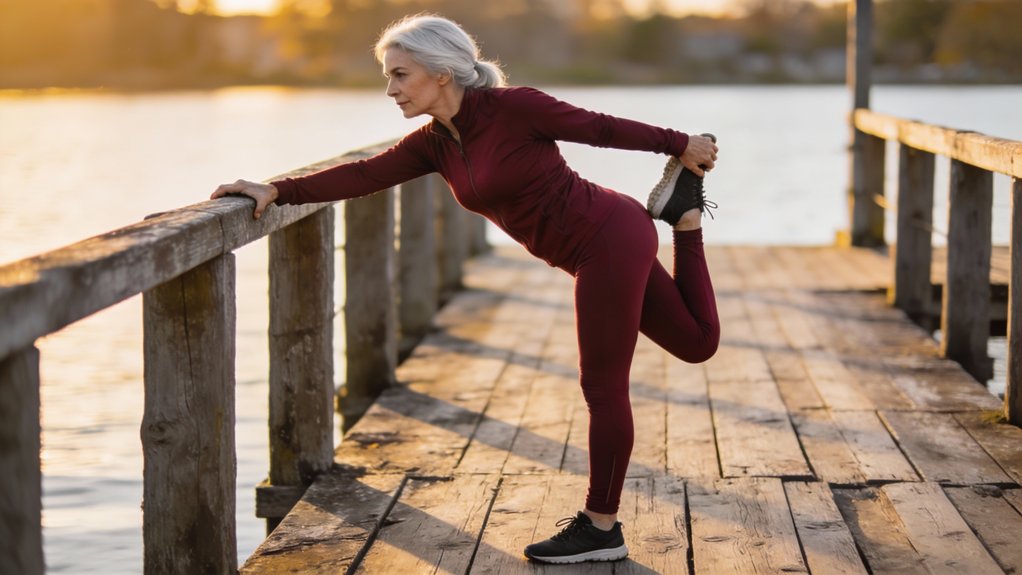
Each walking stride activates your quadriceps through hundreds of repetitions per mile, and this constant engagement tightens the front thigh muscles over time.
You’ll prevent discomfort by mastering proper stretching techniques for these hardworking muscles.
Stand near a wall for support, bend one knee, and pull your ankle toward your glutes. Keep your knee aligned with your hip, don’t let it drift outward. Hold for 30 seconds on each leg.
This simple movement delivers significant mobility benefits, helping you maintain proper walking form and stride efficiency.
Regular practice keeps your thighs pain-free, enabling you to serve others through active community involvement.
Hip Flexor Stretch: Protect Your Lower Back
Hip Flexor Stretch: Protect Your Lower Back
Tight hip flexors create a chain reaction that pulls your pelvis forward and strains your lower back with every step you take. This stretch counteracts that damaging pattern.
Start on one knee with your back straight. Push your pelvis slightly forward while squeezing your buttocks, that’s the key to proper stretch techniques. Hold for 30 seconds on each side.
The hip flexor benefits include improved walking mechanics and reduced injury risk.
Perform this stretch before and after your walks to maintain the flexibility that’ll keep you serving your community actively for years ahead.
Stretching Routine: When and How Long to Hold
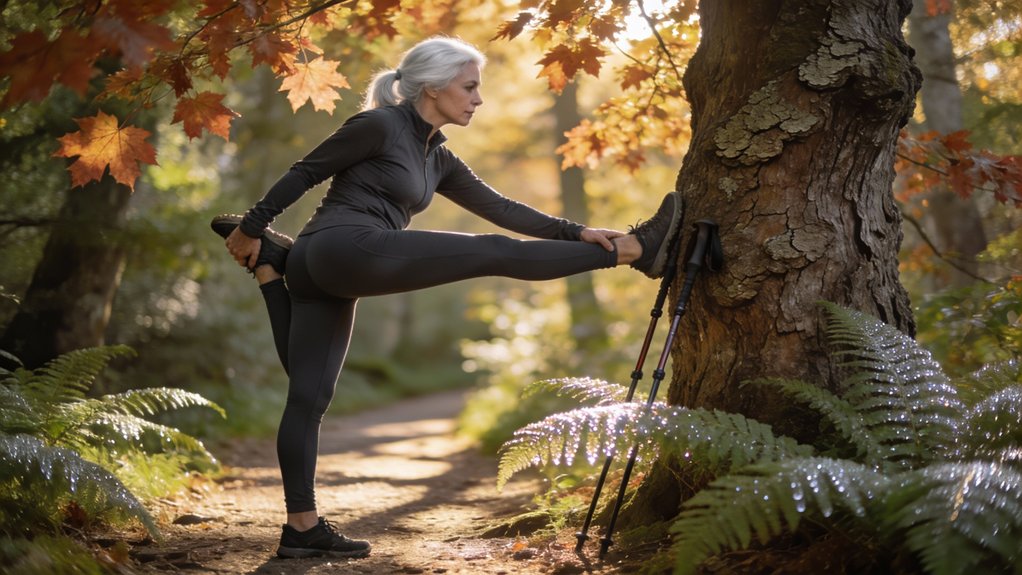
Now that you know which stretches to perform, timing and duration determine whether you’ll actually see results.
Stretch both before and after your walks to maintain flexibility and prevent tightness. This stretching frequency keeps your muscles ready for activity and aids recovery afterward.
Stretch before and after each walk to keep muscles flexible, prepared for movement, and properly recovered.
Hold each stretch for at least 30 seconds: this stretch duration allows your muscles to properly lengthen and adapt. You’ll notice improved mobility when you’re consistent.
Maintain proper form throughout, squeezing your buttocks and tucking your pelvis where appropriate.
Regular practice prevents stiffness and pain, helping you serve others through longer, more comfortable walking sessions.
Read next: 10-Minute Strength Routine for Walkers Over 50. The routine targets the muscles you need for better balance, longer strides, and more power with each step.