
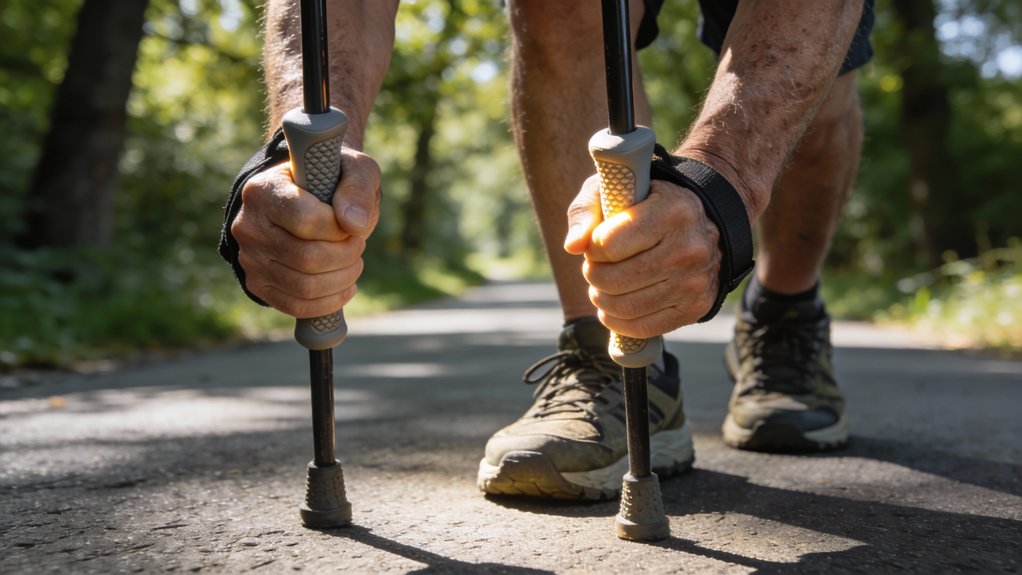
While healthy joints glide smoothly through a morning walk, arthritic ones send sharp reminders with each step, but that doesn’t mean you’re stuck on the couch. You can keep walking and protect your joints at the same time through smart modifications that actually work.
The key isn’t avoiding movement; it’s changing how you move.
Small adjustments to your stride, surface choice, and support tools make the difference between pushing through pain and walking comfortably for years to come.
Adjust Your Foot Angle to Reduce Knee Loading
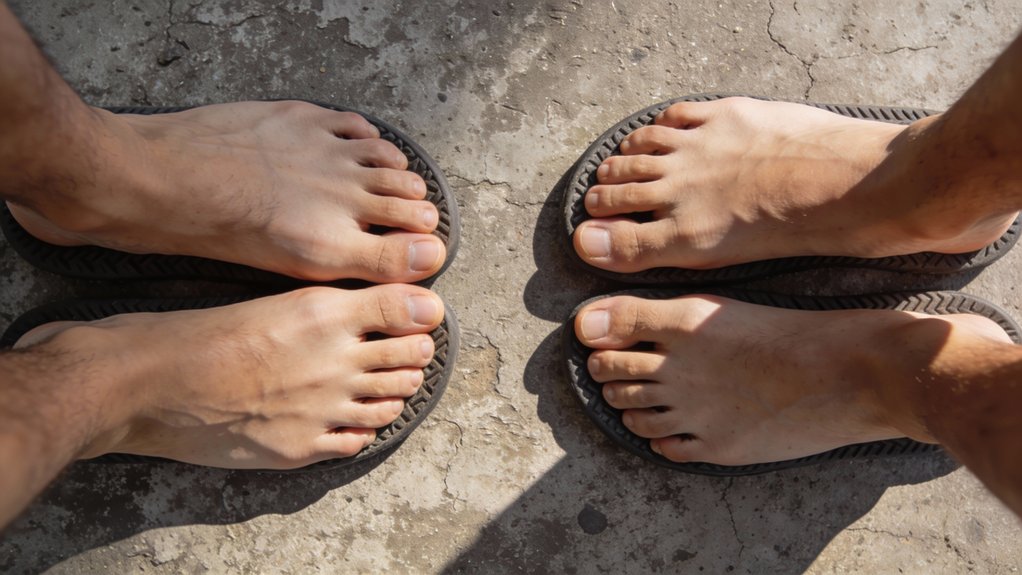
When you walk with knee osteoarthritis, the angle of your feet can make a real difference in how much pressure hits your knee joint.
Research shows that adjusting your foot position reduces maximum knee loading by 4%, while natural walking patterns actually increase stress by 3%.
This simple modification delivers measurable relief: participants reported 2.5 points less pain on a 10-point scale.
MRI scans confirm that changing foot angle slows cartilage breakdown.
By fine-tuning how you plant each step, you’re protecting your knee health and potentially delaying surgery.
It’s a personalized approach worth trying for those you care for.
Choose Supportive Footwear That Cushions Joints
Since your feet absorb two to three times your body weight with every step, the right shoes function as your first line of defense against joint pain.
Your feet bear up to three times your body weight with each step, making proper footwear essential for joint protection.
Look for walking shoes with flexible shoe materials and deep, wide lasts that accommodate bunions or swollen joints.
Quality arch support helps distribute pressure evenly across your foot.
Replace your shoes every 500 miles, that’s roughly every six months for most walkers.
A pedorthist can assess your specific needs, whether you’re dealing with weak ankles or other foot conditions.
Wearing multiple clothing layers allows you to adjust your comfort level as your body temperature changes during your walk.
Properly fitted footwear makes staying active easier for those you care for.
Walk on Grass and Tracks Instead of Concrete
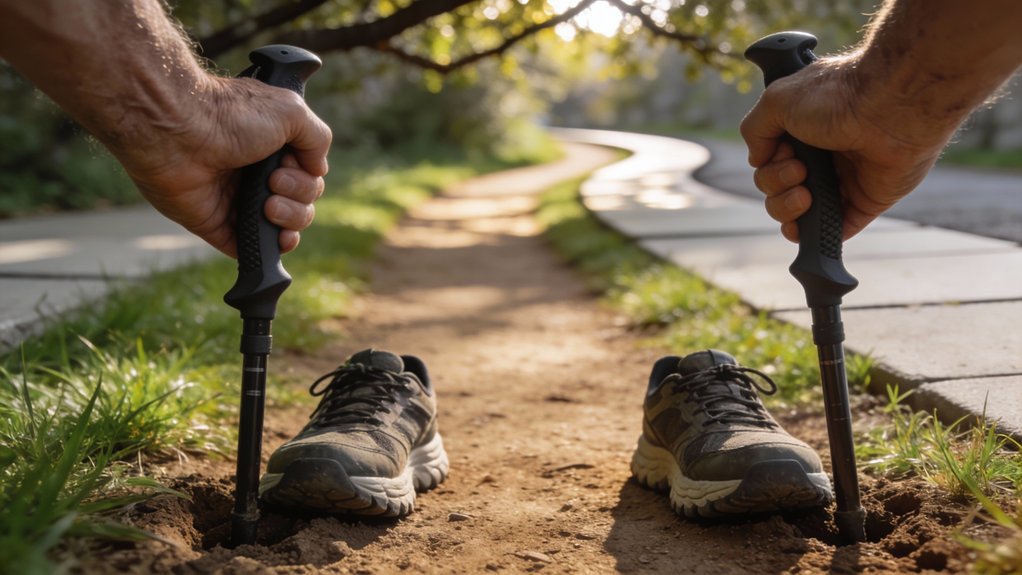
The surface you walk on matters just as much as the shoes you wear.
Concrete transfers shock directly to your joints, but grass benefits include natural cushioning that absorbs impact with each step. Your knees and hips experience 30-40% less stress on softer terrain.
Track advantages come from their uniform, predictable surface: you won’t encounter unexpected dips or cracks that might trigger pain. These gentler surfaces let you walk longer without discomfort, making it easier to maintain consistent exercise routines.
Regular walking on these surfaces supports enhanced brain health while reducing physical strain on arthritic joints.
When you’re helping others manage arthritis, recommend grass or tracks over sidewalks whenever possible.
Use a Cane or Walker for Better Balance
A cane or walker acts as an external support beam for your body, taking 15-20% of your weight off arthritic joints with every step. This redistribution helps you move more comfortably while serving others in your daily activities.
By transferring up to 20% of your body weight, mobility aids let you serve others pain-free while protecting your joints.
Different cane types include standard, quad-base, and shock-absorbing models, each offering varying stability levels.
Walker benefits extend beyond balance: they improve your posture, increase walking speed, and reduce fall risk by up to 40%.
Choose whichever device feels most secure. Your physical therapist can guarantee proper fit and teach you techniques that maximize joint protection during movement.
Take Shorter Walks With Rest Breaks as Needed

When arthritis flares up during walks, breaking your route into 10-15 minute segments lets you cover the same distance without overwhelming your joints.
This approach to energy management helps you stay active while respecting your body’s limits.
Listen carefully for signs you need rest; sharp pain or severe stiffness means it’s time to pause.
You’ll find that multiple short walks throughout the day maintain joint mobility better than pushing through one long session.
This strategy reduces joint strain and keeps you moving consistently, which benefits both your physical health and your ability to serve others actively.
Slow Your Pace to Minimize Joint Stress
Pushing yourself to walk faster doesn’t make your workout more effective when you’re managing arthritis; it just amplifies the pounding force on already sensitive joints.
Slowing down by 25-30% lets you maintain proper form while considerably reducing impact stress.
You’ll notice the difference within days as pain levels decrease. A slower pace improves mental focus, allowing you to concentrate on alignment and movement quality.
Pair this with steady breathing techniques, inhaling for three steps, exhaling for three, to stay centered and controlled.
This gentler approach helps you serve others better by keeping your joints functional and pain-managed for the activities that matter most.
Walk With Someone Who Understands Arthritis
Finding someone who truly gets what you’re dealing with transforms your walking routine from a solitary challenge into a shared journey. A partner who understands arthritis provides emotional support when your joints flare up and knows when to slow down without being asked.
You’ll swap tips about comfortable shoes, discuss which paths have the smoothest surfaces, and celebrate small victories together. These shared experiences create accountability: you’re less likely to skip walks when someone’s counting on you.
Look for walking groups designed for people with arthritis, or invite a friend who faces similar limitations.
You’ll strengthen both your body and your relationships.
Change Routes to Vary Stress on Different Joints
Your joints need variety just like your mind does. Changing your walking routes regularly spreads physical stress across different joints instead of overworking the same ones.
Rotating your walking routes prevents repetitive strain by distributing impact across different joints and movement patterns.
This terrain variety matters more than you might think. Walk on grass one day, gravel the next, then try a smooth track. Softer surfaces like trails absorb shock better than concrete sidewalks.
Parks with gentle slopes engage different muscle groups while offering scenic views. Mix shorter varied paths with longer consistent ones to adjust your pace as needed.
This approach delivers real joint relief while keeping your walks interesting and sustainable.
Log Your Walks to Spot Pain Triggers
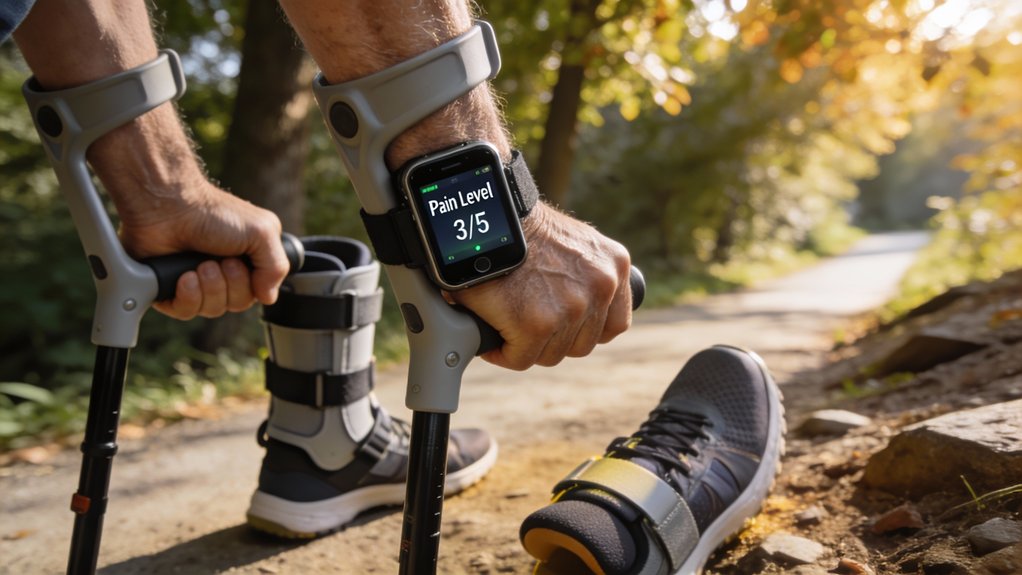
A simple notebook transforms guesswork into actionable data when managing arthritis pain.
Your walking log should track duration, frequency, and discomfort levels after each walk. Note specific routes, concrete versus grass, and which footwear you wore.
Record weather conditions too, since temperature and humidity affect joint stiffness. After two weeks, pain patterns emerge clearly.
You’ll spot that your knees ache more on steep inclines or that certain shoes worsen ankle pain.
These insights help you serve your body better by making smarter choices about when, where, and how you walk.
Keep Walking Regularly Through Flare-Ups
When arthritis flares hit, your instinct might be to stop walking entirely, but maintaining movement actually speeds recovery.
Your flare up strategies should focus on shorter walks, perhaps 5-10 minutes instead of 30, spread throughout the day.
During arthritis flares, break your usual 30-minute walk into shorter 5-10 minute sessions distributed throughout your day for better joint management.
Switch to softer surfaces like grass or dirt paths that cushion each step.
Movement modifications include reducing your pace and adding supportive gear like walking poles or cushioned shoes.
Integrate gentle range-of-motion exercises while you walk to preserve flexibility.
Listen to your body’s signals and adjust accordingly.
These adaptations keep your joints mobile without triggering additional pain, helping you serve others through consistent, sustainable activity.