

You’ve probably heard that walking is the perfect exercise after 50, but starting from scratch feels trickier than it sounds. Your knees might complain, your stamina isn’t what it used to be, and those 10,000 steps a day recommendations seem laughably out of reach.
Here’s the truth: you don’t need to hit any magical number right away. What you need is a practical plan that strengthens your joints, builds endurance gradually, and actually fits into your week without taking over your life.
Strengthen Your Walking Joints: Ankles, Knees, and Hips
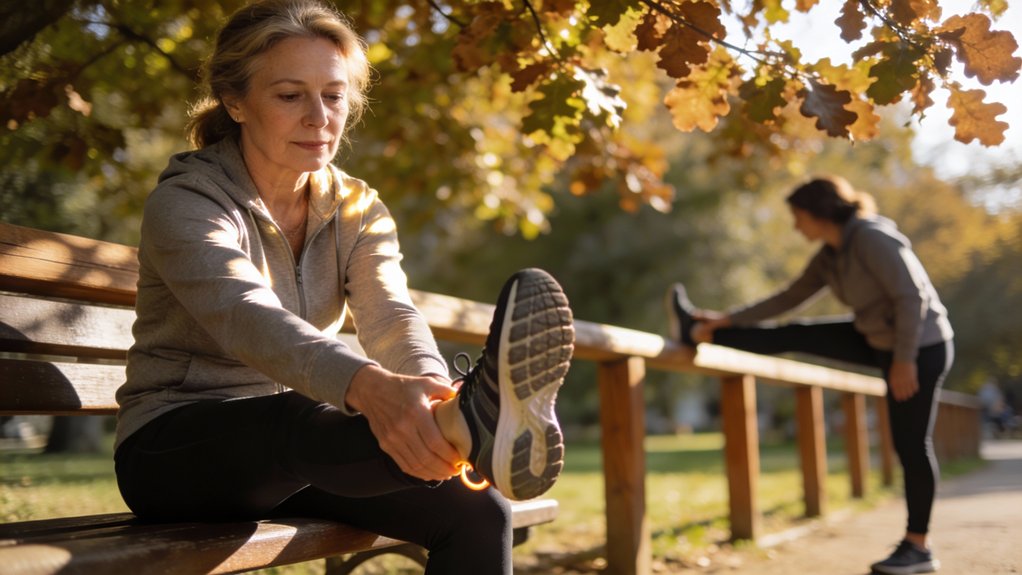
Before you focus on distance or speed, you need to prepare the three joint systems that power every step you take. Your ankles, knees, and hips work together to create efficient movement and prevent injury.
Start with ankle mobility exercises like full range heel raises, they’ll improve your toe-off phase and walking smoothness.
Full range heel raises strengthen your ankles and create a smoother, more powerful push-off with every step you take.
Add knee extensions to build knee stability, which you can do at home with minimal equipment.
Don’t neglect your glutes and hip muscles, as they maintain pelvic alignment and balance.
Practicing these exercises consistently makes walking easier and more comfortable as you age. Incorporating mindful walking into your routine can deepen your body awareness and help you notice how these strengthened joints feel during movement.
It’s easy with healthy joints, but osteoarthritis sends sharp reminders with every step. Read more about how you can keep walking despite osteoarthritis and protect your joints at the same time with appropriate modifications.
Start With 10-Minute Walks and Build to 30 Over 6 Weeks
Your first walk should last just 10 minutes, which gives your body enough stimulus to adapt without overwhelming your joints or cardiovascular system.
Add 5 minutes each week until you reach 30 minutes by week six. This timeline allows gradual increases that reduce injury risk while building endurance.
Start every session with 5 minutes of slow walking before picking up your pace.
The walking benefits compound as you progress toward the 150-minute weekly goal that supports heart health.
Regular walking also enhances memory and stress resilience as you age, making it beneficial for your cognitive health beyond physical fitness.
Track your sessions and adjust based on how you feel, maintaining consistency without pushing through pain.
Schedule Your Walks: How to Hit 150 Minutes Per Week
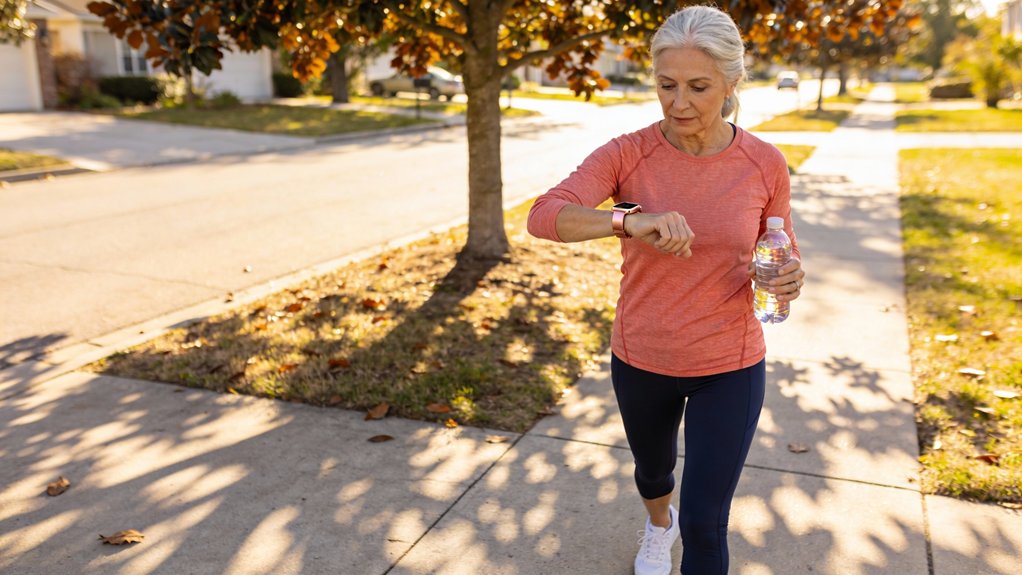
Once you’ve built up to 30-minute walks, divide those 150 weekly minutes into five sessions of 30 minutes each.
Pick specific times that work best for your schedule, perhaps morning walks before breakfast or evening strolls after dinner. Consistency matters more than perfection.
Choose walking times that fit your life, before breakfast or after dinner, and stick with them imperfectly but consistently.
Set daily reminders on your phone to keep your walking routine on track. You can also break those 30 minutes into two 15-minute sessions if needed.
Track your progress with a simple app or fitness tracker.
Consider inviting a neighbor or friend to join you: your commitment to regular walking might inspire them to start their own fitness journey.
Use Interval Walking to Rebuild Muscle After 50
While steady-paced walking builds endurance, interval walking targets something equally important: your muscle tissue.
Alternate between brisk walking for 1-2 minutes and easier recovery walks for 2-3 minutes. This pattern delivers significant interval benefits, particularly for your thigh muscles and knees.
Start each session with a 5-minute warm-up, then complete 6-8 intervals. You’ll need 4-5 days weekly for ideal muscle recovery and growth.
Research confirms this approach increases muscle size and strength in people over 50. It’s especially valuable if you’re helping others maintain their independence; stronger legs mean better mobility and fewer falls.
Add Hills and Inclines for Stronger Knees Without a Gym

Hills transform any walking route into a natural strength-training session for your knees.
You’re fundamentally doing a bodyweight leg press; your body and gravity create the resistance benefits that strengthen knee muscles.
Walk up a moderate hill for 30-60 seconds, then walk back down slowly. Repeat this cycle 6-10 times per session.
If you’ve got knee pain, hill walking offers a low-impact alternative to gym training while building functional strength.
Do this 4-5 days weekly, and you’ll notice improved muscle size in your thighs, better mobility, and enhanced balance, all supporting your capacity to serve others actively.
Walk Stairs and Curbs to Improve Your Balance
Stairs and curbs put your balance to the test in ways flat surfaces can’t match. When you add them to your route every 3-5 minutes, you’ll strengthen your lower limbs and sharpen coordination, essential tools for serving your family and community independently.
Practice stair safety by using handrails initially and watching foot placement. Build curb awareness by starting with low curbs before tackling higher ones.
This terrain work mimics multi-component exercise programs proven to boost gait speed and functional performance.
Regular practice increases muscle engagement and builds confidence, helping you maintain the mobility needed to assist others well beyond age 50.
Add Light Hand Weights to Walks for Upper Body Strength
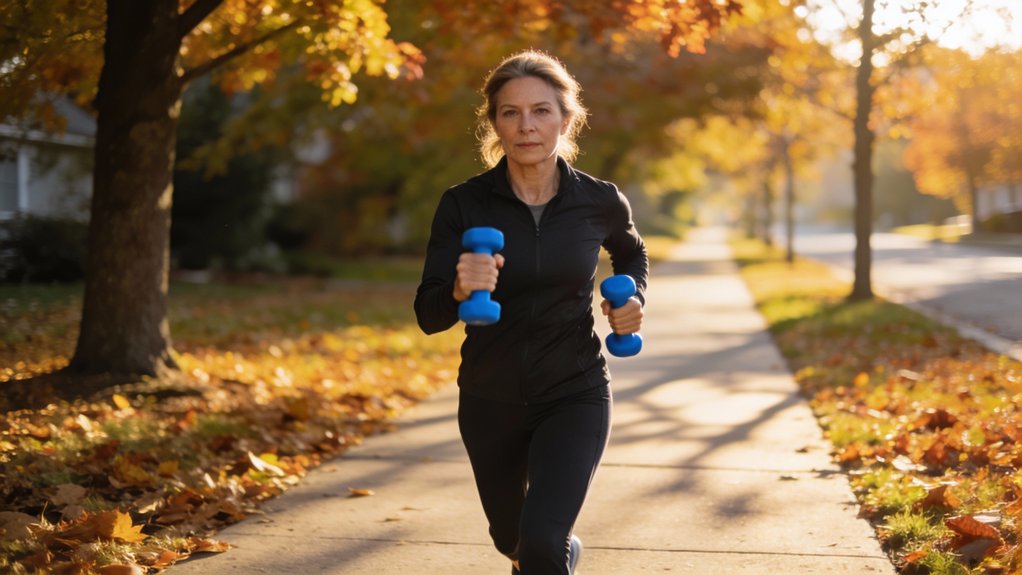
Light hand weights transform your walk into a full-body workout that builds the arm and shoulder strength you’ll need for everyday tasks.
Start with 1-3 pound weights and carry them for 20-40 steps, rest, then repeat 4-8 times during your session.
This approach delivers hand weight benefits without compromising your walking form or speed. You’ll notice improved muscle tone in your arms and shoulders, making it easier to carry groceries, lift grandchildren, or help neighbors with yard work.
These simple upper body workouts maintain the independence you need to serve your family and community effectively as you age.
Choose Supportive Shoes and Gear to Prevent Injury
Your feet absorb 120 percent of your body weight with each walking step, which means the right shoes aren’t just a comfort issue, they’re your primary defense against injury.
Walking shoes are your first line of defense. Each step places 120 percent of your body weight directly on your feet.
Visit a specialty store for professional shoe fitting that accounts for arch type and foot width. Look for shoes with adequate cushioning and stability features designed for walking, not running.
Supportive insoles can address individual foot shapes and pressure points. Choose moisture management fabrics for socks and clothing to prevent blisters and skin irritation.
Replace walking shoes every 300-500 miles, as worn cushioning compromises protection regardless of appearance.
Read more: The 4-Week Walking Progression Plan for Beginners Over 50