

Like Dorothy stepping from black-and-white Kansas onto the colorful yellow brick road, you’re about to leave your familiar sidewalks for something more adventurous. The shift from neighborhood walking to trail hiking isn’t as dramatic as it sounds, but it does require some specific preparation.
You’ll need to strengthen different muscles, learn basic navigation skills, and understand what gear actually matters. Most walkers make three critical mistakes in their first month, mistakes that’ll either end your trail ambitions early or turn you into a confident hiker who wonders why you waited so long.
Worried About Your First Trail Walk? Here’s Why You Shouldn’t Be

Why do so many people hesitate before their first trail walk?
You’re simply taking your neighborhood walking routine into nature. That’s it.
Hiking is just walking outdoors—no need to overthink it or make it more complicated than it needs to be.
Hiking isn’t some extreme sport requiring special skills. The AllTrails app shows countless beginner-friendly options under 2 miles, perfect for building confidence while embracing nature.
You’ll discover that overcoming anxiety happens naturally once you’re on the path. Regular walking on trails enhances memory and stress resilience, making each outing a meaningful investment in your long-term wellness.
Check the weather beforehand, tell someone your plans, and download offline maps.
Start short, stay safe, and remember: every experienced hiker began exactly where you’re now.
The trail community needs people who care about exploring responsibly and encouraging others.
Follow This 6-Week Sidewalk-to-Trail Training Plan
Your body needs preparation time before tackling real trails, even beginner ones. This six-week plan builds strength while teaching proper walking techniques and trail safety fundamentals you’ll need outdoors.
Weeks 1-2: Walk 20-30 minutes on sidewalks, 3-4 times weekly. Establish your baseline fitness.
Weeks 3-4: Add slight hills and uneven surfaces to your routes. Your legs adapt to varied terrain.
Weeks 5-6: Hit actual beginner trails under 2 miles. Use AllTrails app to find suitable options.
Gradually increase distance and elevation as confidence grows. Building joint strength and endurance during these early weeks prepares your knees, hips, and ankles for the demands of outdoor trail walking.
Join local hiking groups for guidance and companionship: you’ll learn from experienced hikers while building community connections.
Assess Your Walking Fitness Before Choosing Trails

Most beginners skip the fitness assessment and head straight to the trails, which often leads to frustration, exhaustion, or even injury on their first outing.
Before you choose a trail, honestly evaluate where you stand today.
Skip the ego and take an honest inventory of your current fitness level before hitting the trails.
Can you walk 20-30 minutes without becoming winded? Your fitness assessment determines your trail selection.
Start with sidewalk walks three to four times weekly for two weeks.
Then add hills during weeks three and four.
After six weeks of consistent effort, you’ll be ready for beginner trails under 2 miles.
This progression guarantees you’ll actually enjoy helping others discover hiking’s rewards.
Find Beginner-Friendly Trails Using These Three Methods
Once you’ve built a solid walking foundation, the next challenge becomes finding trails that won’t overwhelm you.
Three reliable methods will help you discover appropriate routes:
1. Use trail apps like AllTrails** to filter searches by difficulty level**, distance, and elevation gain.
Reviews from other beginners provide honest assessments of what to expect.
2. Connect with local resources including hiking groups and community organizations.
Experienced members often lead guided outings perfect for newcomers.
3. Ask friends and family who hike regularly.
Their firsthand knowledge reveals hidden beginner-friendly spots that serve your current fitness level without pushing beyond your comfortable limits.
Pack Only These 5 Items for Your First Trail Walk
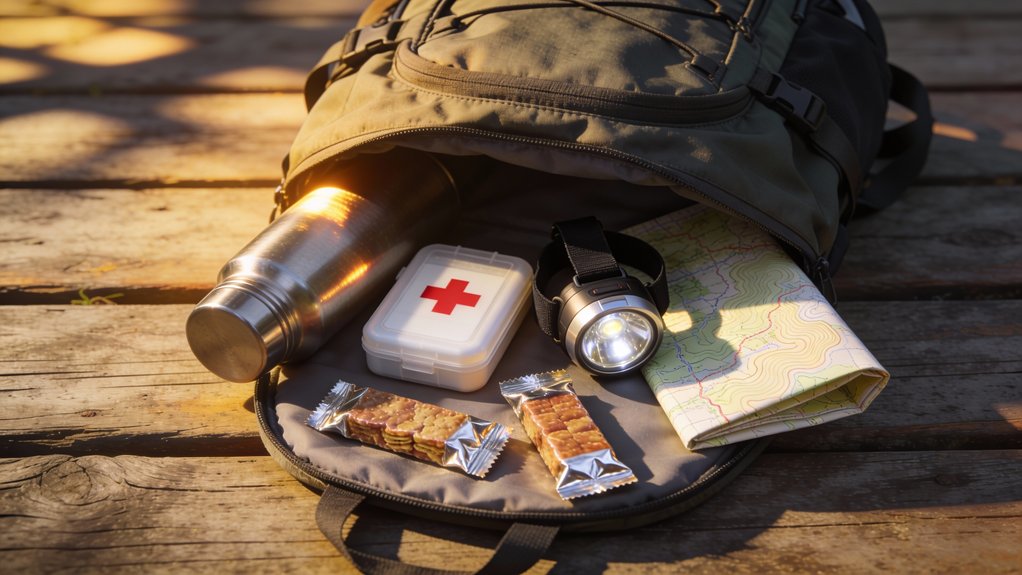
Minimalist packing transforms your first trail experience from a burden-laden slog into an enjoyable walk.
You’ll need just five packing essentials: sturdy hiking boots for ankle support, a lightweight backpack, and a reliable water bottle.
Follow hydration tips by drinking half a liter per hour to maintain energy.
Add a basic first aid kit with bandages and antiseptic wipes for minor scrapes.
Finally, bring your smartphone loaded with offline maps for navigation.
This streamlined approach keeps you mobile and prepared without unnecessary weight, letting you focus on serving your hiking companions and enjoying nature’s beauty together.
Check Weather, Tell Someone, and Download Offline Maps
Before you step onto any trail, you’ll need to complete three safety essentials that take less than ten minutes combined.
Weather safety and navigation tips form your foundation for responsible hiking:
- Check the forecast for your hiking area, noting temperature changes and precipitation that could affect trail conditions.
- Tell someone your trail name and expected return time so they can alert authorities if you don’t check in.
- Download offline maps before leaving home, since cell service often disappears on remote trails.
These simple steps protect both you and anyone who might need to help you later.