
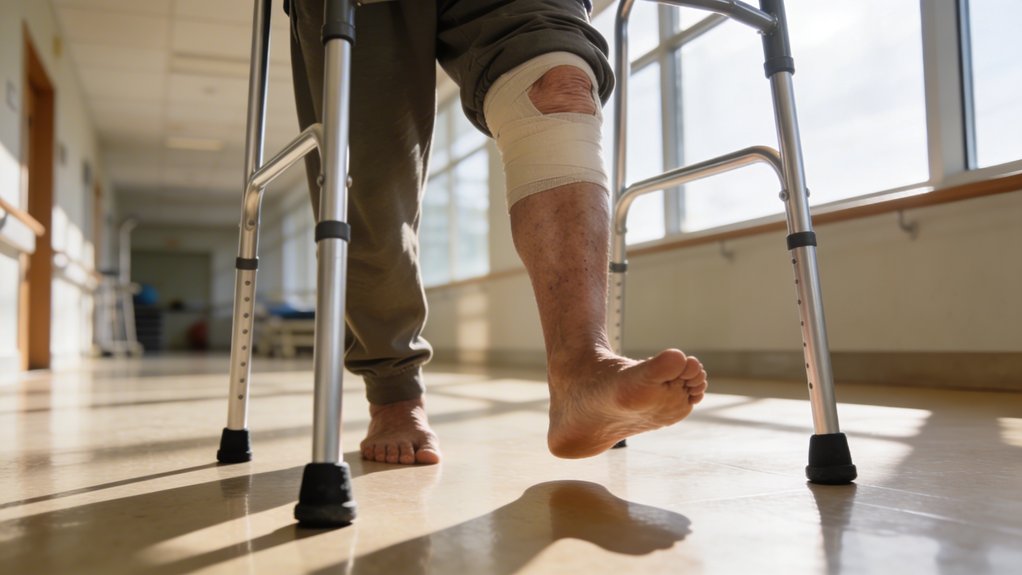
You’ll start walking within hours of your knee replacement surgery. Early movement isn’t optional, it’s essential for a strong recovery.
During the first day or two, you’ll use a walker or crutches and take short trips around your hospital room. A physical therapist will guide your heel-to-toe technique to protect your new joint.
From there, you’ll gradually progress from walker to cane to walking independently, and there’s a smart way to do each stage.
When Can You Start Walking After Knee Replacement?
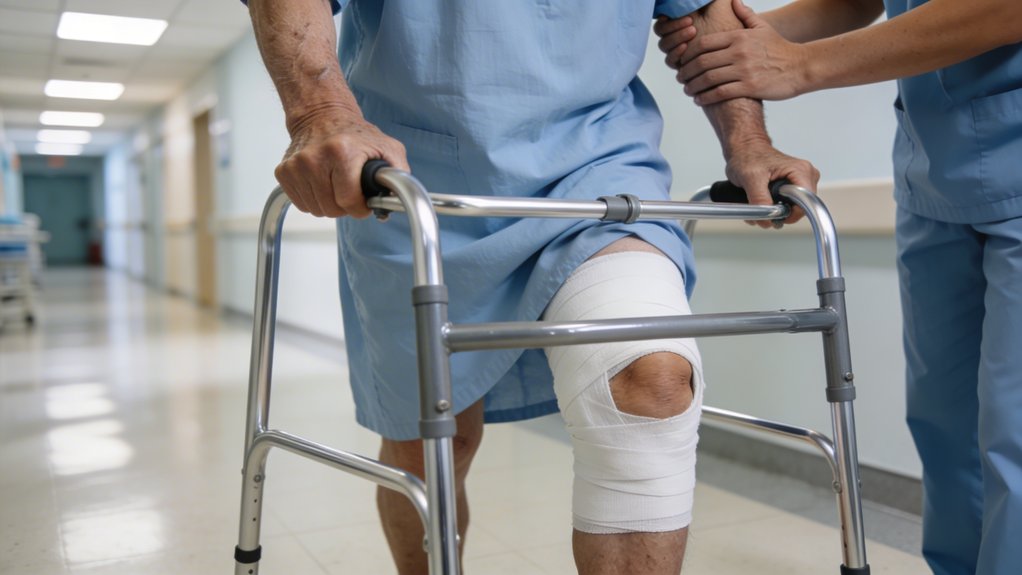
Most patients start walking within just a few hours after knee replacement surgery. Your care team will get you on your feet quickly because early movement supports better recovery outcomes.
You’ll likely use an assistive device like a walker or crutches during the first 1-2 days. Short walks around your hospital room help rebuild strength and confidence.
As you progress, incorporating ankle and calf exercises into your routine will help reduce fall risk and improve stability during your walking recovery.
Week 1: Your First Steps After Knee Replacement
The first week after knee replacement moves faster than you might expect. Your physical therapy begins on the day of surgery, with short walks around your hospital room.
You’ll use assistive devices like a walker or crutches to walk after knee replacement safely.
Your therapist focuses on heel-to-toe steps, which protect your new joint and build proper habits early. Each day, you’ll walk a little farther and a little longer as your body adjusts.
These small, consistent efforts matter enormously, not just for your recovery, but for helping you return to caring for the people who depend on you. Following the 10% rule will help you avoid setbacks as you gradually increase your walking duration during this critical recovery phase.
How to Walk Correctly After Knee Replacement
Walking correctly after knee replacement isn’t complicated, but it does require attention to a few key habits.
- Keep your posture upright and your operated knee slightly bent as you move.
- Land heel-to-toe with each step, taking small, deliberate strides rather than rushing.
- Avoid sudden turns or twists, which can strain your new joint.
Use your walker or crutches consistently during the first weeks, shifting away only as your strength improves. Watch for increased pain or swelling, these are signals to slow down.
Your physical therapist will guide your walking progression, helping you recover safely after knee replacement.
Weeks 2–6: Walking From a Walker to a Cane After Knee Replacement
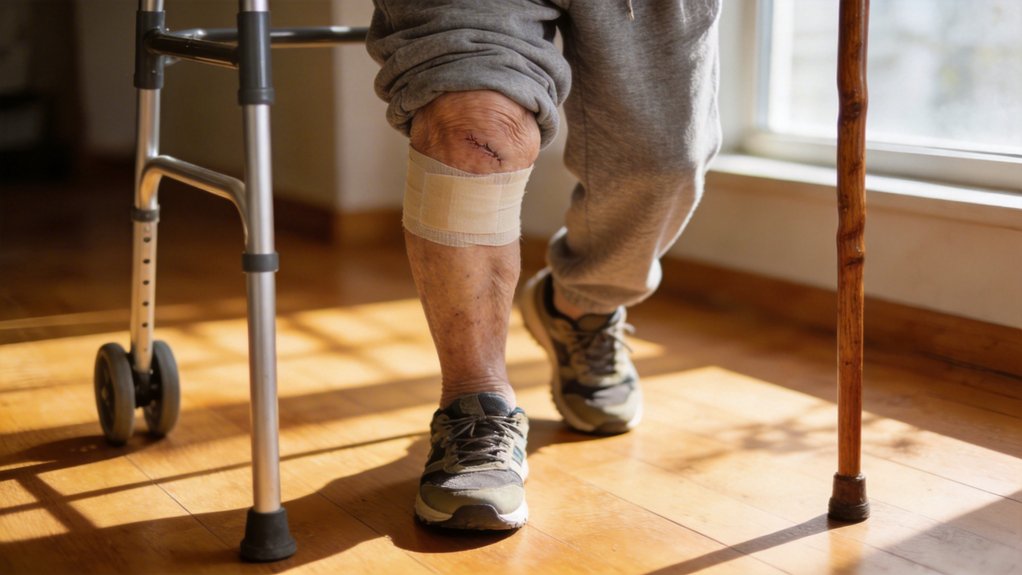
As your strength builds during weeks 2–6, you’ll likely move from a walker to a cane. This change gives you greater independence while still providing stability.
Your physical therapists will guide your progress carefully after knee replacement surgery.
Focus on these key practices:
- Hold the cane on your stronger side for proper weight distribution
- Maintain upright posture while walking
- Gradually increase your walking distance as tolerated
- Continue knee exercises and low-impact activities daily
Your goal is building confidence with each step. Listen to your body, follow your therapist’s guidance, and progress at your own pace.
Weeks 7–12: Walking Without Assistance After Knee Replacement
By weeks 7–12, you’ll likely be walking without a walker or cane. From the recovery room onward, your body has been steadily rebuilding strength.
Now, knee replacement surgery recovery reaches a rewarding milestone.
You can walk several blocks at a time and enjoy modified activities. Physical therapy exercises target your quadriceps and gluteal muscles, improving stability and mobility.
Gradually increase your walking distance as your body allows.
Avoid overdoing it, pain and swelling signal you’ve pushed too far. Follow your physical therapist’s guidance on safe progression. Your consistency now directly helps you serve and support the people who depend on you.
Knee Pain or Swelling While Walking: When to Stop
Even as your recovery progresses well, knee pain or swelling while walking is a signal you shouldn’t ignore. Stop walking immediately if you notice:
- Severe knee pain that doesn’t ease with rest
- Significant swelling that worsens after each walk
- Increased difficulty bending or straightening the knee
- Symptoms that persist beyond 24 hours despite rest and ice
Mild discomfort that resolves quickly is normal. But pushing through serious pain can damage your knee and delay recovery.
Report persistent swelling or pain to your physical therapist or surgeon. They’ll help you adjust your walking plan safely.
How to Increase Your Walking Distance After Knee Replacement Without Setbacks
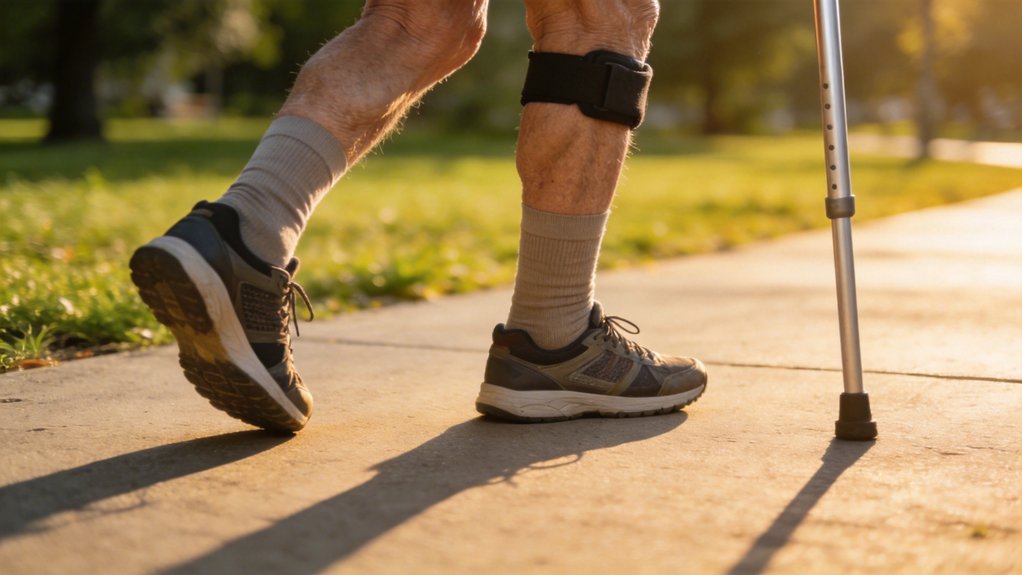
Once you know when to stop, you also need to know how to keep moving forward. Start your walking routine with short 5-10 minute sessions after knee replacement surgery. Use a walker or crutches for stability early on.
Each week, increase your distance by only 10-20%, no more. Take breaks whenever you feel pain, swelling, or fatigue. Your body will signal its limits, so listen carefully.
Complement your walking with low-impact activities like stationary cycling or swimming. These build stamina without stressing your knee.
Steady, consistent progress helps you serve others better by keeping you strong and mobile longer.
After you have fully recovered, you can look our 4-Week Walking Progression Plan for Beginners Over 50.