
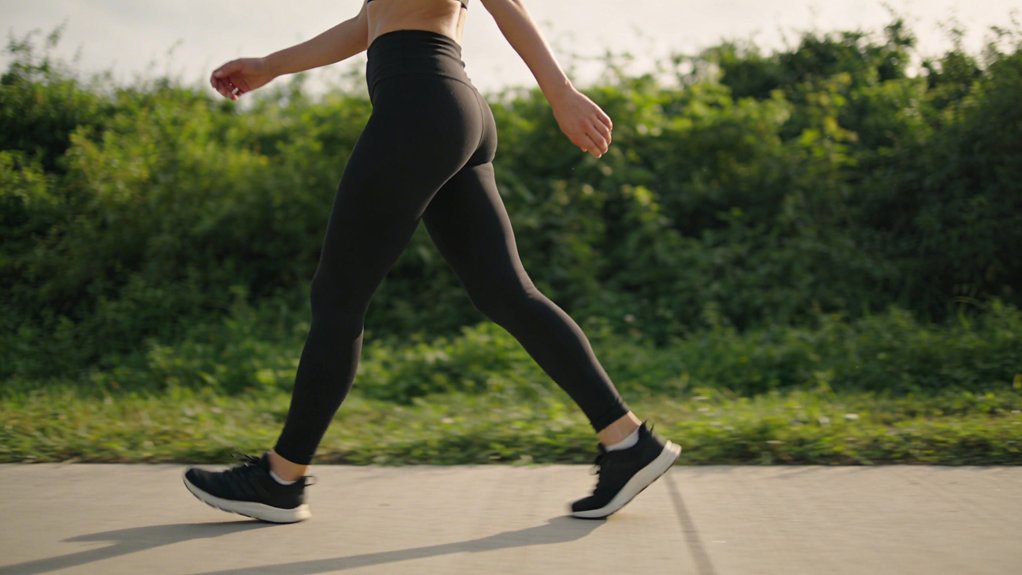
Walking with poor posture puts unnecessary stress on your spine, causing persistent aches and making recovery harder. Keep your gaze 10-20 feet ahead, roll your shoulders back and down, and let your arms swing freely below chest level.
Step heel-to-toe rather than landing flat-footed, and imagine a string gently pulling your crown upward.
These small adjustments reduce joint stress greatly. Keep going to discover the specific mistakes and exercises that make correct walking posture feel completely natural.
Why Walking With Poor Posture Causes Back Pain
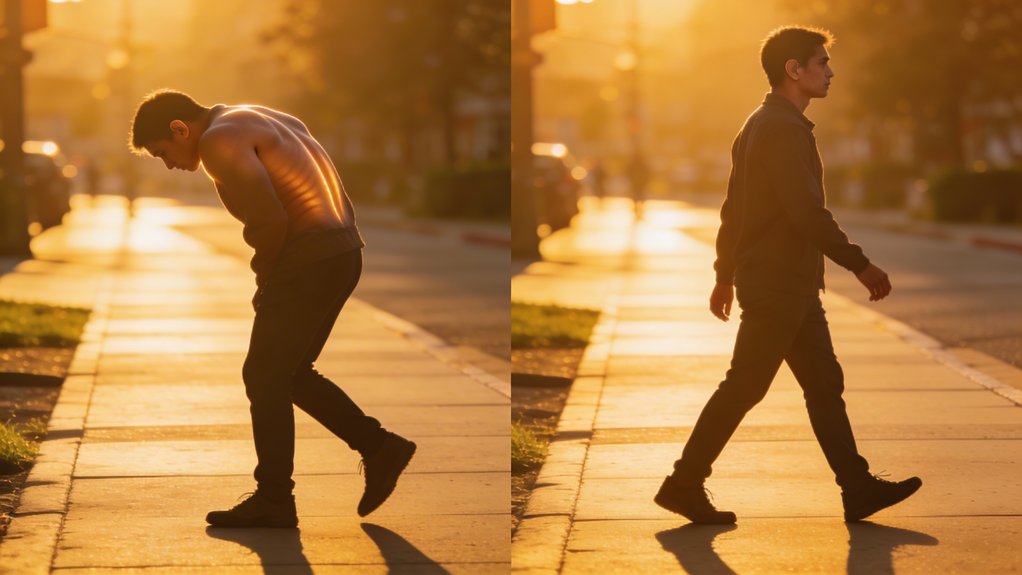
When you walk with poor posture, your spine absorbs stress it wasn’t designed to handle. Your muscles compensate, pulling unevenly across your lower back and upper back.
Over time, this creates persistent aches and pains that make it harder to stay active and care for others.
Poor alignment also restricts blood flow to surrounding tissues, slowing recovery and increasing stiffness.
Weak ankles and knees compound this problem by creating uneven stress across lower body joints, forcing your spine to work harder to maintain balance.
Walking properly distributes your body weight evenly, reducing strain on joints and muscles. Good posture isn’t just about looking confident, it’s about keeping your body functional so you can keep showing up for the people who need you.
Common Walking Mistakes That Compress Your Spine
Most people don’t realize they’re compressing their spine with every step. Taking long strides forces your lower back to absorb impact instead of your joints sharing the load.
Every step you take is either protecting your spine or slowly compressing it.
Leaning forward while you walk shifts pressure onto your lumbar discs, wearing them down over time.
Poor posture in your lower body, like locked knees or turned-out feet, disrupts how forces move forward through your frame. Even looking down at your phone tilts your head, adding roughly 27-60 pounds of pressure to your back.
Wearing properly fitted walking shoes with adequate support helps distribute impact evenly across your feet, reducing unnecessary strain on your spine during extended walking adventures.
Small corrections in how you walk protect the people counting on you to stay healthy.
How to Align Your Body Correctly From Head to Toe
Good alignment starts at the top and works its way down.
Picture yourself being lifted from the crown of your head, standing tall with an elongated spine. Keep your gaze 10-20 feet in front of you, not down at your feet.
Roll your shoulders up, back, and down so they’re not creeping toward your ears. Let your arms swing naturally below chest height like a pendulum.
When your feet in front make contact, roll heel to toe rather than landing flat-footed.
Right posture throughout your entire body reduces joint stress, prevents backaches, and helps you serve others longer without pain.
Three Posture Checks You Can Do on Your Next Walk
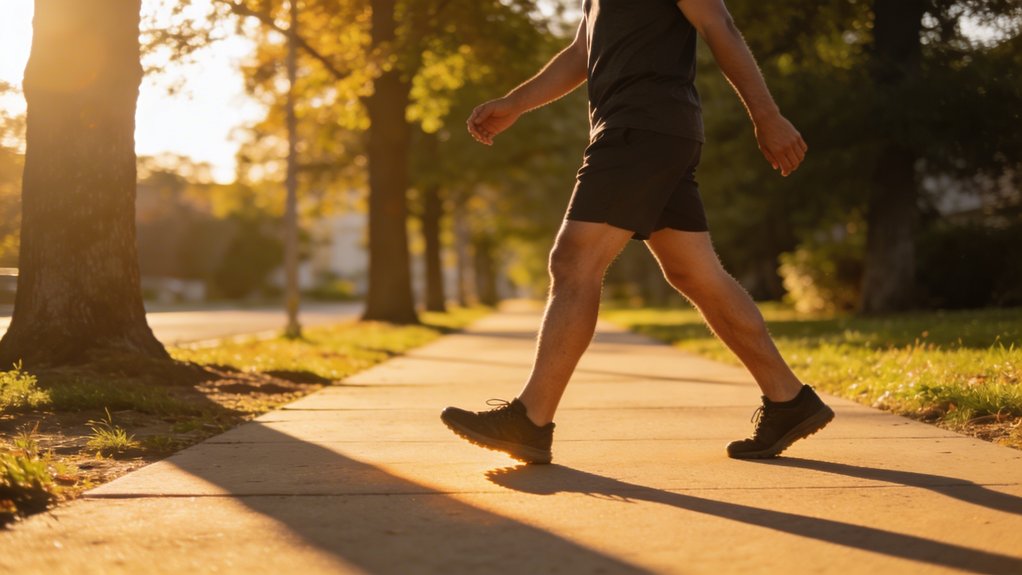
Knowing the right techniques is one thing, but putting them into practice on your next walk is another. Make sure to run through these three quick checks as you go.
- First, imagine a string pulling you from the crown of your head to keep your spine tall.
- Second, swing your arms freely below chest height to improve your walking rhythm and reduce upper-body tension.
- Third, roll from heel to toe with each step instead of landing flat-footed.
These simple checks support healthy living, helping you place one foot in front of the other with better form every time.
Exercises That Make Good Walking Posture Feel Automatic
Even though good walking posture starts in your head, your muscles need to be trained to hold it. These three exercises build the foundation:
- Wall angels improve shoulder mobility and train proper arm swing mechanics.
- Cat-cow stretches boost spinal flexibility and reinforce upright alignment awareness.
- Planks and bird dogs develop core strength and stabilize your pelvis while walking.
Add glute activation drills, like squeezing a small ball between your knees, to correct leg positioning.
Good posture begins in the mind, but your muscles must be trained to sustain it through targeted exercise.
Balance work, including single-leg stands, sharpens proprioception so your body naturally maintains an elongated stance. Practice these consistently, and good posture becomes automatic.