
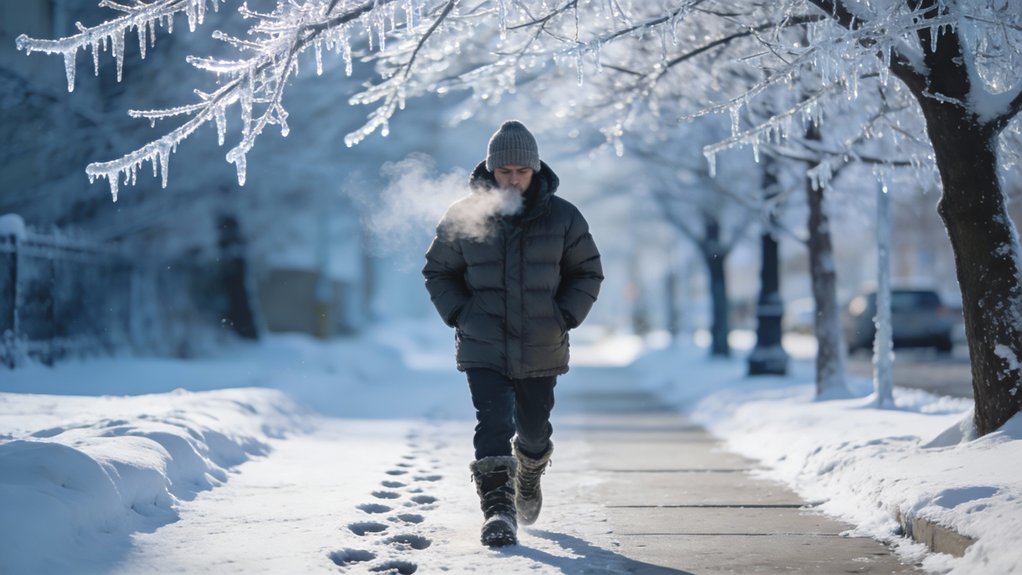
Winter doesn’t have to end your walking routine, but you’ll need to adjust your approach when temperatures drop below 40°F.
Cold air can feel harsh on your lungs, your fingers go numb after ten minutes, and icy sidewalks turn every step into a potential fall.
The good news? You can stay comfortable and safe outdoors with the right gear and a few smart strategies that’ll keep you moving through January and February.
Why Cold Weather Walking Boosts Your Mood and Health

While most people retreat indoors when temperatures drop, bundling up for a cold weather walk delivers measurable benefits that warm weather can’t match.
Your brain releases more endorphins and dopamine in the cold, providing natural mood enhancement that helps you better serve those around you.
You’ll burn extra calories through shivering and thermogenesis, making winter walks particularly effective for weight management.
The cold air strengthens your immune system and encourages deeper breathing, improving lung capacity.
Cold air challenges your respiratory system, building stronger lungs while training your immune defenses to work harder.
Nature exposure provides stress relief, reducing anxiety levels considerably.
These combined effects make cold weather walking an efficient way to maintain your physical and mental health. Regular walking also enhances memory and cognitive function, helping you stay sharp as you age.
Dress in Three Layers to Stay Warm and Dry
The key to comfortable cold weather walking lies in mastering the three-layer clothing system, which regulates your body temperature far better than a single heavy coat.
Start with synthetic fabrics like Cool-Max or polypropylene against your skin; they’ll wick away sweat and dry quickly, unlike cotton.
Add fleece or wool blends as your insulating middle layer, doubling up when temperatures drop.
Top it off with a waterproof, breathable shell made from Gore-Tex or similar materials.
These layering techniques protect you from wind and precipitation while letting moisture escape.
Use zippers to adjust ventilation as you walk, and you’ll stay comfortable throughout your service activities.
Choose Waterproof Winter Boots With Non-Slip Traction
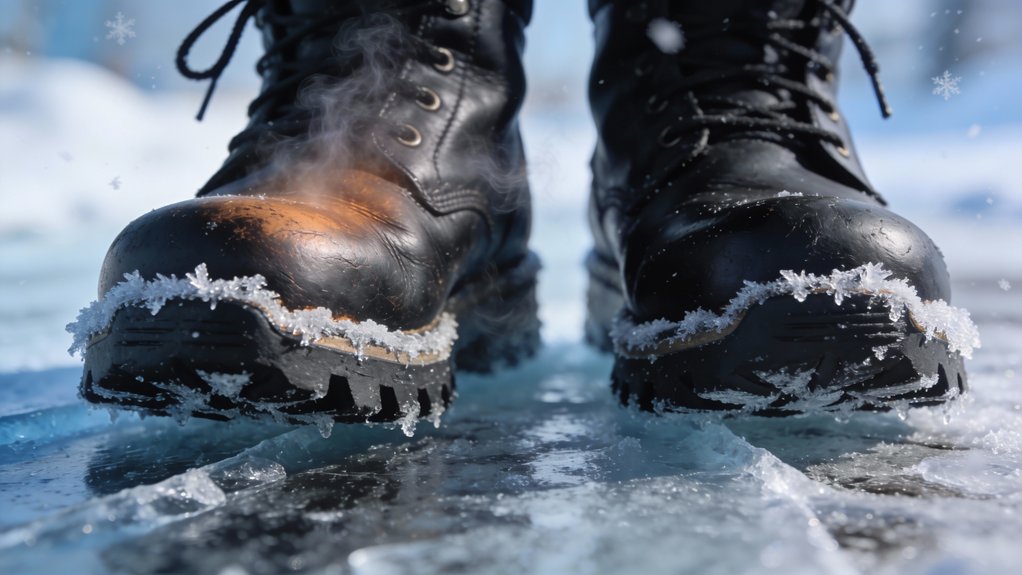
Your best layering system won’t help much if your feet get soaked in the first ten minutes of your walk.
Invest in boots made from waterproof materials like treated leather or synthetic membranes that keep moisture out while letting your feet breathe.
Look for non slip soles with deep rubber treads, at least 5mm deep, to grip ice and snow effectively.
Insulated options maintain warmth without adding excessive weight that’ll tire you out.
A wide, low heel provides the stability you need on slippery surfaces.
Quality winter boots let you focus on serving others rather than worrying about your footing.
Add Ice Grippers for Safe Walking on Frozen Paths
Even with proper winter boots, icy patches can send you sliding across frozen sidewalks in seconds. That’s where ice grippers come in: they’ll transform your cautious shuffle into confident strides.
Different ice gripper types use traction technology like metal spikes or coiled springs that dig into ice, giving you the stability you need to reach those you’re helping.
Slip them over your boots before heading out, then remove them once you’re indoors to protect tile and polished floors.
For extra security when assisting others on treacherous paths, consider using a cane with a retractable ice pick attachment.
Wear Reflective Gear to Stay Visible in Low Light
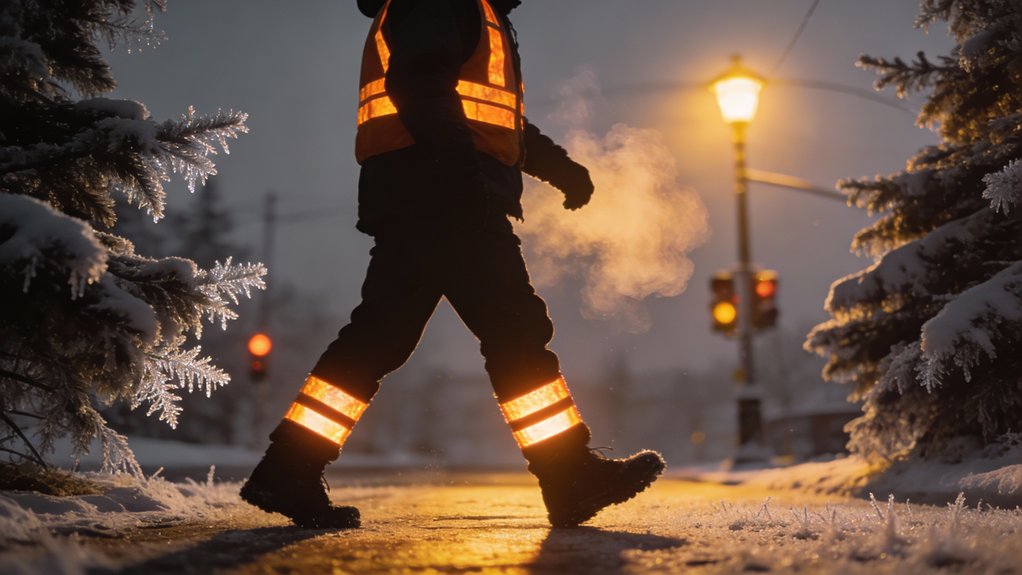
Winter daylight disappears fast, often catching walkers off-guard when their afternoon stroll suddenly turns into a twilight trek through dim streets.
Winter’s early darkness transforms routine afternoon walks into unexpected journeys through shadows, leaving pedestrians vulnerable in dimly lit streets.
You’ll want reflective gear to stay visible: vests, bands, or accessories that bounce light from car headlights up to 1,000 feet away.
These visibility tips can protect you and help drivers spot you sooner. Look for shoes with reflective details, and wear at least one reflective piece in poorly lit areas.
Combine reflective accessories with bright colors to stand out against dark backgrounds. Your safety matters, especially when you’re serving your community through regular walking routes.
Keep Your Balance With Shuffling Steps and Wide Stance
Being visible protects you from traffic, but staying upright on icy sidewalks requires a different approach to how you move.
Slow your pace and adopt a shuffling technique rather than taking normal strides. This method keeps more of your foot in contact with the ground, reducing slip risk.
Widen your stance by keeping your feet several inches apart for better stability improvement.
Take your hands out of your pockets, you’ll need them for balance or to catch yourself.
If you’re helping elderly neighbors navigate winter conditions, consider bringing a cane or walking stick for their added support and confidence.
Plan Safe Routes With Cleared and Well-Lit Paths
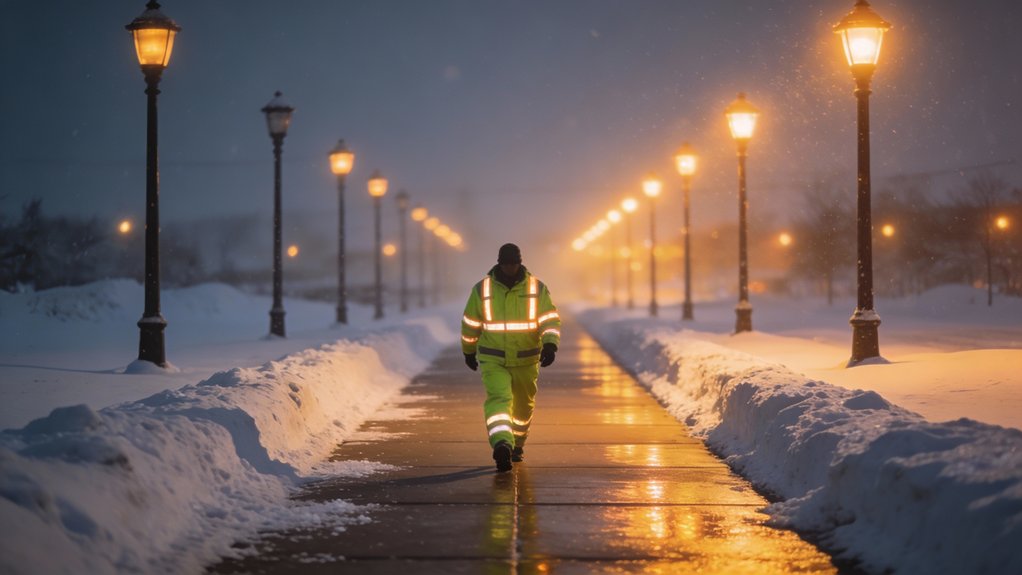
Before you head out, scout your walking route during daylight hours to identify which sidewalks and paths get cleared regularly. This walking route selection process helps you serve yourself and others by preventing accidents.
Check local apps or city websites for maintained winter trails; many municipalities post updates within 24 hours of snowfall. Your path safety evaluation should prioritize well-lit streets, especially if you’re walking early morning or evening.
Share your planned route and return time with family or neighbors. Well-maintained paths reduce fall risks and let you focus on helping others who might need assistance during winter walks.
Tuck in Your Clothing to Trap Body Heat
Once you’ve mapped your route, you’ll need to dress properly to stay warm throughout your walk.
Shirt tucking makes a real difference in cold weather. When you tuck your shirts into your pants, you create a barrier that stops cold air from sneaking up your torso.
This simple adjustment keeps your body’s heat close to your skin where it belongs. The warmth retention you’ll gain is noticeable, often enough to make an uncomfortable walk feel manageable.
Try tucking just one layer first to test it yourself.
Proper layering strategies work together with shirt tucking to maximize your insulation and comfort in cold conditions.
Combined with proper layering, this strategy helps you serve others through consistent outdoor ministry.
Allow Two to Three Weeks for Cold Weather Acclimatization
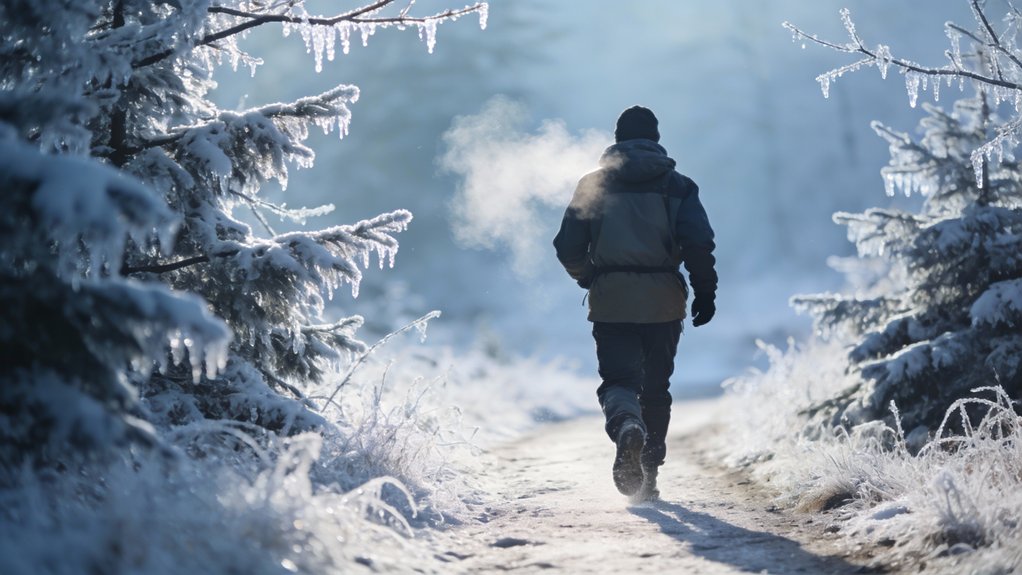
Your body needs time to adapt to cold conditions, and rushing this process will make every walk harder than it should be.
Plan for two to three weeks of gradual exposure before expecting comfortable outdoor sessions.
Give your body two to three weeks to gradually adapt before winter walking feels truly comfortable.
During this period, your metabolism increases and your cold tolerance improves naturally.
Start with shorter walks, just fifteen to twenty minutes, then extend duration as your body adjusts.
This acclimatization burns more calories while making winter walks genuinely enjoyable instead of miserable.
Remember that everyone adapts differently, so don’t compare your progress to others.
Patience during these initial weeks guarantees you’ll serve your community through consistent walking all season long.
Know When to Walk Indoors During Extreme Cold
Even with proper acclimatization, some weather conditions are simply too dangerous for outdoor walking.
Weather monitoring becomes essential when temperatures fall below 20°F (-6°C), as frostbite can damage your fingers and ears within minutes.
Wind chill compounds the risk, making already cold air feel even more brutal.
Heavy snow and ice create treacherous surfaces where falls become likely.
Poor air quality from winter pollution poses additional health concerns.
Indoor alternatives like gyms, indoor tracks, or home equipment let you maintain your walking routine safely.
You’ll serve yourself and those who depend on you by choosing wisely when conditions turn extreme.