
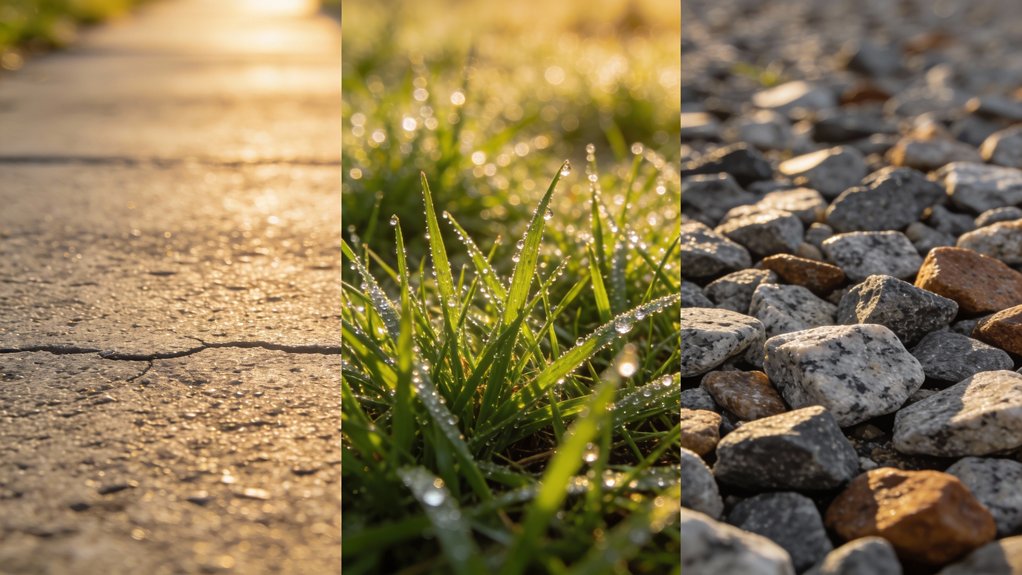
Your walking surface creates up to three times more joint impact than your actual stride does. Most people blame their shoes or walking speed when their knees start aching, but the ground beneath you matters more than either factor.
Concrete transfers 100% of impact force back into your joints, while grass absorbs roughly 40% and gravel sits somewhere in between.
Understanding which surface protects your body best could mean the difference between walking comfortably at 70 or dealing with chronic pain.
Which Walking Surfaces Are Easiest on Your Joints After 50?
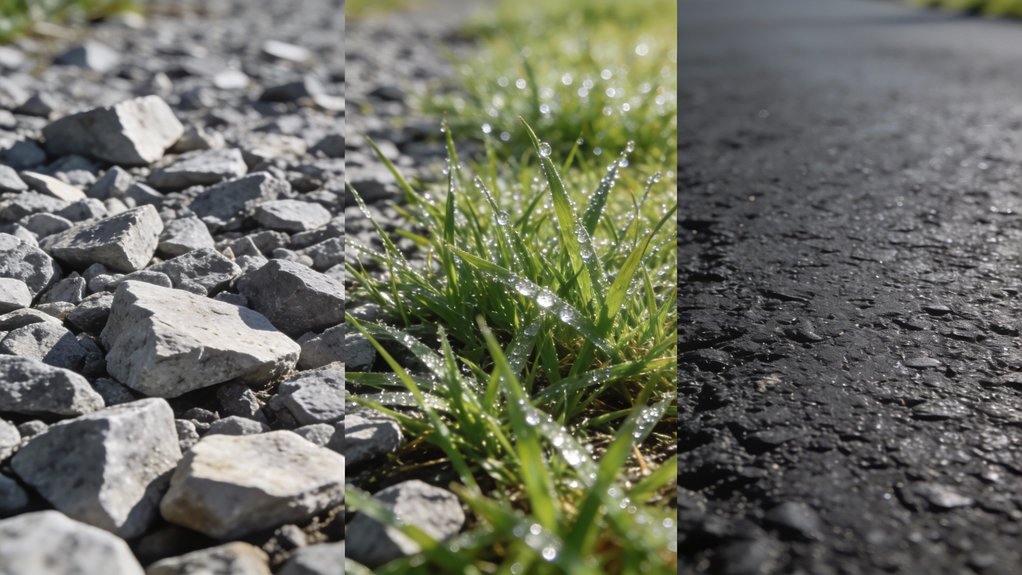
As your joints accumulate decades of wear and tear, the surface beneath your feet becomes increasingly important to your comfort and mobility.
Grass benefits your knees and hips by absorbing impact naturally, though wet conditions can challenge your balance.
Gravel advantages include its forgiving texture that cushions each step while maintaining enough firmness for stability.
Crushed cinder delivers the best combination: soft enough to protect joints yet firm enough for daily walks.
Concrete creates the highest impact forces, potentially aggravating arthritis.
Asphalt offers slightly better shock absorption than concrete but remains harder than natural surfaces for regular use.
Building joint strength and endurance through consistent walking on appropriate surfaces helps you maintain mobility and independence as you age.
Why Hard Surfaces Like Concrete Damage Joints Over Time
Every step you take on concrete sends a jolt through your body that softer surfaces would normally absorb. Those impact forces travel straight up through your ankles, knees, and hips with nowhere to dissipate.
Over months and years, this repetitive pounding creates cumulative damage you won’t notice until joint stress becomes pain.
The rigid surface prevents your foot from moving naturally, forcing awkward biomechanical adjustments that strain surrounding tissues.
Research confirms what your body already knows: regular concrete walkers face higher rates of stress fractures, tendonitis, and early osteoarthritis. When combined with excessive walking volume, these hard surfaces significantly increase the risk of chronic joint pain that can develop into serious overuse injuries.
Your joints weren’t designed for such unforgiving terrain.
Why Grass and Gravel Walking Surfaces Reduce Joint Pain
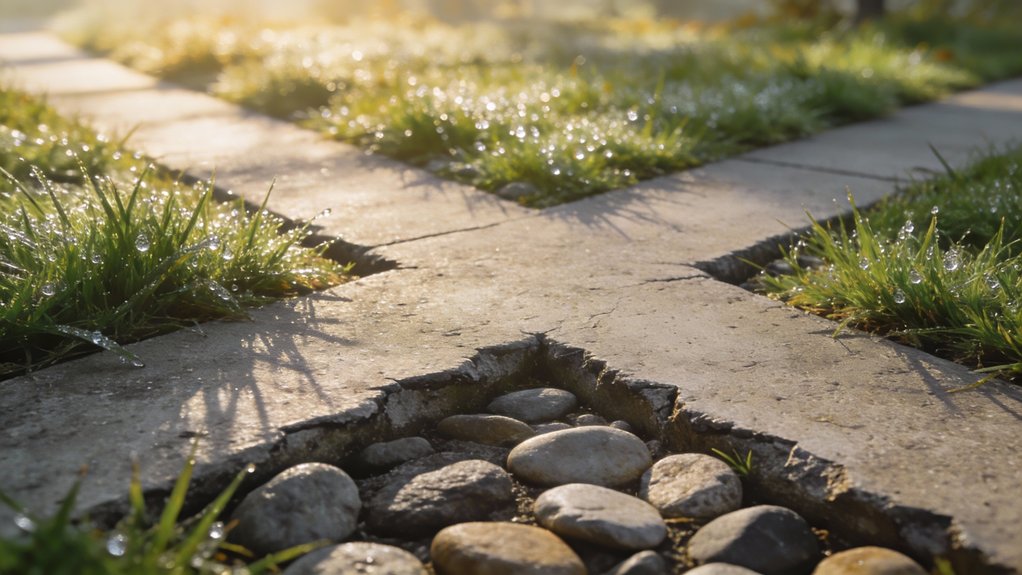
When you step onto grass or gravel, something immediately changes about how your body handles each stride.
These softer surfaces engage your stabilizing muscles more actively than concrete does, distributing forces throughout your legs rather than concentrating stress on vulnerable joints.
The natural cushioning provides superior impact absorption, reducing the shock that would otherwise travel through your knees and hips.
Research shows that people with arthritis experience measurably less pain when walking regularly on grass or gravel.
The subtle variations in these surfaces also strengthen your balance and build leg resilience, protecting joints from the repetitive strain that damages them.
Concrete vs. Asphalt: Which Walking Surface Is Safer?
Most sidewalks force you to choose between concrete and asphalt, and that choice affects your joints more than you’d think.
Concrete durability makes it smoother and longer-lasting, but those benefits come at a cost: higher impact forces that stress your knees and hips during daily walks.
Asphalt’s slightly softer surface reduces joint strain by 8-12%, making it safer for regular exercise routines.
Both surfaces retain heat and can reach 140°F on summer days.
While concrete’s smoothness prevents tripping hazards, asphalt maintenance issues create cracks and irregularities.
For protecting those you care for during long walks, asphalt wins.
Best Walking Surfaces for Knee Pain and Arthritis
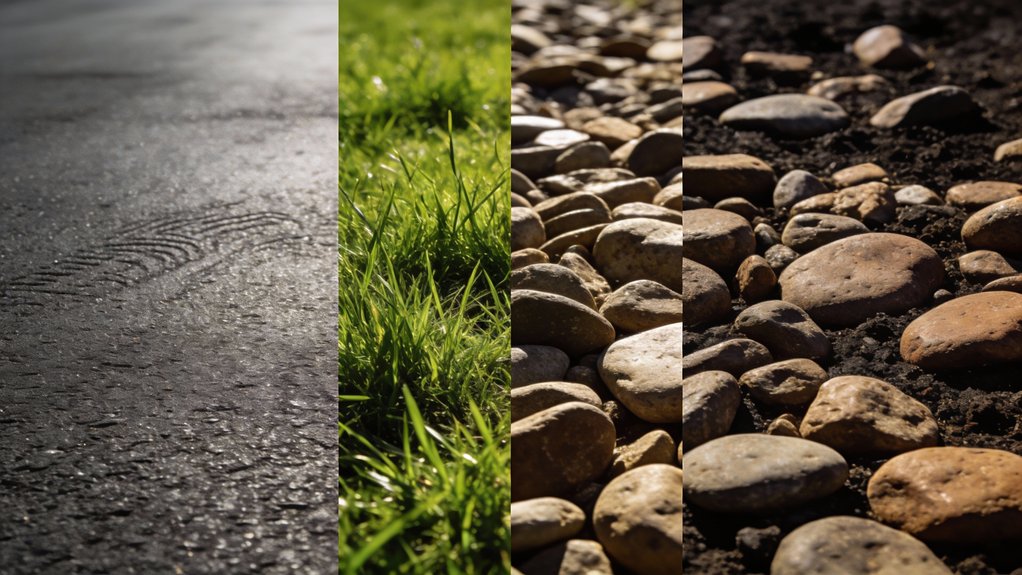
Joint pain changes everything about your walking surface choices. When you’re helping someone manage knee discomfort, steer them toward softer terrain.
The walking benefits multiply when impact forces decrease.
Surfaces ranked for joint protection:
- Grass paths absorb shock like natural cushioning, reducing stress by up to 40% compared to concrete.
- Crushed cinder trails blend softness with stability, preventing muscle fatigue during longer walks.
- Gravel routes offer moderate cushioning while strengthening stabilizing muscles around the knee.
- Pavement creates maximum impact: save it for when no alternatives exist.
Regular walks on forgiving surfaces actively strengthen supporting muscles, potentially reducing arthritis symptoms over time.
Best Walking Surfaces for Hip and Lower Back Problems
Hip and lower back pain demands even more attention to surface selection than knee issues.
You’ll find grass offers the ideal cushioning to reduce impact stress on your spine and hips.
When comparing grass vs. gravel, crushed cinder provides excellent surface stability while maintaining enough give to prevent repetitive strain injuries.
Concrete pavement creates excessive impact forces that can worsen existing problems.
Regular gravel presents uneven terrain that may compromise your balance and trigger lower back discomfort.
Stick with grass or crushed cinder paths, they’ll help those you’re caring for walk comfortably while protecting vulnerable joints and maintaining proper stability.
Are Uneven Walking Surfaces Safe if You Have Balance Issues?
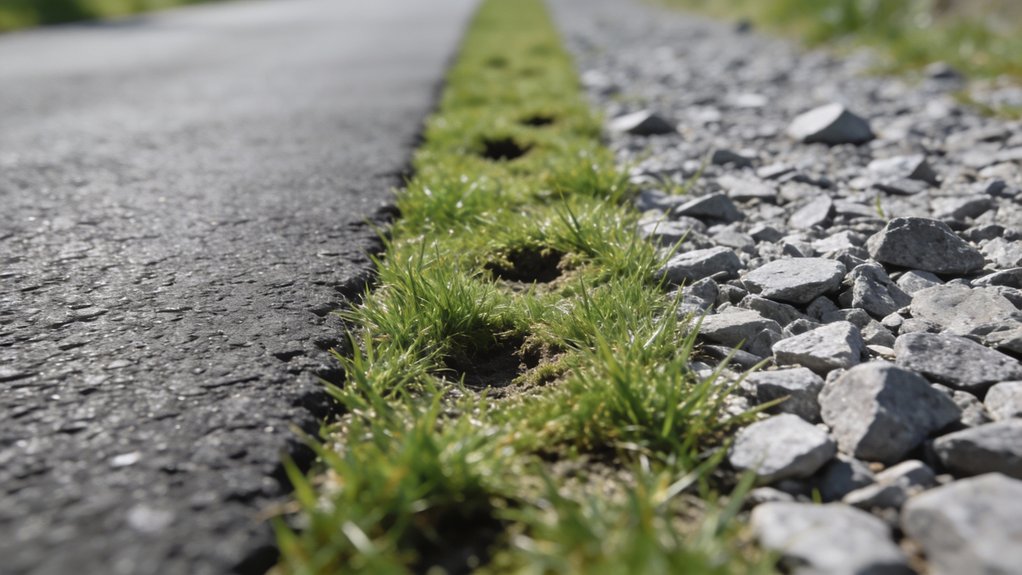
Walking with balance issues turns every surface irregularity into a potential hazard. Before exploring uneven terrain, you’ll want proper balance techniques and surface adaptability strategies to protect those you’re caring for.
Safer approaches for uneven surfaces:
- Start with flat, 10-foot sections of packed grass before progressing to more challenging terrain.
- Use walking poles or stability aids on gravel paths to create three points of contact.
- Practice weight-shifting exercises on soft surfaces for 5-10 minutes daily.
- Schedule physical therapy consultations to develop personalized stability programs.
Gradual exposure builds confidence without compromising safety.
Your healthcare provider can recommend appropriate progression timelines.
How to Transition to Softer Walking Surfaces Without Injury
Your body needs time to adjust when you shift from concrete sidewalks to forgiving grass or sand. Start with 10-minute intervals on softer terrain, mixing them into your regular routes.
This gradual adaptation lets your stabilizing muscles strengthen without overwhelming them. The soft surface benefits include reduced joint impact, but they demand more from your ankles and core.
Invest in supportive footwear with proper cushioning. Watch for discomfort; it’s your signal to slow down.
Add leg and core exercises twice weekly to build the strength you’ll need. Increase your soft-surface time by five minutes each week until you’re comfortable.
How Often Should You Change Walking Surfaces for Joint Health?
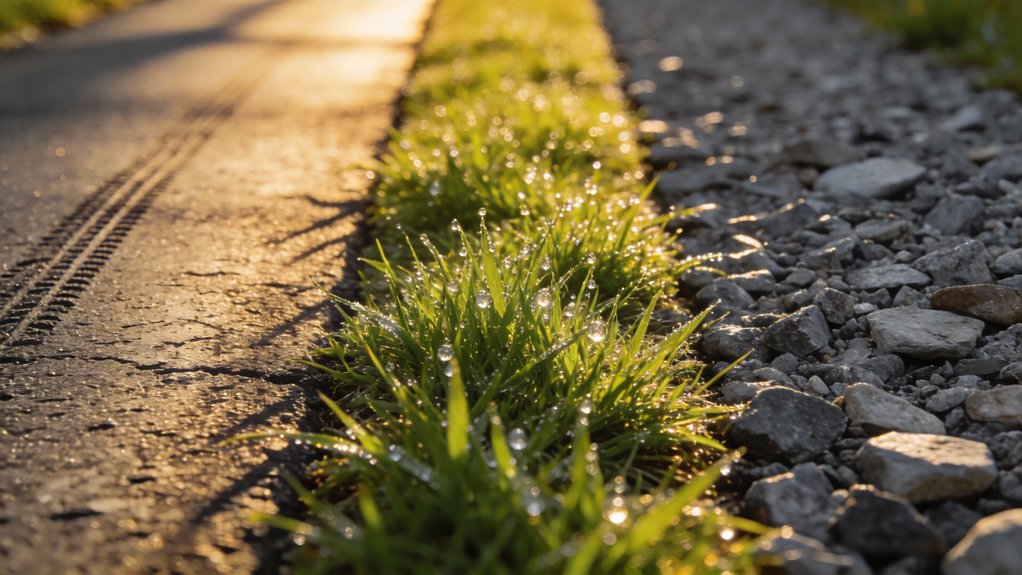
How often should you mix up where you walk? For ideal joint health, aim to alternate between hard and soft surfaces at least once a week.
Surface variety reduces repetitive strain while promoting joint flexibility through different impact levels.
Walking on different surfaces strengthens joints by distributing impact forces and activating varied muscle groups throughout the week.
Consider this practical rotation:
- Monday through Wednesday: concrete sidewalks for convenience and accessibility
- Thursday: grassy park trails to give joints a softer landing
- Friday and Saturday: asphalt paths for moderate firmness
- Sunday: crushed cinder tracks or woodland trails for recovery
This pattern engages stabilizing muscles differently each day, strengthening the support system around your joints while improving balance and coordination.
So the walking surface is very important for your joints. What about hills? It’s more about energy use. Beginner hikers waste their energy on hills. Read more in our other article on how to make steep climbs manageable.