

Your ankles absorb force equal to 3-5 times your body weight with every step you take, yet most people never train them directly until after an injury occurs. This oversight explains why ankle sprains account for roughly 25,000 emergency room visits daily in the United States alone.
Your knees face similar stress, bearing loads up to six times your weight when walking downhill. The right strengthening exercises can protect both joints from preventable damage, keeping you mobile and pain-free for decades.
How Weak Ankles and Knees Cause Walking Injuries
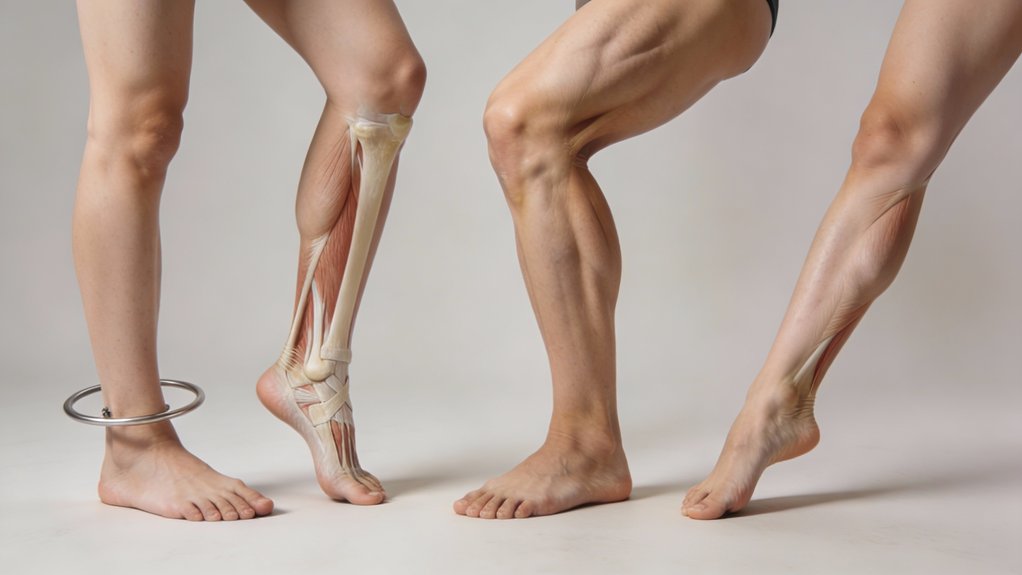
When your ankles and knees lack strength, every step you take becomes a potential setup for injury.
Ankle instability makes you vulnerable to the 2 million sprains Americans experience annually. That’s concerning when you’re caring for others who depend on your mobility.
Knee weakness compounds the problem by creating uneven stress across your lower body joints.
About 40% of ankle sprains lead to chronic symptoms that limit your ability to serve effectively.
The combination forces improper walking mechanics, increasing fall risk and overuse injuries.
Your body compensates poorly, leading to pain that restricts the active lifestyle needed for helping others.
Building joint strength and endurance through targeted exercises can significantly reduce these injury risks and restore confidence in your daily movement.
6 Ankle Strengthening Exercises to Prevent Sprains
Five essential exercises target the muscles and ligaments that keep your ankles stable during each step you take.
These movements enhance ankle mobility while building strength that protects you from the 2 million sprains Americans experience yearly.
Regular ankle strengthening prevents injuries that sideline millions of Americans each year while improving your overall stability and movement quality.
- Calf raises and single-leg calf raises improve stability and balance.
- Tib raises and standing arch raises strengthen shin and foot muscles.
- Banded ankle inversion and eversion target inner and outer ankle muscles.
- Single-leg balance and squats develop proprioceptive training for better coordination.
You’ll reduce fall risks while helping others stay active and injury-free through these proven exercises.
5 Knee Exercises That Build Stability for Walking
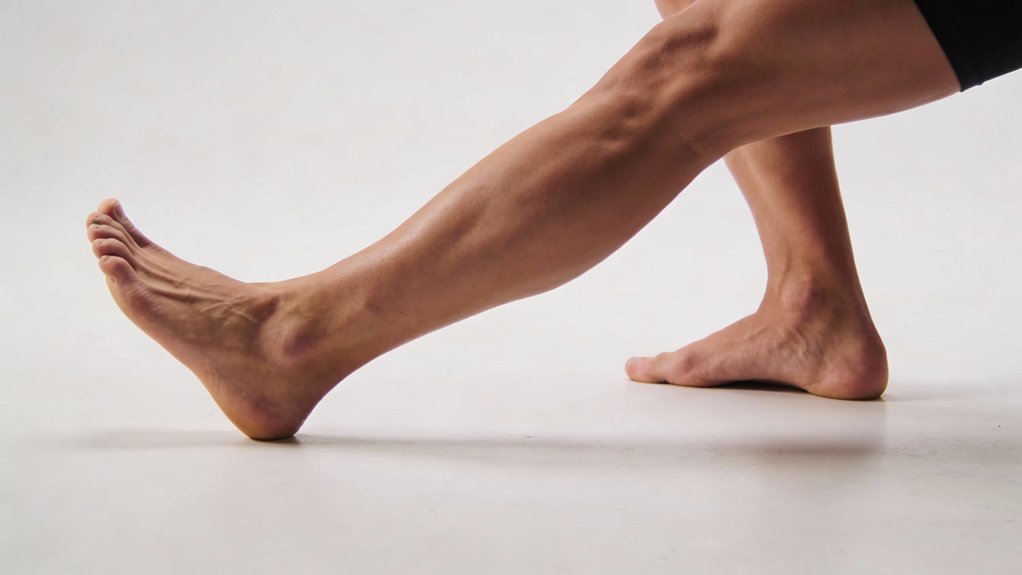
Strong knees depend on balanced muscle development around the joint, where your quadriceps, hamstrings, and calves work together to absorb impact with each step.
You’ll build this foundation through straight leg raises, calf raises, wall sits, and lunges, exercises that strengthen the supporting muscles while maintaining proper knee alignment.
Add single-leg stands to improve your balance and coordination, which directly supports injury prevention during daily activities.
Don’t skip hamstring stretches; they’ll keep your knee joint flexible and protected.
Practice these movements 2 to 3 times weekly, and you’ll maintain the strength needed to serve others confidently and safely.
Balance Exercises for Stable Ankles and Knees
Your ankle and knee stability depends largely on proprioception, your body’s ability to sense where your joints are in space without looking at them.
You’ll strengthen this vital skill through consistent balance training. Start with these exercises:
- Single leg stands: Hold for 30 seconds while brushing your teeth each morning.
- Balance board training: Practice 2-3 times weekly for ankle strengthening.
- Single leg RDLs: Perform 10 reps per side to build stability.
- Stability balls exercises: Challenge your balance during core work.
These movements help protect the 2 million Americans who experience ankle sprains annually, enabling you to serve others more effectively. Incorporating essential stretches alongside these exercises can further enhance your mobility and reduce tightness in the joints.
Stretches That Prevent Ankle and Knee Pain

While balance training strengthens your proprioception, stretching addresses the underlying muscle tightness that creates ankle and knee pain in the first place.
You’ll want to focus on calf stretches that target your gastrocnemius and soleus muscles; these improve ankle mobility and prevent sprains.
Standing quadriceps stretches reduce knee strain by maintaining flexibility around the joint.
Regular hamstring stretches maintain muscle elasticity, taking pressure off your knees during walks.
Don’t overlook hip flexor stretches and lower back work either. They improve your alignment and posture, minimizing pain throughout your lower body.
Consistent stretching protects those you’re caring for and yourself.
Your Weekly Ankle and Knee Exercise Routine
A practical weekly routine combines these exercises into two or three sessions spaced throughout your week.
This schedule improves ankle mobility and knee alignment while helping you better serve those who depend on your physical capability.
Your Weekly Exercise Plan:
- Monday/Thursday: Perform calf raises, single leg calf raises, and tib raises for 3 sets of 12 repetitions each.
- Tuesday/Friday: Complete banded ankle inversion and eversion exercises with 15 repetitions per direction.
- Wednesday/Saturday: Practice single leg balance holds for 30 seconds and reverse lunges for 10 reps per leg.
- Rest Day: Sunday allows muscle recovery.
Exercises to Avoid if Your Knees or Ankles Hurt

When pain strikes your knees or ankles, certain exercises transform from helpful movements into potential setbacks that can delay your recovery and limit your ability to care for others.
Skip high impact activities like running and jumping, they’ll worsen existing injuries.
Avoid deep squats and lunges that stress painful joints.
Don’t attempt agility drills requiring quick lateral movements, as they increase sprain risk.
Steer clear of excessive twisting and pivoting motions that create chronic instability.
Finally, resistance exercises targeting your lower body need proper warm-up and support.
Without them, you’re risking overexertion when your community needs you healthy and mobile.
When to See a Physical Therapist for Walking Pain
Knowing which exercises to skip matters, but recognizing when professional help becomes necessary matters even more.
Understanding the causes of pain and identifying signs of injury helps you serve others better by maintaining your mobility.
Consult a physical therapist if you experience:
- Pain persisting beyond a few days despite rest, especially with swelling or bruising
- Limited mobility in your knees or ankles that affects daily activities
- Ongoing symptoms two weeks after an ankle sprain or knee injury
- Recurring discomfort from previous injuries, or numbness and tingling while walking
Early intervention prevents minor issues from becoming major setbacks.