
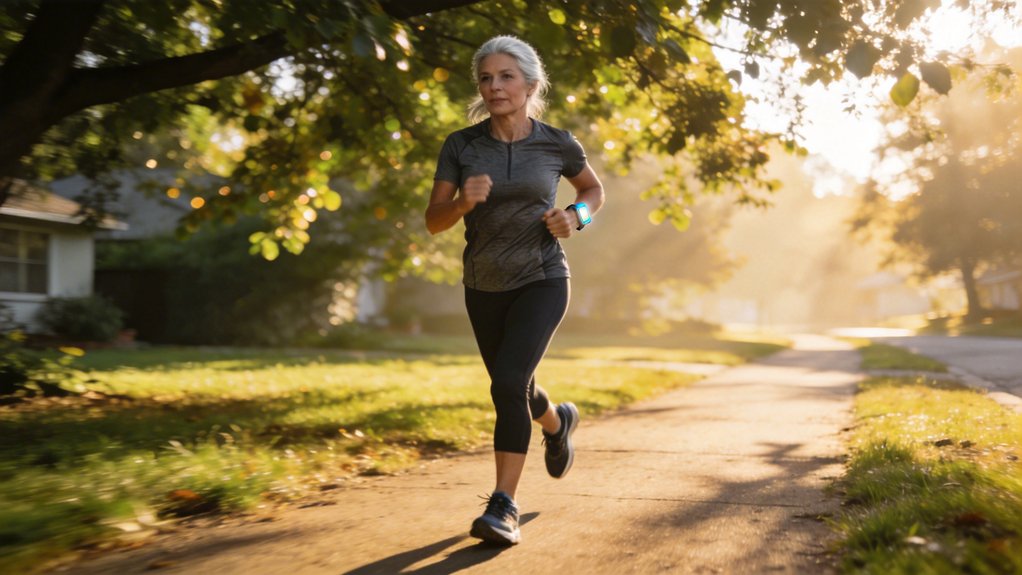
Walking for weight loss after 50 actually works, but your body’s changing rules matter. Hormonal shifts, muscle loss, and a slower metabolism make standard advice less effective.
Walking 30,60 minutes daily, five days a week, can produce 6,10% weight loss over 12,24 weeks. Pair that with around 100 grams of daily protein, and results improve dramatically.
The right pace, structure, and eating strategy make all the difference, and there’s more to unpack here.
Why Weight Loss Gets Harder After 50
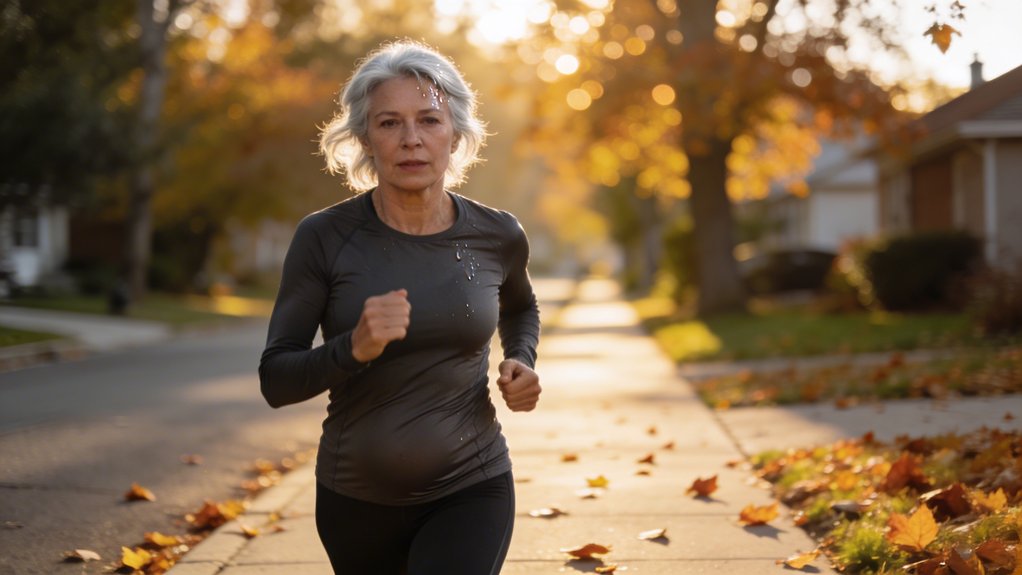
Once you hit 50, losing weight gets noticeably harder, and there are real biological reasons for that. You naturally lose muscle mass with age, which slows your metabolism and reduces how efficiently you burn fat.
Hormonal changes also play a significant role. Decreased estrogen and testosterone encourage your body to store more fat, especially around your midsection. Stress compounds the problem, too, hitting harder as you age and triggering fat-storing hormones like cortisol. Regular walking can help counteract this by reducing cortisol levels, particularly when done outdoors in nature.
These aren’t excuses, they’re real physiological shifts. Understanding them helps you make smarter choices about how you exercise, recover, and support the people depending on you.
How Much Weight Can Walking Help You Lose?
So how much can walking actually move the needle on the scale? Combined with a calorie-controlled diet, walking can help you lose 1-2 pounds per week. Studies show that walking 30-60 minutes daily, five days a week, produces 6-10% weight loss over 12-24 weeks.
Each mile you walk burns roughly 100-300 calories, depending on your pace and body weight. For burning fat more efficiently, try interval walking: alternating between faster and slower paces boosts your metabolism. Remember that following the 10% rule helps prevent injury and burnout, which keeps you consistent with your walking routine.
Once you’ve hit your weight loss goal, walking 150-300 minutes weekly helps you keep those pounds off for good.
Why Slow Walks Outperform Hard Ones for Fat Loss After 50
Slower walks can actually outperform faster ones for fat loss after 50. Research shows women walking 3.2 mph for 54 minutes burned 2.73 times more body fat than those walking 4.1 mph for 45 minutes.
Burns more fat as primary fuel
Preserves energy without fatigue
Protects bone mineral density
Sustains longer workout minutes consistently
Supports recovery between harder sessions
You don’t need to push hard every time. Steady, longer walks are a powerful, sustainable tool for real fat loss results.
Structure Your Walks to Burn More Fat After 50
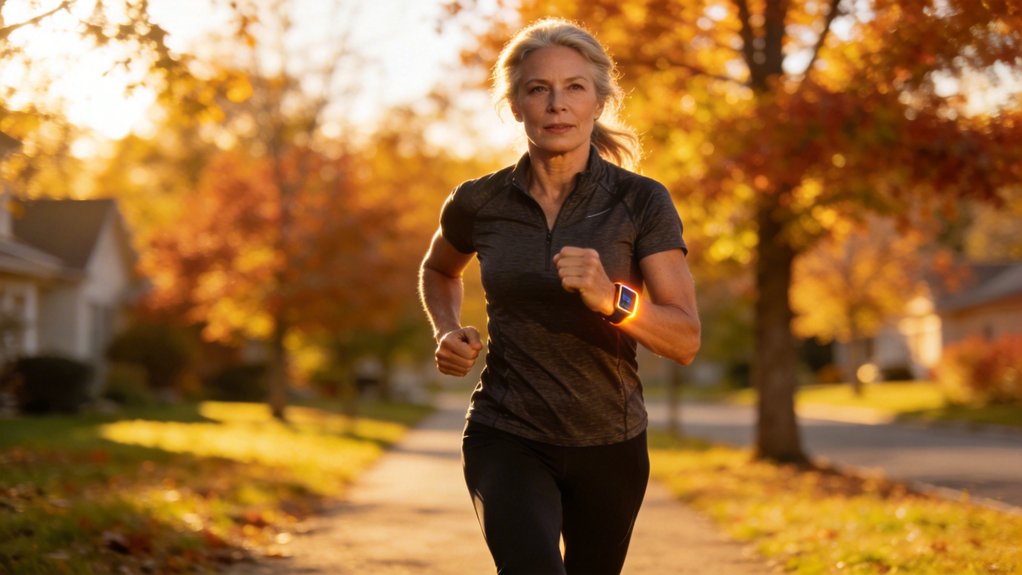
Longer, easier walks are a great foundation, but they’re only part of the picture. To maximize fat burning after 50, you need structure. Aim for 3-4 interval walking sessions weekly, alternating between faster bursts and slower recovery periods.
Add 1-2 easy walks for active recovery and stress relief. Pair this with 2-3 strength training sessions to protect muscle and boost your metabolism. Interval walking activates more muscle fibers, improves insulin sensitivity, and keeps your body adapting.
This balanced weekly plan supports sustainable fat loss while protecting your joints and keeping your energy levels steady throughout the week.
How Often and How Long to Walk for Real Weight Loss After 50
The right walking frequency makes all the difference for fat loss after 50. Meeting the Activity Guidelines for Americans means hitting 150 minutes of moderate aerobic activity weekly.
Structure your regular physical activity like this:
- Walk 3,4 interval sessions weekly, alternating harder and easier efforts
- Add 1,2 easy, low-intensity walks for recovery and mental clarity
- Include 2,3 strength training sessions to protect muscle and boost fat burning
- Keep most walks between 30,45 minutes
- Never rely on walking alone, combine interval walking with strength work
This balanced weekly structure triggers the metabolic changes your body needs after 50.
What to Eat to Make Your Walks Actually Work After 50
Walking consistently is half the battle, what you eat is the other half. Your body needs enough protein to preserve muscle while losing weight. Aim for 100 grams of protein daily, research shows this can double weight loss results in women over 50 who walk regularly.
Build your meals around unprocessed, protein-rich foods, and you could triple those results. Processed foods quietly work against you, draining energy and adding unwanted calories.
One woman lost 93.3 pounds in 13 months simply by walking and cleaning up her diet. Small, consistent food choices genuinely transform what walking can do for you.