
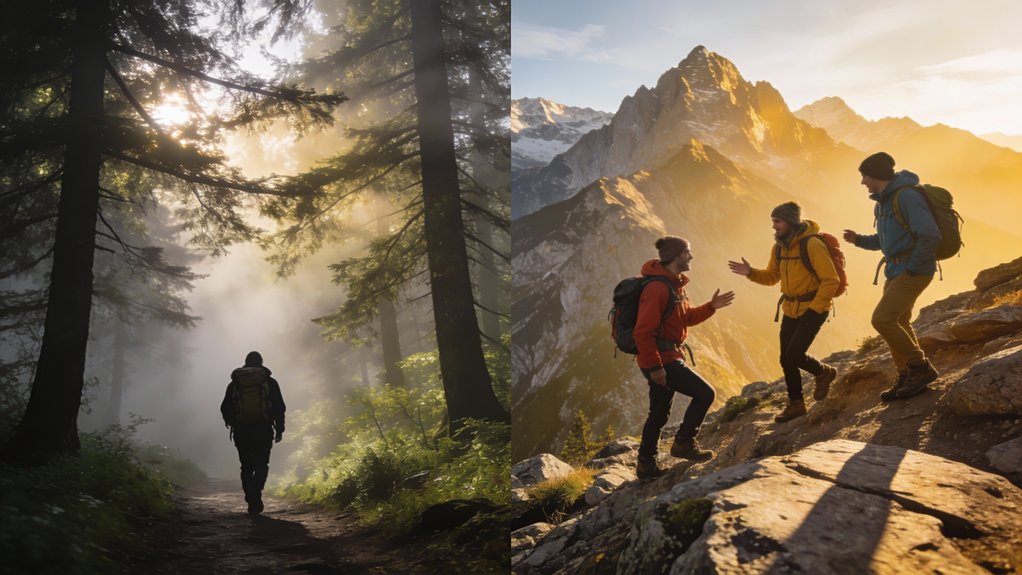
You’ve probably noticed that some days you crave a solitary morning walk, while other times you’d rather have a friend beside you, and there’s actually solid reasoning behind both impulses.
Walking alone lets you set your own pace, whether that’s a leisurely 20-minute stroll or a brisk 45-minute power walk. Walking with others keeps you accountable when motivation dips and makes those longer distances feel shorter.
The trick is knowing which approach serves you best on any given day.
Match Your Walking Style to What You Actually Want
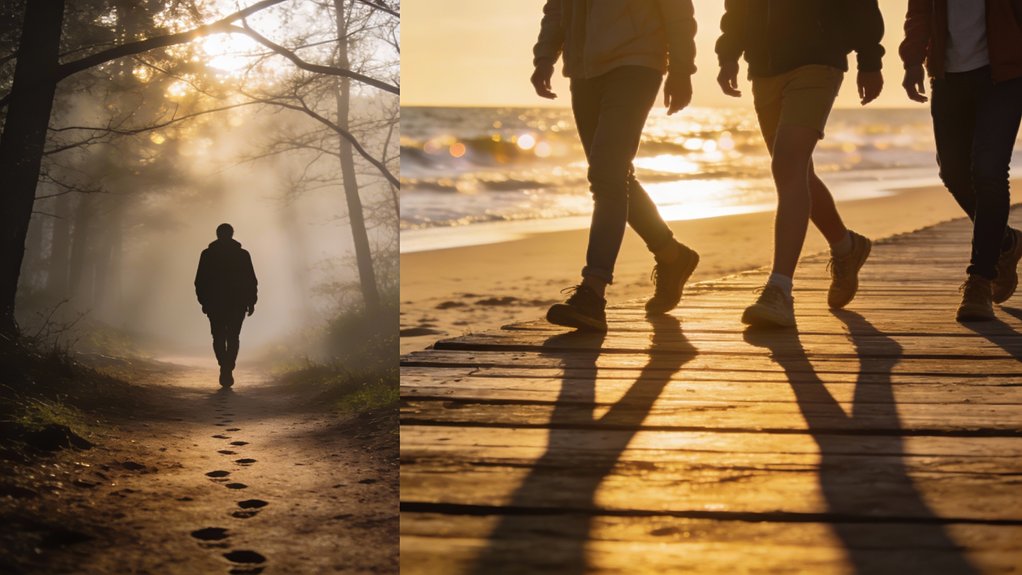
Your walking style should match what you’re actually trying to get from the activity.
If you’re seeking introspection or mental clarity, solo motivation drives your best results. You’ll maintain your own pace, whether that’s a brisk 3.5 mph or a moderate 2 mph, without adjusting for others.
Solo walks let you process thoughts, pray, or simply observe your surroundings without distraction. Regular solo walking has been shown to boost problem-solving abilities while simultaneously reducing stress levels.
Without the pull of conversation or compromise, solitary walking creates mental space for reflection, meditation, and unfiltered observation.
Conversely, if you’re looking to serve others through companionship or accountability, group dynamics create meaningful connections.
Walking with aging neighbors provides them security. Leading a morning walk group encourages others toward better health.
Choose based on your actual goals, not what seems ideal.
Walking Alone for Freedom, Focus, and Mental Clarity
Solo walking strips away the social obligations that typically govern group activities.
You’ll discover freedom benefits immediately: choosing your own route, setting your pace, stopping when you want. This autonomy creates space for mental clarity that’s hard to find elsewhere.
Walking alone lets you process thoughts without interruption, working through challenges while your body moves steadily forward.
The combination of physical activity and solitude reduces stress and anxiety naturally.
You’re free to walk briskly for fitness or slowly for reflection.
This focused time strengthens your capacity to serve others because you’ve taken care of your own mental health first.
When practiced with intention, solo walking becomes mindful walking meditation, deepening your self-awareness and concentration with each step.
How Walking Partners Keep You Showing Up More Often

When you schedule a walk with someone else, you’ve created an informal commitment that’s harder to break than a promise to yourself. Your accountability partner expects you to show up, and that external pressure delivers a motivation boost when your own willpower falters.
Research shows people exercise 90% more consistently with companions. The conversation makes those 30 minutes fly by, turning effort into enjoyment.
You’ll notice fewer skipped sessions because canceling means letting someone down. For those you serve who struggle with consistency, this simple social strategy transforms sporadic attempts into reliable routines that stick.
When to Walk Solo vs. When to Bring Company
Walking partners deliver consistency, but they aren’t the right choice for every session.
Choose solo benefits when you need deep focus or want to push your pace until you’re breathless; conversation makes this difficult. You’ll also enjoy spontaneous route changes and unplanned stops without coordinating with others.
However, group dynamics shine for safety concerns, particularly if you’re older or walking in unfamiliar areas. Women often feel more secure with companions during early morning or evening walks.
Consider your neighborhood’s safety level, your fitness goals, and whether you need accountability or independence that day.
Alternating Solo and Group Walks Throughout Your Week

Alternating Solo and Group Walks Throughout Your Week
You’ll gain maximum benefits by mixing solo and group walks into a deliberate weekly pattern rather than choosing one approach exclusively.
Schedule solo walks on Mondays and Wednesdays for personal reflection and goal setting. Reserve Tuesdays and Thursdays for group sessions where you’ll experience strong group dynamics and build community connections.
The solo benefits include enhanced focus on your pace and mindfulness practice.
Group walks provide safety, engaging conversations, and motivation through shared commitment.
This alternating schedule prevents boredom while addressing both your physical fitness goals and your desire to support and connect with others in meaningful ways.
Finding Walking Partners Who Match Your Pace and Goals
The right walking partner transforms your routine from a solitary effort into a shared commitment that keeps you both accountable.
Look for someone who’ll challenge you to maintain a brisk pace, around 3 to 4 miles per hour, while still allowing comfortable conversation.
Consider these essential matching factors:
- Fitness goals that align with yours, whether weight loss, endurance building, or stress relief
- Shared interests beyond walking that spark engaging discussions
- Similar availability for consistent weekly schedules
- Compatible communication styles during exercise
- Willingness to adjust pace and routes as both partners progress
Regular check-ins guarantee you’re both benefiting equally from your partnership.
When Walking Alone Becomes Risky: Safety Considerations

While partnership offers many benefits, sometimes you’ll find yourself walking alone, and that’s when you need to think carefully about your surroundings.
Choose populated trails during daylight hours, particularly in unfamiliar areas.
Women face specific challenges, including unwanted attention and harassment, making awareness tactics essential.
Keep your phone charged, share your route with someone, and trust your instincts when situations feel off.
The Camino and other popular routes have documented instances of stalking and aggressive behavior.
Develop safety strategies before you head out: walk busier paths, avoid isolated sections, and stay alert to people who seem overly interested in your movements.
Saying No to Group Walks Without Guilt or Awkwardness
Sometimes turning down a friend’s invitation to walk together feels harder than the walk itself. You can master the guilt free decline by establishing assertive boundaries that honor both your needs and your friendships.
Boundaries aren’t barriers to friendship—they’re bridges to authenticity that strengthen connections while protecting your personal needs.
Your approach matters:
- Be direct yet warm: “I’m walking solo today to clear my head, but let’s catch up for coffee this week.”
- Emphasize personal goals: “I’m working on maintaining a 15-minute-per-mile pace for my fitness plan.”
- Suggest alternatives: “Group walks aren’t working for me right now, but I’d love to meet for lunch instead.”
- Skip lengthy explanations: Brief honesty beats elaborate excuses.
- Remember your why: Solo walks build mental clarity and independence.