
Every step feels like walking on broken glass when foot pain strikes, turning your daily stroll into an ordeal you’d rather avoid. You’re not imagining it: seven specific conditions cause most walking discomfort, and each one has telltale signs you’ll recognize immediately.
The good news? Once you identify what’s actually hurting, you can fix it with targeted strategies that work within days or weeks.
Here’s what’s likely causing your problem and exactly how to address it.
Plantar Fasciitis: Stabbing Heel Pain With Your First Morning Steps
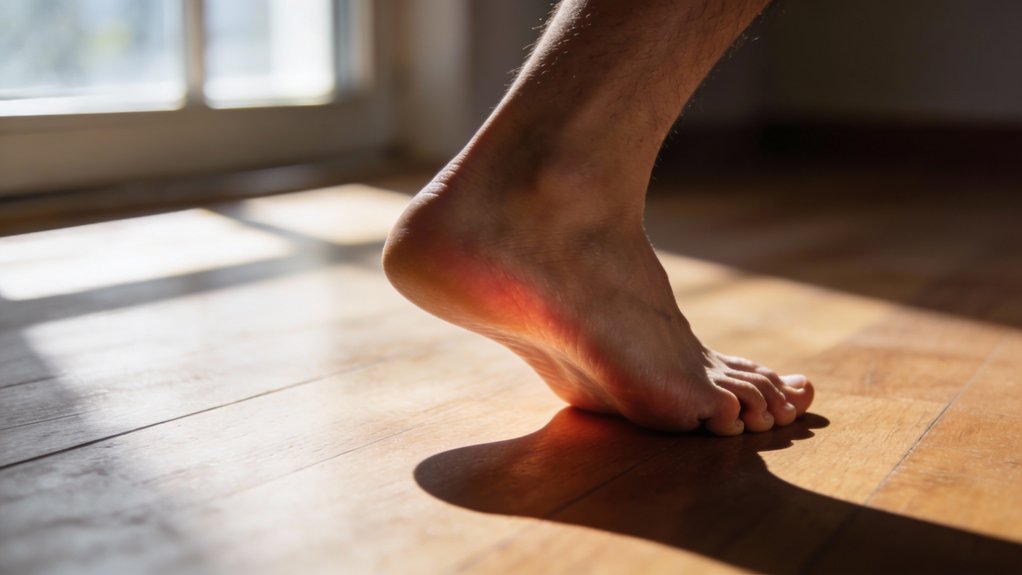
When you swing your legs out of bed in the morning and plant your feet on the floor, plantar fasciitis announces itself with a sharp, stabbing pain in your heel.
This inflammation of the thick tissue band running along your foot’s bottom typically stems from overuse, poor footwear choices, or structural imbalances like flat feet.
Symptom management includes ice therapy, targeted stretching exercises, and supportive shoes with proper arch support.
Preventive measures focus on maintaining a healthy weight, avoiding high-impact activities during flare-ups, and wearing custom orthotics.
Choosing footwear with adequate cushioning and stability is essential, as shoes designed for walking adventures provide the foundation for pain-free movement.
Early treatment prevents chronic pain that limits your ability to serve others effectively.
Achilles Tendonitis: Heel and Ankle Pain From Overuse or Tight Muscles
As your calf muscles tighten or you suddenly ramp up your running routine, the thick rope of tissue connecting your heel to your calf, the Achilles tendon, takes the brunt of that stress.
You’ll feel pain and stiffness along your heel’s back, especially after rest periods or during activity.
Strengthening your calf muscles through consistent exercise is essential for maintaining joint strength and endurance as you age, which helps prevent Achilles tendon injuries.
Help others avoid this condition by sharing these prevention tips:
- Perform daily calf stretches to maintain tendon flexibility
- Increase activity levels gradually over several weeks
- Wear supportive shoes with proper heel cushioning
Rest, ice, and targeted exercises typically resolve symptoms.
Persistent cases may need physical therapy or medical intervention.
Bunions: Painful Bumps That Make Walking in Shoes Difficult
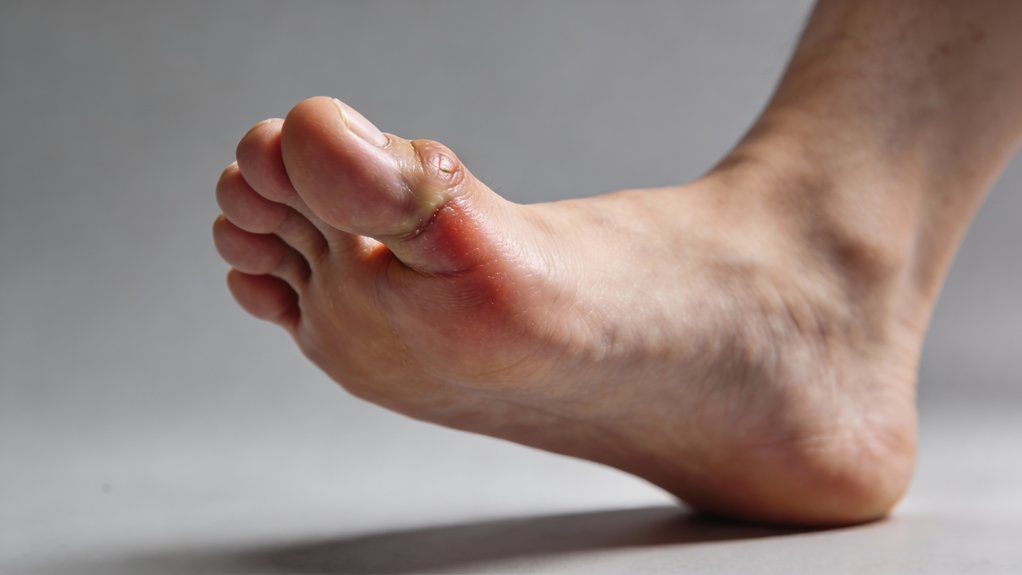
That bony protrusion jutting out from your big toe’s base isn’t just unsightly, it’s a bunion, and it can turn every step into a challenge.
This inherited condition worsens when you wear tight, pointy shoes that squeeze your toes together.
Common bunion symptoms include swelling, redness, and your big toe angling inward toward the others.
You’ll struggle finding shoes that don’t hurt.
Bunion treatments start with switching to footwear featuring a wide, deep toe box. This simple change prevents progression and reduces pain.
Severe cases need surgical correction called a bunionectomy.
Early intervention makes all the difference for those you’re helping.
Morton’s Neuroma: Burning or Tingling Pain Between Your Toes
If you’re experiencing a sharp, burning sensation in the ball of your foot, you might’ve Morton’s neuroma, a thickening of nerve tissue between your toes.
This nerve compression typically develops between your third and fourth toes, creating a feeling like you’re standing on a pebble.
Your footwear choices play a significant role in preventing and managing this condition.
Consider these treatment approaches:
- Switch to shoes with wider toe boxes and lower heels
- Use custom orthotics or padding to reduce pressure
- Try corticosteroid injections for inflammation relief
When conservative methods don’t work, surgery can remove the affected nerve tissue.
Metatarsalgia: Ball-of-Foot Pain That Worsens With Activity
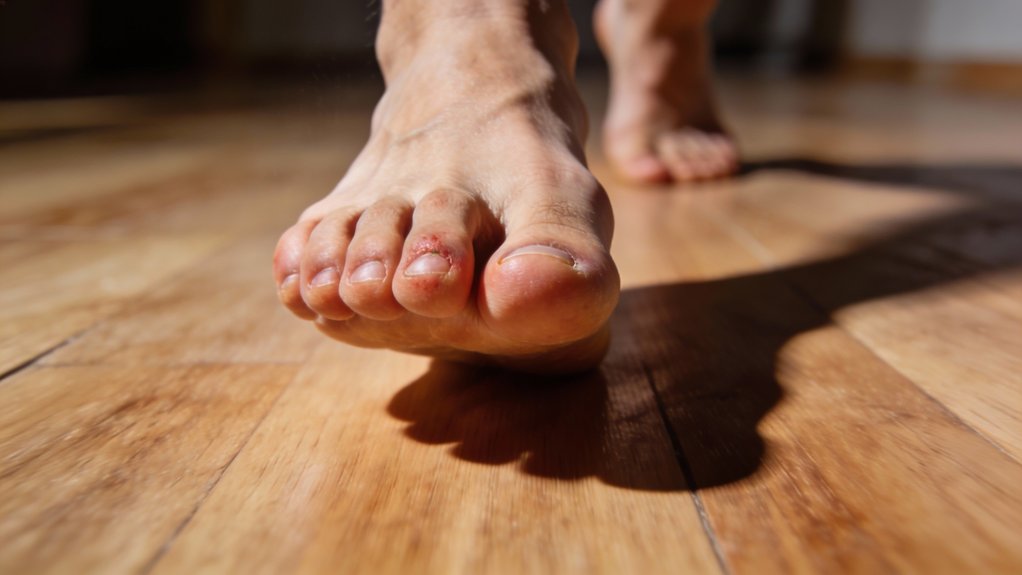
While Morton’s neuroma affects the tissue between your toes, metatarsalgia targets a broader area across the ball of your foot where your metatarsal bones connect to your toe bones.
You’ll notice metatarsalgia symptoms as burning or aching pain that intensifies when walking, running, or standing for extended periods.
High-impact activities, ill-fitting shoes, and foot structure problems often trigger this condition.
Metatarsalgia treatment typically includes custom orthotics, supportive footwear, ice therapy, and weight management to reduce forefoot pressure.
Addressing foot alignment issues and selecting proper shoes helps prevent recurrence, enabling you to stay active while serving others effectively.
Arthritis in the Feet: Joint Stiffness and Swelling That Limits Walking
Arthritis gradually transforms your foot joints into inflamed, stiff obstacles that make each step feel like a burden.
You’ll notice pain primarily in your big toe joint, along with tenderness and reduced range of motion.
Age, previous injuries, and excess weight often trigger or worsen symptoms.
Effective arthritis management requires early intervention to preserve joint mobility and help you continue serving others actively:
- Physical therapy strengthens surrounding muscles and improves flexibility
- Anti-inflammatory medications reduce swelling and discomfort
- Orthotic devices provide essential support during daily activities
Don’t ignore persistent symptoms.
Untreated arthritis leads to chronic pain and progressive joint deterioration that eventually limits your ability to walk.
Flat Feet: Arch Pain and Fatigue From Unsupported Foot Structure
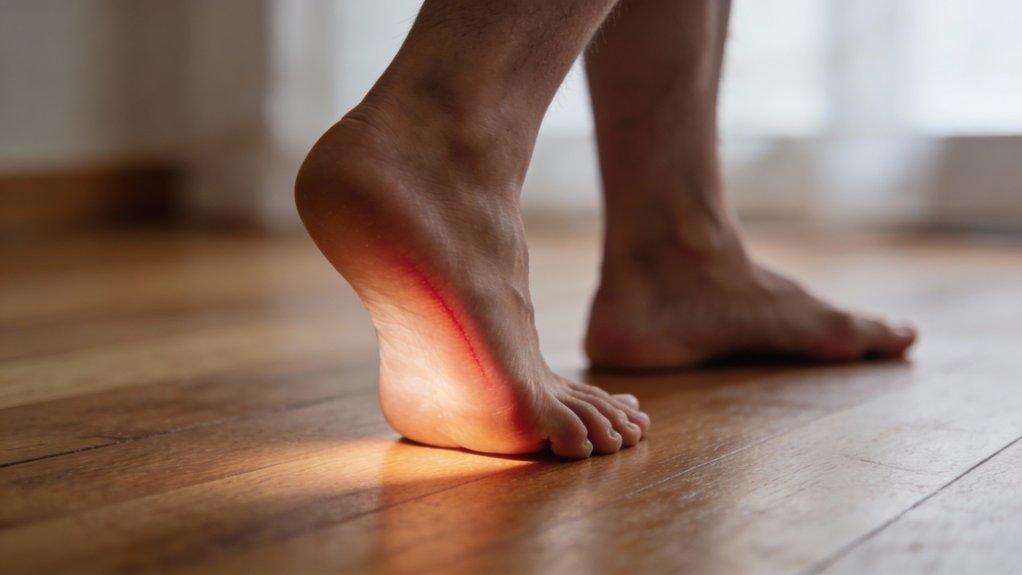
Your foot’s natural arch acts as a shock absorber that distributes your body weight evenly across your entire foot.
When you have flat feet, that arch collapses and your entire sole touches the ground. This structural change puts excessive strain on your heels, ankles, and knees during walking.
You’ll likely notice aching in your arches and unusual fatigue after standing for extended periods. Supportive footwear options with built-in arch support provide immediate relief, while custom orthotics offer personalized correction.
Incorporating strengthening exercises that target your foot muscles helps rebuild arch stability over time, enabling you to serve others without constant discomfort.
Learn the essential ankle and knee exercises that prevent the most common walking injuries before they sideline your active lifestyle.